Top 10 AI Innovations That Will Direct the Path of Technology
+
Table of Contents
- 1 Quick Overview Table on Top 10 AI Innovations:
- 1.1 1. Generative AI
- 1.2 2. Autonomous AI agents
- 1.3 3. AI-powered robots
- 1.3.1 Key benefits are:
- 1.4 4. AI in Healthcare
- 1.5 5. AI Cybersecurity Systems
- 1.6 6. AI-Powered Smart Homes
- 1.7 7. Self-Driving Cars
- 1.8 8. AI in Education
- 1.8.1 Enhanced learning
- 1.9 9. AI Video & Image Generation
- 1.10 10. Quantum AI
- 1.10.1 Quantum AI leads
- 1.10.2 Some major concerns are:
- 2 The Future of AI Technology
- 3 Conclusion
Artificial Intelligence is changing the future of technology. AI no longer seems like it exists only in fiction. AI is becoming ubiquitous. People in sectors including healthcare, education, transportation, finance, entertainment, and cybersecurity are starting to employ AI. Users are starting to connect with AI daily through smart devices and intelligent systems. The shift in how people interact with technology has come through Initiative AI and autonomous AI agents.
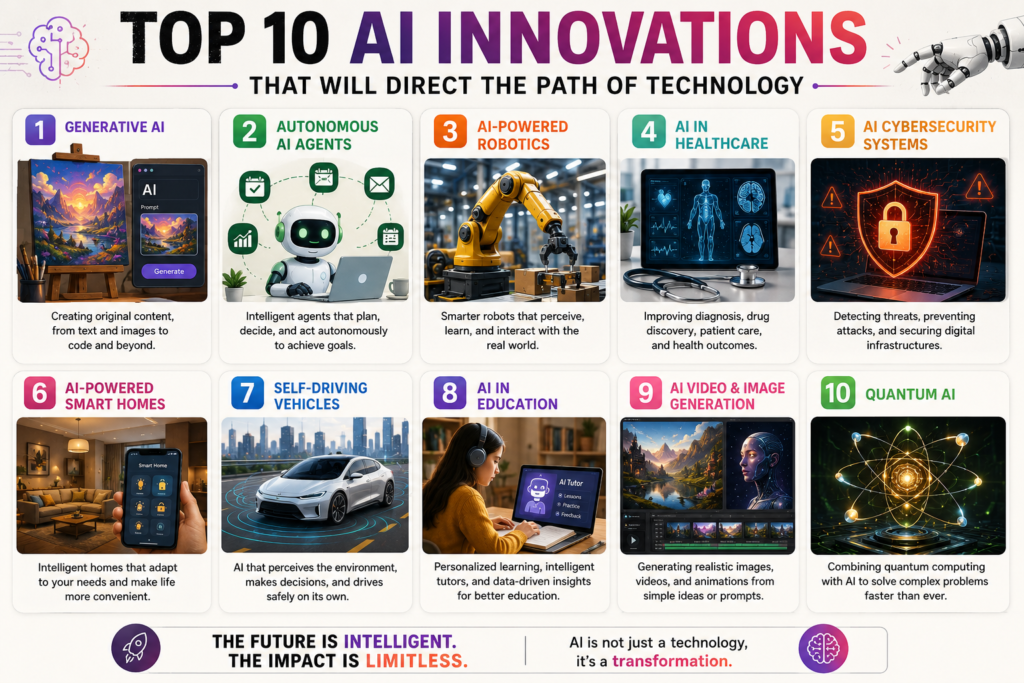
Innovations in AI advancements are drastically changing the future of transportation. AI Innovations include autonomous AI agents, advanced robotics, AI in healthcare, AI Cybersecurity systems, AI-powered smart homes, self-driving vehicles, AI in education, AI video/image generation, and quantum AI.
Quick Overview Table on Top 10 AI Innovations:
| Rank | AI Innovation | Main Purpose | Industries Impacted |
|---|---|---|---|
| 1 | Generative AI | Content and media creation | Marketing, entertainment, education |
| 2 | Autonomous AI Agents | Independent task automation | Business, customer service |
| 3 | AI-Powered Robotics | Advanced physical automation | Manufacturing, healthcare |
| 4 | AI in Healthcare | Faster diagnosis and treatment | Medical and pharmaceutical |
| 5 | AI Cybersecurity Systems | Threat detection and prevention | IT and finance |
| 6 | AI-Powered Smart Homes | Intelligent home automation | Consumer technology |
| 7 | Self-Driving Vehicles | Autonomous transportation | Automotive and logistics |
| 8 | AI in Education | Personalized learning | Schools and online learning |
| 9 | AI Video & Image Generation | Creative digital production | Media and design |
| 10 | Quantum AI | Advanced problem-solving | Research and computing |
1. Generative AI
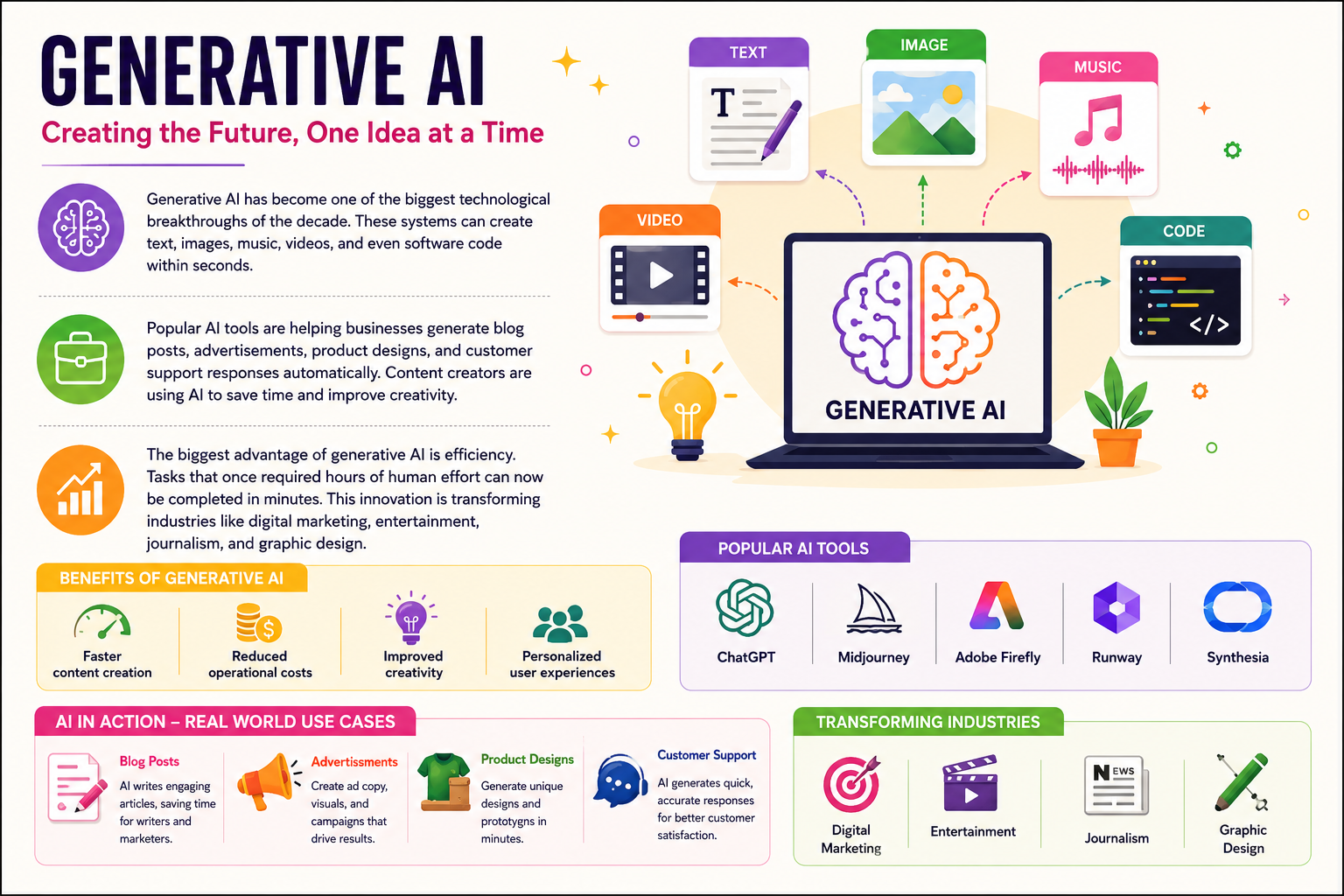
The creation of text, photo, audio, video, and even code has made Generative AI one of the biggest technological breakthroughs of the decade.
From blog posts to product designs and customer responses, businesses can rapidly generate extensive content with popular AI tools. Time-consuming manual tasks can now be done in a fraction of the time. AI offers efficiency. All industries experience the endless possibilities of AI.
Generative AI is revolutionizing:
- Digital marketing
- Entertainment
- Journalism
- Graphic Design
Generative AI also customizes user experiences and instigates personal creativity.
Generative AI raises the following concerns:
- The spread of misinformation
- Copyright issues
Also Read- 10 Innovative AI Gadgets Revolutionizing Smart Homes
2. Autonomous AI agents
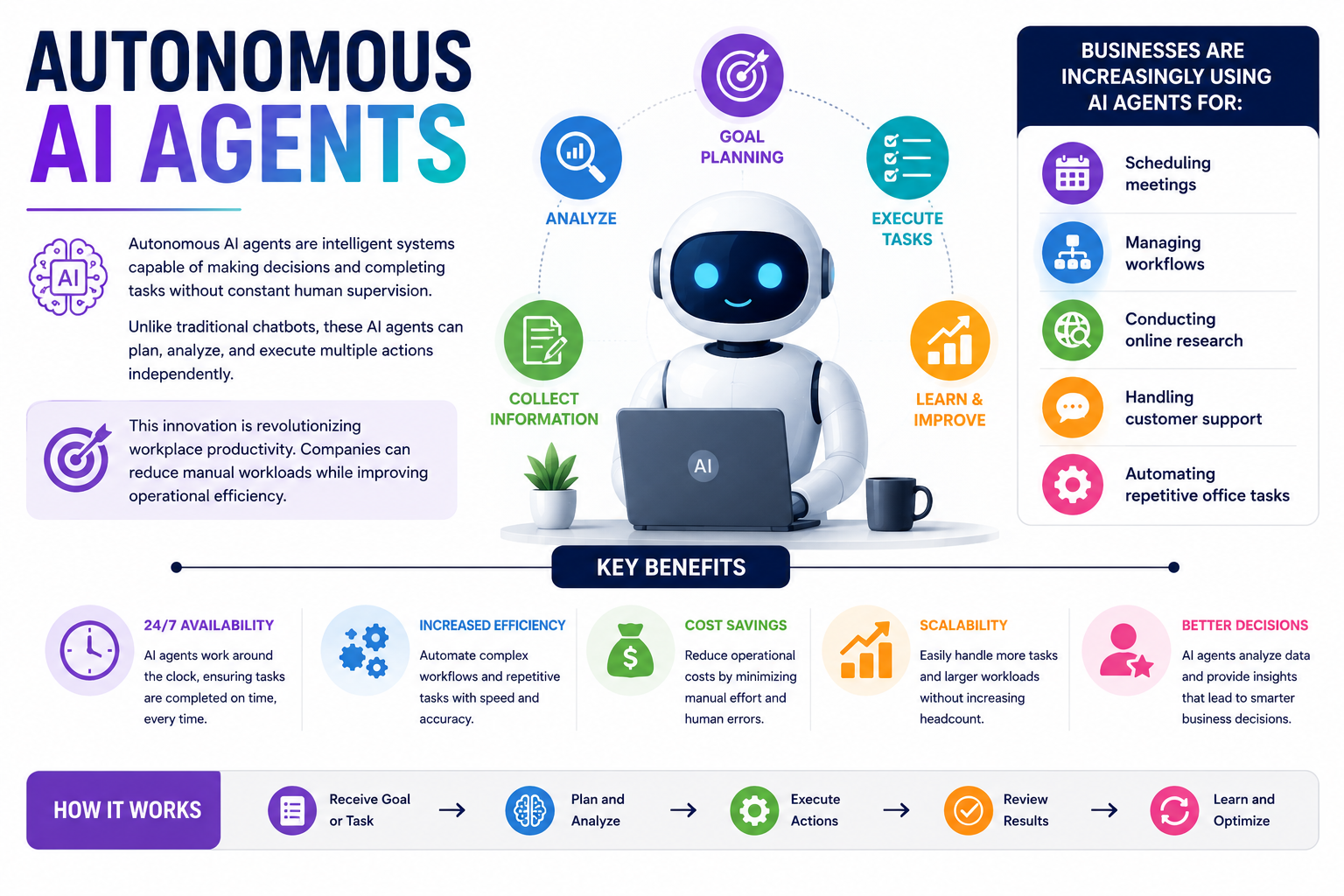
AI agents now perform tasks regularly undertaken by humans, including:
- Managing workflows
- Conducting online research
- Handling customer support
- Tasks that involve continual supervision
- Scheduling meetings
AI agents have the potential to execute office tasks to a greater degree of efficiency than humans.
AI-powered robots outperform humans. AI-powered robots to learn, analyze, and adjust.
3. AI-powered robots
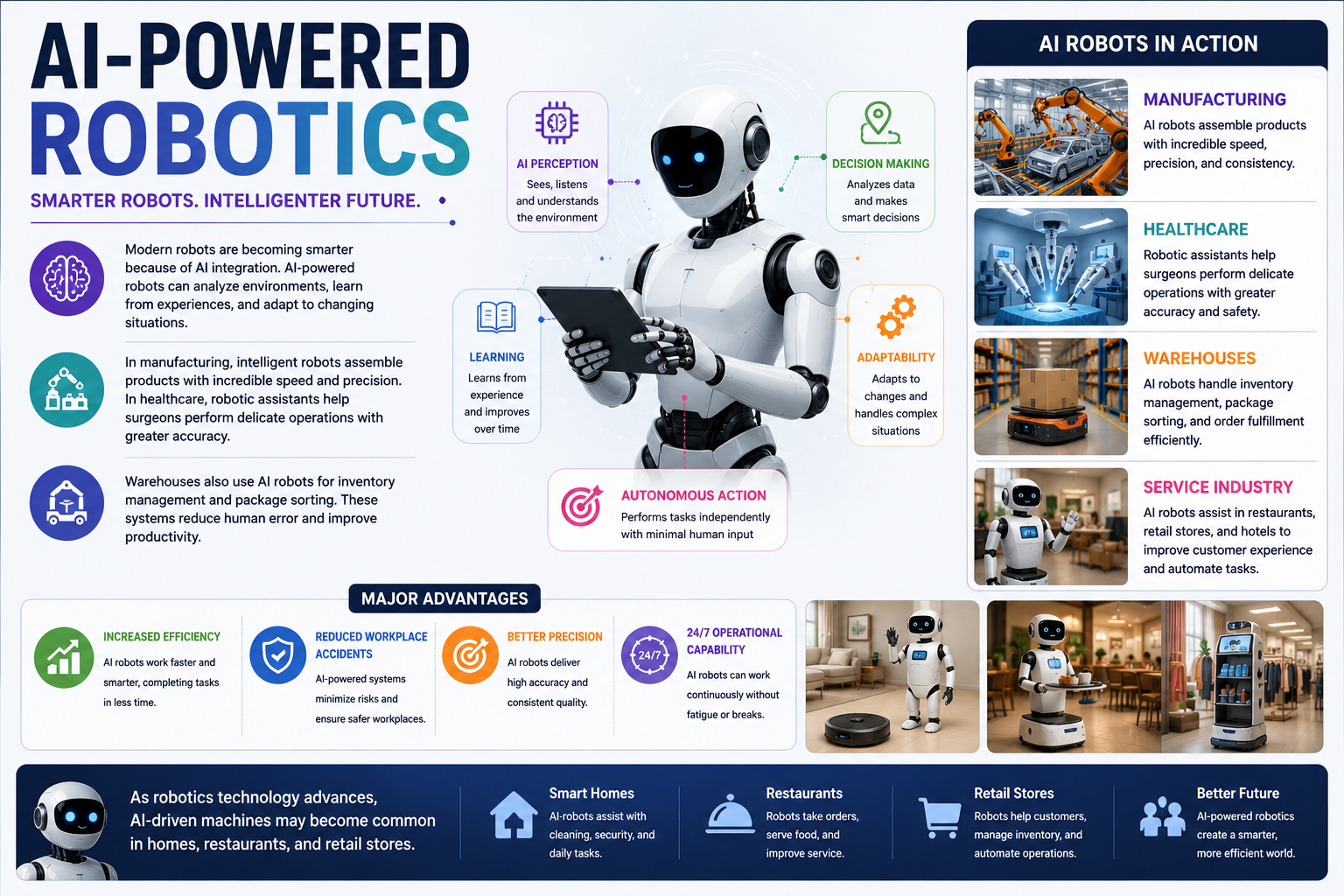
improve productivity in some industries, including:
- Assembly and manufacturing
- Healthcare
- Inventory Management
Key benefits are:
- Greater efficiency
- Fewer workplace injuries
- Greater accuracy
- Ability to work continuously
As robotics technology progresses, we can expect AI machines in residential, dining, and retail markets.
4. AI in Healthcare
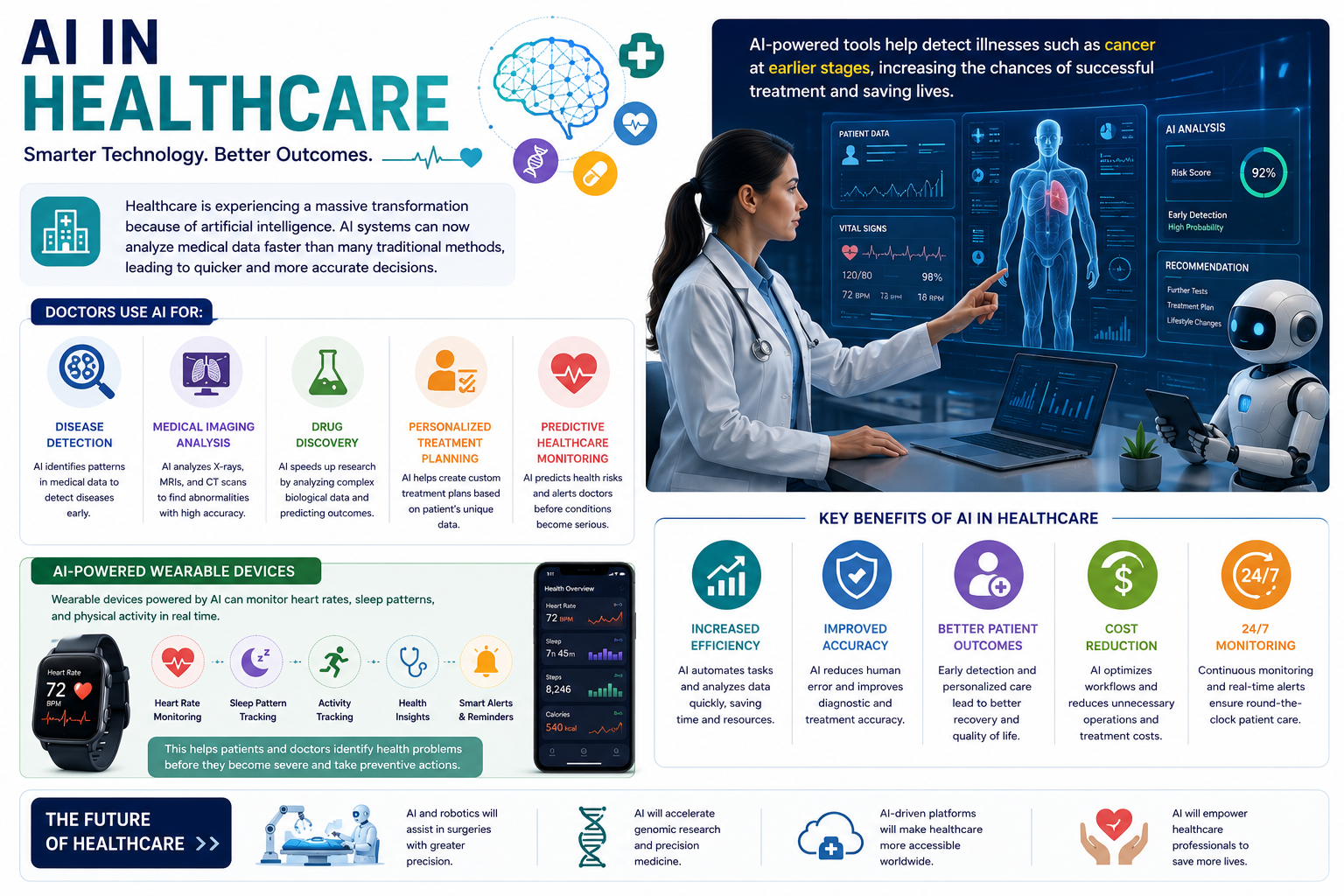
Transformative effects from AI in healthcare are definable. AI has the ability to interpret healthcare data faster than other methodologies.
AI is helpful to physicians in:
- Interpreting diagnostic imaging
- Generating hypotheses for new pharmaceutical agents
- Constructing individualized prescriptions
- Predictive Medical Models
AI technology is useful in discovering various types of diseases, helping to identify disorders early to allow for greater therapeutic intervention.
Much of AI in health is to allow for advanced health tracking, enabling physicians and health professionals to better enable intervention and prevent health deterioration.
Healthcare is a field that has the most promise for personalized, reduced-cost care with improved efficiency and advanced health intervention.
5. AI Cybersecurity Systems
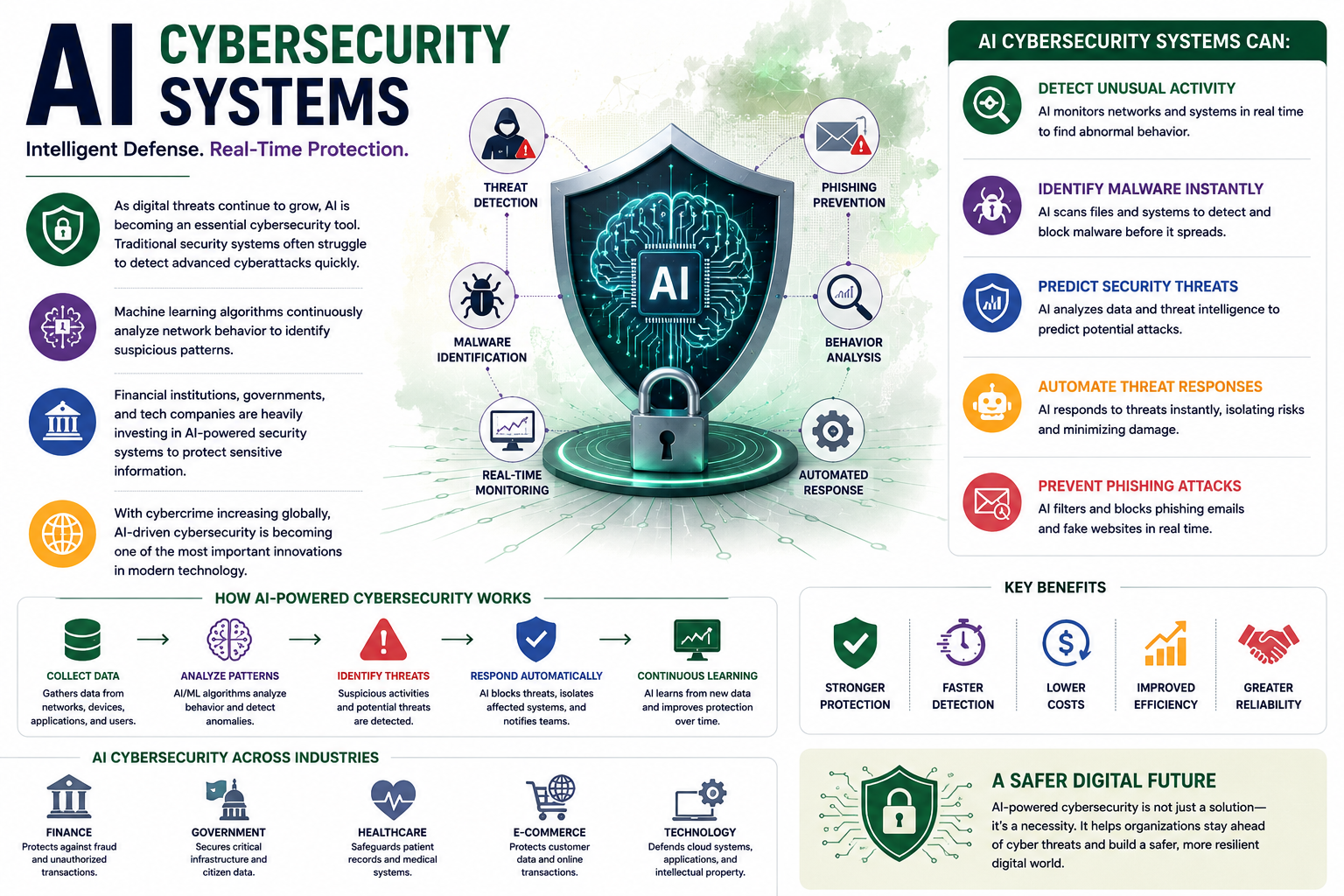
AI is a critical component for growing digital safeguards in the age of growing digital threats.
- AI can discern and identify
- Unusual network activity
- Interruption of the normal course of network activity
- Ill-intentions and corrupted digital components
AI is redefining the parameters around which digital safeguards are incorporated.
All digital entities, particularly financial institutions and government bodies, exist in an AI Reality to ensure legislative compliance and incorporation of the new AI safeguards.
AI-driven digital safeguards have an interesting correlation with the rising tide of digital threats seen in almost all industries.
6. AI-Powered Smart Homes
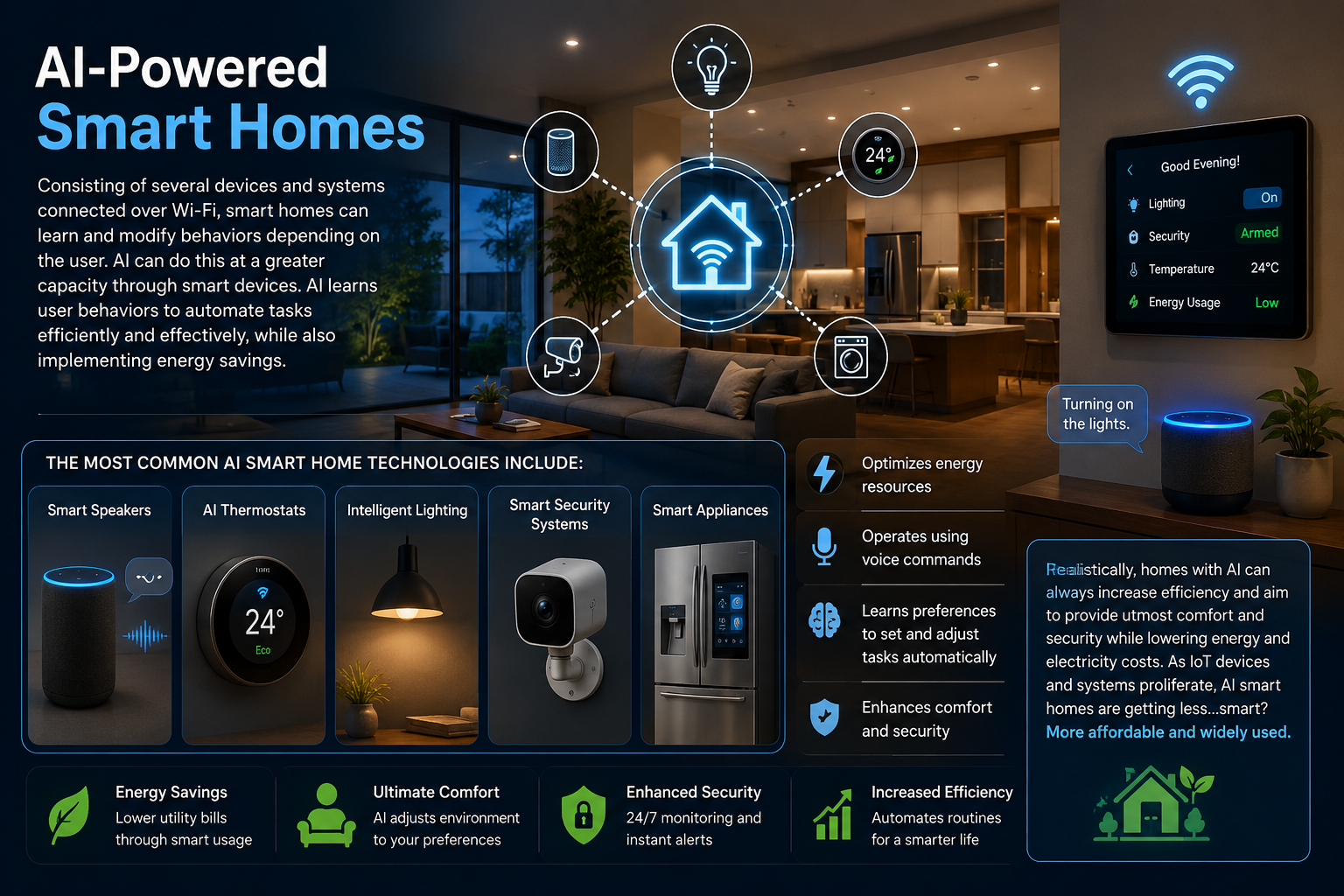
Consisting of several devices and systems connected over Wi-Fi, smart homes can learn and modify behaviors depending on the user. AI can do this at a greater capacity through smart devices. AI learns user behaviors to automate tasks efficiently and effectively, while also implementing energy savings.
The most common AI smart home technologies include:
- Smart speakers
- AI thermostats
- Intelligent lighting
- Smart security systems
- Smart appliances
Not surprisingly, these systems and devices optimize energy resources, operate using voice commands, and even learn to set and adjust tasks to users’ preferences. Realistically, homes with AI can always increase efficiency and aim to provide utmost comfort and security while lowering energy and electricity costs. As IoT devices and systems proliferate, AI smart homes are getting less…smart? More affordable and widely used.
Also Read- Top 10 Smart Wearables Changing Everyday Life in America
7. Self-Driving Cars
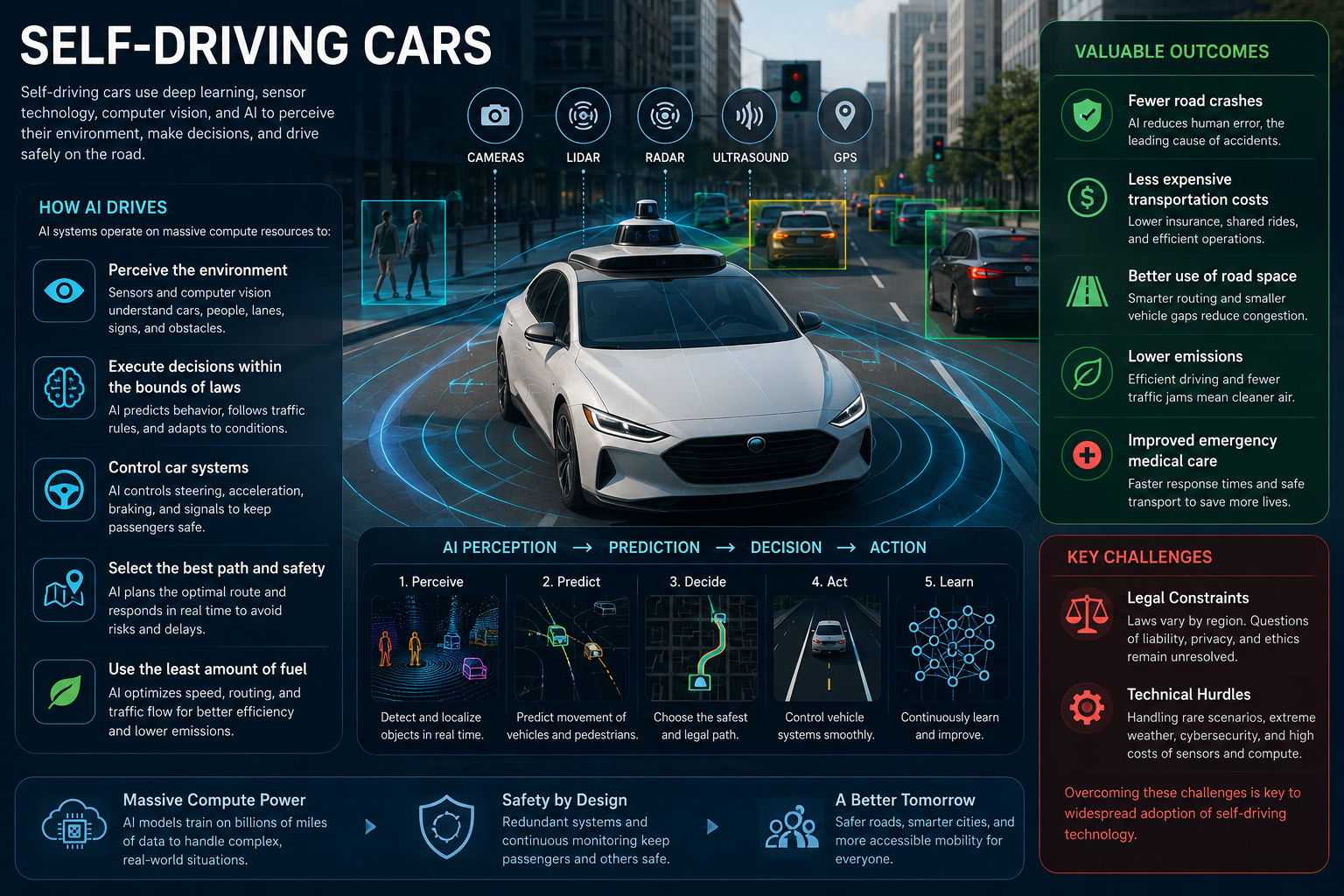
Think of the most innovative AI focused on transportation, and most people will say autonomous self-driving cars. Self-driving cars are cars that use deep learning, sensor technology, computer vision, and AI to drive themselves on the road.
AI systems operate on massive compute resources to:
- Perceive the environment
- Execute decisions within the bounds of laws
- Control car systems to avoid injury, damage, and accidents
- Select the best path and safety
- Use the least amount of fuel
To avoid those road bumps or accidents, AI systems are designed to keep the vehicles within the bounds of laws. Interestingly, there are several feasible and valuable outcomes of using self-driving AI in transportation, including:
- Fewer road crashes
- Less expensive transportation costs
- Better use of road space
- Better use of road space
- Improved emergency medical care
An unmet need to avoid those road bumps, or accidents, AI systems are designed to keep the vehicles within the bounds of laws. Even with the advancement of self-driving technology, legal constraints and technical systems are the main obstacles to the widespread use of self-driving technology.
8. AI in Education
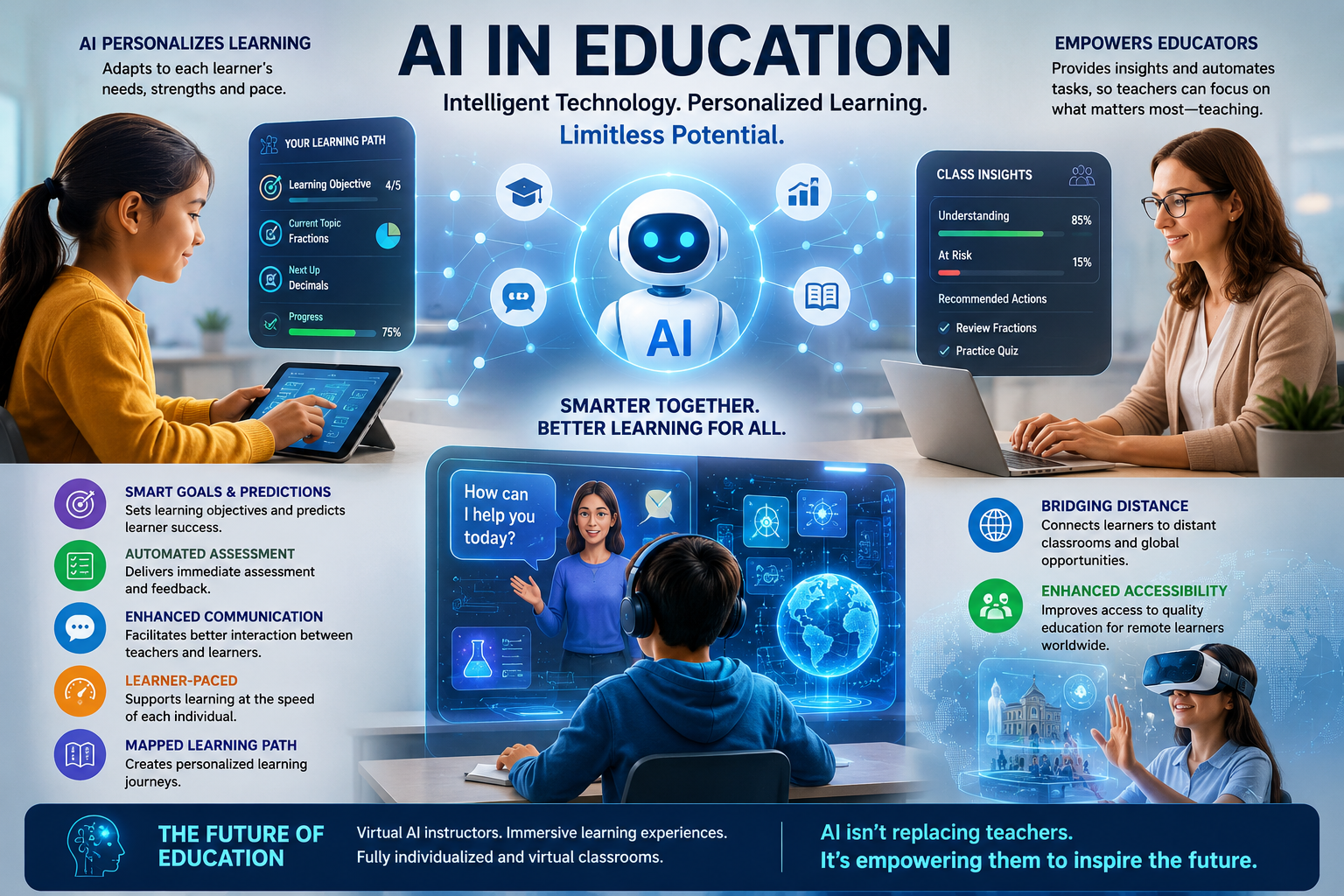
Imagine a world where learning is tailored to the individual and where education can adapt to the unique needs of each learner. We no longer need to imagine it. That is the world that the AI of today is creating, and it is empowering teachers and learners in unfathomable ways.
The most innovative way AI education products are using technology is editing the medium of instruction and incorporating features traditionally associated with standard education, such as:
Setting learning objectives, predicting how successfully a learner might achieve
- Automated and immediate assessment
- Feedback Enhanced communication
- Facilitating tasks and learning at the speed of a learner
- Mapping the learning path
- Creating a bridge to distant learning environments
Enhanced learning
Multiple scholars and practitioners have noted that AI at the level it is today is unparalleled. If properly used, AI seeks to foster a deep and meaningful investment in learning. For teachers, it is an invaluable resource for improving classroom functionality.
AI is also improving the accessibility of education for remote learners around the world.
In the future, the education landscape may look like virtual AI instructors, experiences of learning through deep immersion, and classrooms that are fully individualized and virtual.
9. AI Video & Image Generation
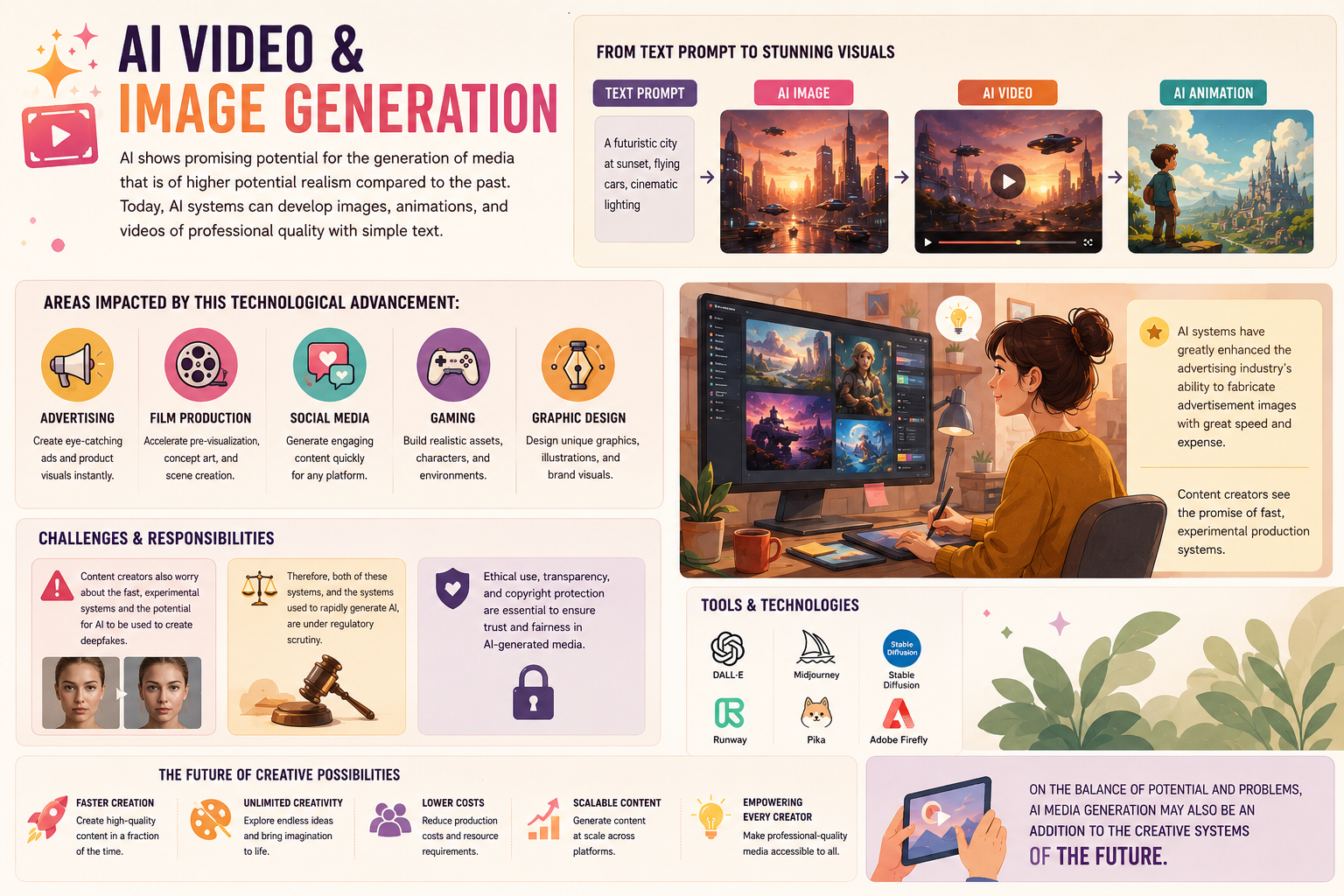
AI shows promising potential for the generation of media that is of higher potential realism compared to the past. Today, AI systems can develop images, animations, and videos of professional quality with simple text.
Here are a few of the areas that have been noticeably impacted by this technological advancement:
- Advertising
- Film production
- Social media
- Gaming
- Graphic design
AI systems have greatly enhanced the advertising industry’s ability to fabricate advertisement images with great speed and expense.
Content creators see the promise of fast, experimental production systems.
Content creators also worry about the fast, experimental systems and the potential for AI to be used to create deepfakes. Therefore, both of these systems, and the systems used to rapidly generate AI, are under regulatory scrutiny.
On the balance of potential and problems, AI media generation may also be an addition to the creative systems of the future.
10. Quantum AI
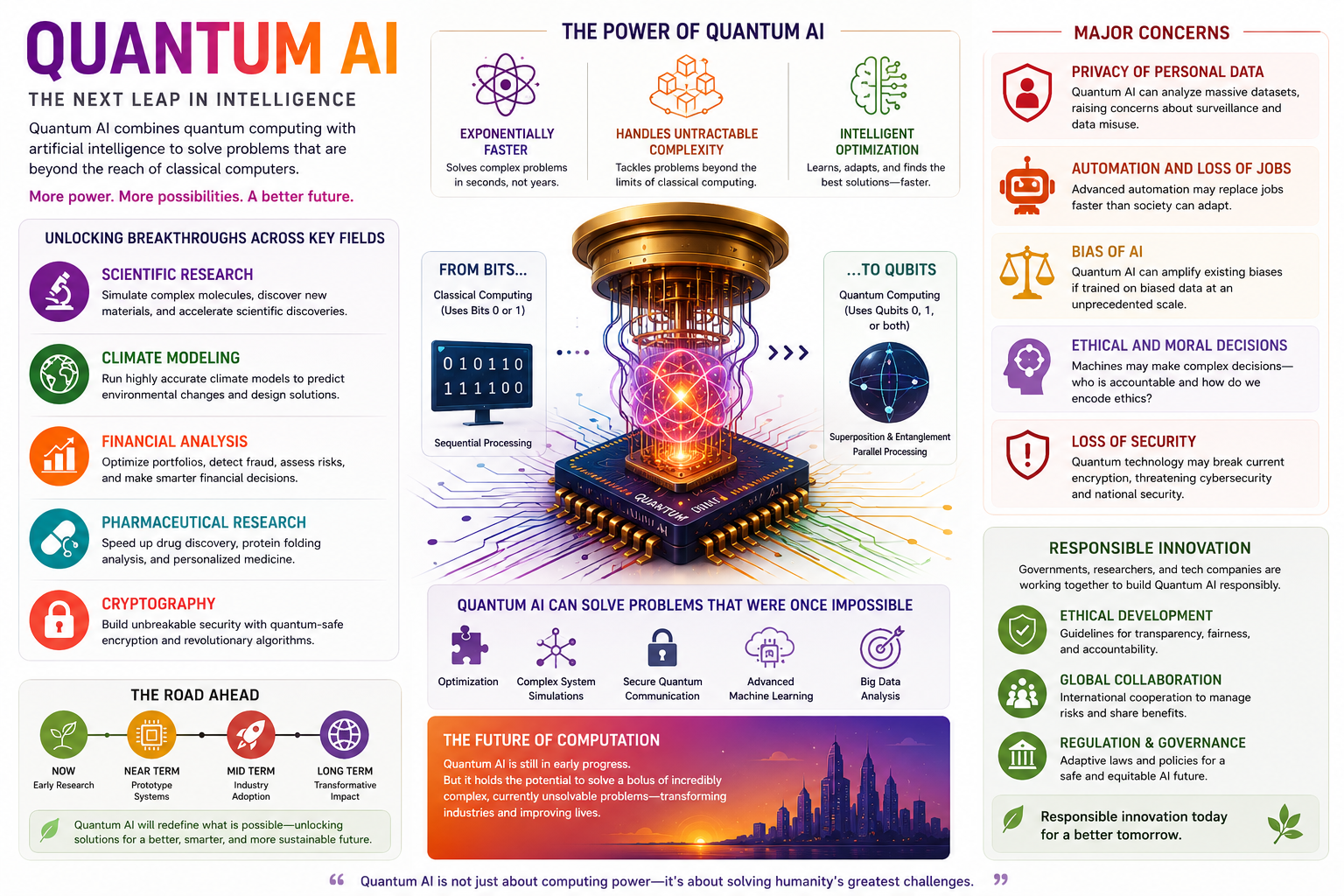
For the future of the potential of technological systems, combining the power of AI systems.
Quantum AI leads
Through solving multiple tractable complexities, multiple untractable complexities may provide the breakthrough needed to progress the future of:
- Scientific research
- Climate modeling
- Financial analysis
- Pharmaceutical research
- Cryptography
Using bits for processing systems may be the current systems of our day; quantum processing systems of the future will potentially be systems that use qubit processing.
Even though quantum AI is still in early progress, it is theoretically within future systems of this current order of computation systems that a bolus of incredibly complex untractable problems may be solved.
The future of AI systems is indeed a complex web of innovation and promise disrupted by technological breakthroughs.
Some major concerns are:
- Privacy of personal data
- Automation and loss of jobs
- Bias of AI
- Ethical and moral decisions
- Loss of security
Governments and tech companies are crafting new measures and frameworks to develop AI responsibly.
Oversight and balancing of progress will be critical.
The Future of AI Technology
The next several generations of technology to develop and deploy will include:
- More human-like AI assistants
- Fully autonomous AI-run factories and entire industries
- AI as the primary discovery agent for science
- Cities managed by AI
- Brain chips
AI technology will be woven into the fabric of everyday life and transform virtually every industry.
The early mastery of AI automations by a business will disrupt its market.
Conclusion
AI is progressing technology at an unprecedented rate and will define the future of technology. From generative AI to autonomous systems to robotics and quantum computing, these are fundamental innovation systems that define how people will live and work.
AI is positively teaching and transforming the whole of the industry with automation. The primary negative impacts of AI – loss of moral judgment, job loss, and ethics – will diminish with time.
AI technology will continue to be more powerful and integrated into every aspect of life in the next decade. The dawning of a new technology-driven society will have more promise than all. The better mastery of AI technology and the more readiness and innovation an individual or an organization has, the better they will be at meeting the challenges.
F&Q
1. What serves as the current forefront of AI innovation?
Generative AI, unlike the competition, truly serves the user in the most dynamic and fast-paced format, creating images, text, videos, and even code.
2. How is AI disrupting healthcare?
AI is embraced by physicians as they utilize the technology to enhance their diagnostic accuracy, to expedite the collection and arrangement of their medical data, and to formulate and administer treatment paradigms that are tailored to the unique needs of their patients.
3. Do fully autonomous cars exist
Although, in the present moment, systems in self-driving cars have advanced to great levels, numerous technological, legal, and safety issues present barriers that must be overcome before widespread distribution can occur.
4. Is AI taking over every job?
AI is merely replacing the voids in job that are relegated to boring and menial tasks, and, in turn, creating new jobs in technology, AI oversight, and data.
5. Explain AI and its potential dangers to society.
AI poses numerous risks, including the invasion of people’s privacy, the compromising of first amendment rights, the spread of false news, racial concerns related to programmed AI, and the potential displacement of workers.
6. What is the definition of Quantum AI?
Quantum AI, or Quantum Intelligence, combines quantum computing and AI to create the most advanced and fast-paced technology that can solve problems too intricate for current technology.