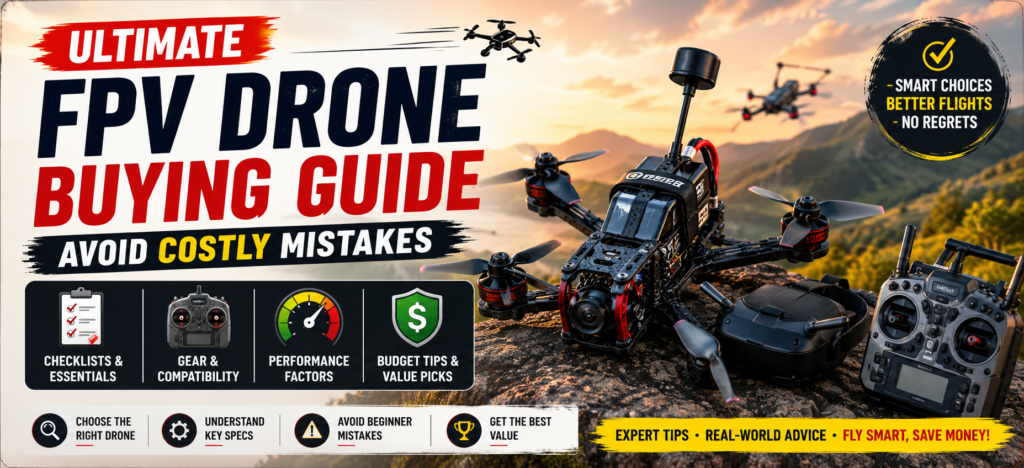
Ultimate FPV Drone Buying Guide: Avoid Costly Mistakes
+
Table of Contents
- 1 What Is an FPV Drone?
- 2 Important Features to Look for in an FPV Drone
- 2.1 1. Camera
- 2.2 2. Flight Times
- 2.2.1 FPV Drones typically have a shorter flight time than your average drone. Typical flight times are:
- 2.3 3. Video Transmission System
- 2.3.1 Analog Systems
- 2.3.2 Pros
- 2.3.3 Cons
- 2.3.4 Digital Systems
- 2.3.5 Pros
- 2.3.6 Cons
- 2.4 4. Motor Performance
- 2.5 5. Frame Material
- 2.6 6. Flight Modes
- 2.7 Benefits of Owning an FPV Drone
- 2.7.1 1. Immersive Flying Experience
- 2.7.2 2. Amazing Cinematic Footage
- 2.7.3 3. Excellent Speed
- 2.7.4 4. FPV drones are highly customizable
- 2.7.5 5. Learn Valuable Technical Skills
- 2.8 FPV Drone Buying Guide
- 2.9 Avoidable Mistakes New FPV Drone Buyers Make
- 2.9.1 Buying the Least Expensive Drone
- 2.9.2 Overlooking the Availability of Replacement Parts
- 2.9.3 Starting With an Advanced Racing Drone
- 2.9.4 Getting One Battery
- 2.9.5 Neglecting Additional Accessories
- 2.10 How to Choose the Right FPV Drone
- 2.10.1 For Beginners
- 2.10.2 For Racing
- 2.10.3 For Cinematic Videos
- 2.10.4 Drones for FPV flying
- 2.11 Essential Accessories for FPV Flying
- 2.12 Maintenance Tips for Longer Drone Life
- 2.13 Is an FPV Drone Worth Buying?
- 2.13.1 Most yes
- 3 Conclusion
This Ultimate FPV Drone Buying Guide is here to ensure you don’t make the wrong decision as you start your first-person view flying journey. Traditional drones have limitations when it comes to flying. FPV drones have the immersive experience of first-person flying, so you have a view of the world through the drone’s camera and experience complete control of the situation. FPV goggles let you experience the flight. Because of that immersion, FPV drones have a growing popularity amongst different communities from general hobbyists to racers to filmmakers.
When it comes to your first FPV drone, it’s easy to get lost. Different models come with different systems for flight control, different batteries, different cameras, and different radios for transmission and control. Because of that variety and the resulting confusion, many consumers end up with poorly paired equipment. The Ultimate FPV Drone Buying Guide uses the failing consumer experience to adjust and improve.
What Is an FPV Drone?
FPV drones, or first-person view drones, are equipped with cameras that send real-time video back to the people flying them through the FPV goggles, a screen, or a phone. This eliminates the ground view.
FPV drones are the way to go for flying fast and performing tricks and stunts. They can also capture shots that traditional drones cannot reach. These are some of the reasons why they are growing in use for professional filmmaking.
Modern FPV drones can be classified into four categories: beginner FPV drones, racing drones, freestyle drones, and cinematic FPV drones. These classifications will help you identify the FPV drone model that caters to your needs. This Ultimate FPV Drone Buying Guide will be especially beneficial for the novice buyer.
Why FPV Drones Are So Popular
FPV drones offer a different level of flying experience that has changed the game in aerial photography and drone racing. Their popularity can be attributed to factors such as the:
- Ability to fly in first person and in real time
- Speed
- Agility
- Ability to shoot video
- Ability to perform tricks
- Participation in drone racing
- Customization
Whether you are interested in FPV racing or want to shoot amazing photography, use this Ultimate FPV Drone Buying Guide to help you identify the equipment that pertains to your needs.
Also Read- Top FPV Drones for Racing in 2026: The Ultimate Speed, Power & Performance Guide
Important Features to Look for in an FPV Drone
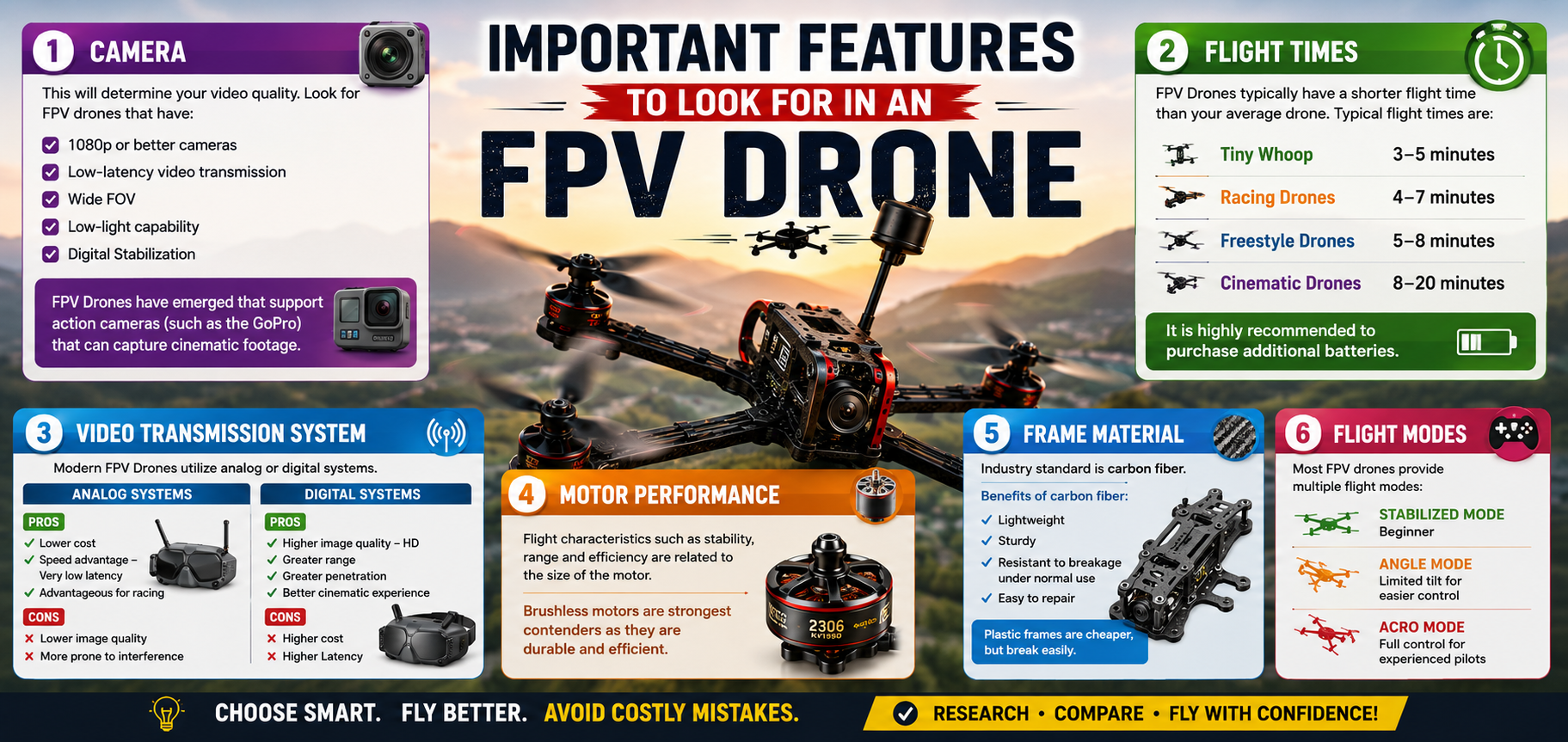
When buying FPV drones, there are a number of considerations that you need to take into account.
1. Camera
This will determine your video quality. Look for FPV drones that have:
- 1080p or better cameras
- Low-latency video transmission
- Wide FOV
- Low-light capability
- Digital Stabilization
FPV Drones have emerged that support action cameras (such as the GoPro) that can capture cinematic footage.
2. Flight Times
FPV Drones typically have a shorter flight time than your average drone. Typical flight times are:
- Tiny Whoop: 3–5 minutes
- Racing Drones: 4–7 minutes
- Freestyle Drones: 5–8 minutes
- Cinematic Drones: 8–20 minutes
It is highly recommended to purchase additional batteries.
3. Video Transmission System
Modern FPV Drones utilize analog or digital systems.
Analog Systems
Pros
- Lower cost
- Speed advantage – Very low latency
- Advantageous for racing
Cons
- Lower image quality
- More prone to interference
Digital Systems
Pros
- Higher image quality – HD
- Greater range
- Greater penetration
- Better cinematic experience
Cons
- Higher cost
- Higher Latency
4. Motor Performance
Flight characteristics such as stability, range and efficiency are related to the size of the motor.
Brushless motors are strongest contenders as they are durable and efficient.
5. Frame Material
Industry standard is carbon fiber.
Benefits of carbon fiber:
- Lightweight
- Sturdy
- Resistant to breakage under normal use
- Easy to repair
- Plastic frames are cheaper, but break easily.
6. Flight Modes
Most FPV drones provide multiple flight modes:
- Stabilized Mode – beginner
- Angle Mode – limited tilt for easier control
- Acro Mode – full control for experienced pilots
Gradual learning through these modes is one of the best pieces of advice in the Ultimate FPV Drone Buying Guide.
Benefits of Owning an FPV Drone
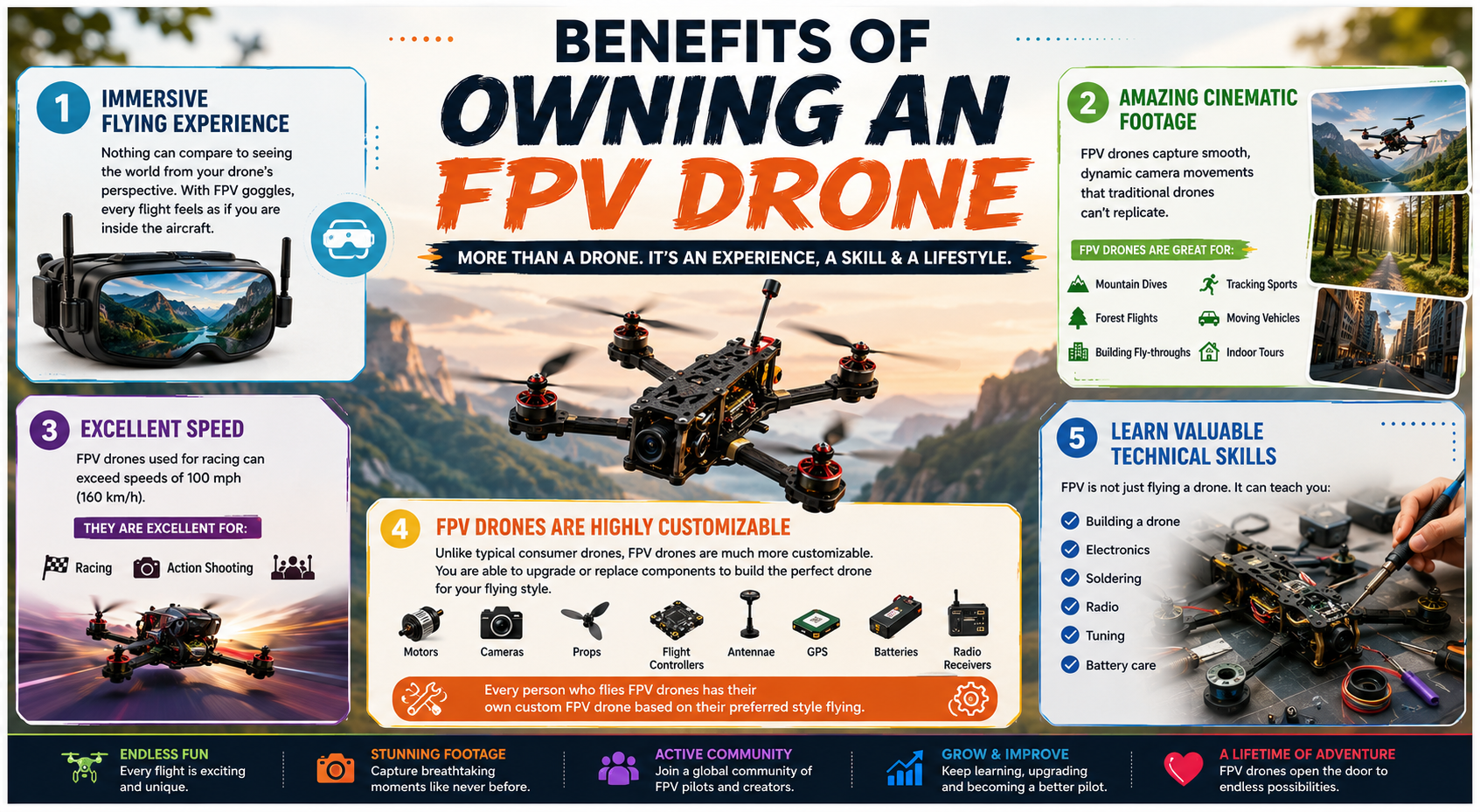
There are a variety of reasons to invest in FPV Drones each passing year.
1. Immersive Flying Experience
Nothing can compare to seeing the world from your drone’s perspective. With FPV goggles, every flight feels as if you are inside the aircraft.
2. Amazing Cinematic Footage
Dynamic camera movements FPV drones capture smoothly and traditional drones are unable to replicate.
FPV drones are great for:
- Mountain Dives
- Forest Flights
- Building Fly-throughs
- Tracking Sports
- Moving Vehicles
- Indoor Tours
3. Excellent Speed
FPV Drones used for racing can exceed speeds of 100 mph (160 km/h).
They are excellent for:
- Racing
- Action shooting
- Events
4. FPV drones are highly customizable
Unlike typical consumer drones, FPV drones are much more customizable.
You are able to change out for better versions:
- Motors
- Cameras
- Props
- Flight controllers
- Antennae
- GPS
- Batteries
- Radio receivers
Every person who flies FPV drones has their own custom FPV drone based on their preferred style flying.
5. Learn Valuable Technical Skills
FPV is not just flying a drone. It can teach you:
- Building a drone
- Electronics
- Soldering
- Radio
- Tuning
- Battery care
Every one of these skills can be helpful in many hobbies or even in a job.
FPV Drone Buying Guide
You can use this guide to help you in the purchase of an FPV drone.
| Feature | What to Look For | Why It Matters |
|---|---|---|
| Camera | 1080p resolution or higher | Provides a clearer view and improves the overall flying experience. |
| Motors | Brushless motors | Offer more power, greater efficiency, and longer durability than brushed motors. |
| Frame | Carbon fiber construction | Lightweight, strong, and more resistant to crashes. |
| Battery | High-capacity LiPo battery | Extends flight time and delivers consistent performance. |
| Video System | Digital FPV system | Produces sharper image quality with lower latency. |
| Controller | Ergonomic and reliable design | Improves comfort, precision, and control during flights. |
| GPS | Optional but recommended | Enables return-to-home, position hold, and tracking features. |
| Spare Parts | Widely available replacement parts | Makes repairs easier and reduces downtime. |
| Beginner Mode | Available | Simplifies learning by limiting speed and increasing stability. |
| Community Support | Large and active user community | Provides helpful guides, troubleshooting tips, and upgrade advice. |
This checklist prevents most FPV drone pitfalls listed in this buying guide and will help with model comparison.
Avoidable Mistakes New FPV Drone Buyers Make
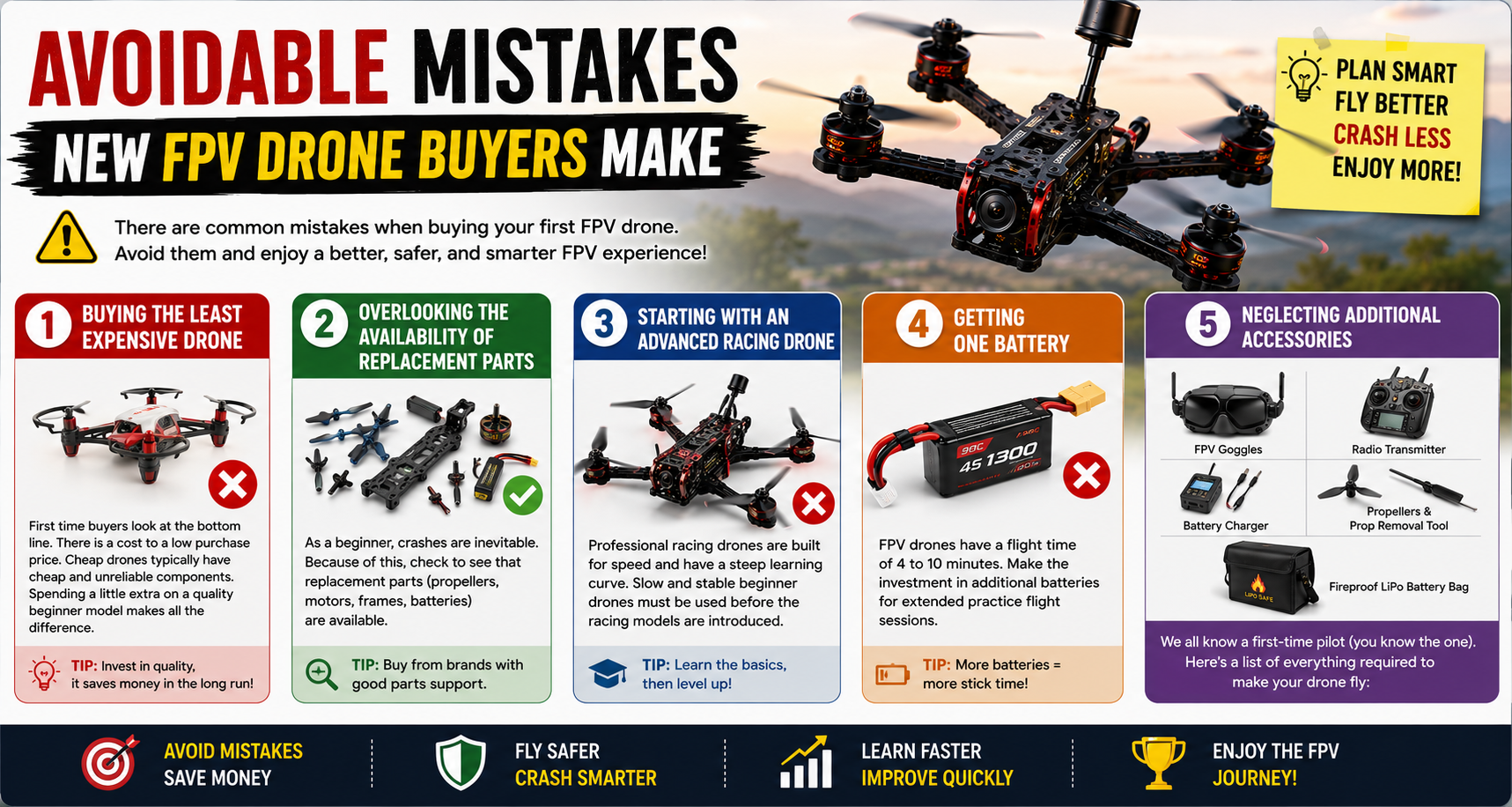
There are common mistakes when buying your first FPV drone. This helps you avoid those mistakes.
Buying the Least Expensive Drone
First time buyers look at the bottom line. There is a cost to a low purchase price. Cheap drones typically have cheap and unreliable components. Spending a little extra on a quality beginner model makes all the difference.
Overlooking the Availability of Replacement Parts
As a beginner, crashes are inevitable. Because of this, check to see that replacement parts (propellers, motors, frames, batteries) are available.
Starting With an Advanced Racing Drone
Professional racing drones are built for speed and have a steep learning curve. Slow and stable beginner drones must be used before the racing models are introduced.
Getting One Battery
FPV drones have a flight time of 4 to 10 minutes. Make the investment in additional batteries for extended practice flight sessions.
Neglecting Additional Accessories
We all know a first-time pilot (you know the one). Here’s a list of everything required to make your drone fly:
- FPV goggles
- Radio transmitter
- Battery charger
- Propellers and a propeller removal tool
- Fireproof LiPo battery bag
Also Read- Best AI Voice Generator Software That Delivers Stunning Results
How to Choose the Right FPV Drone
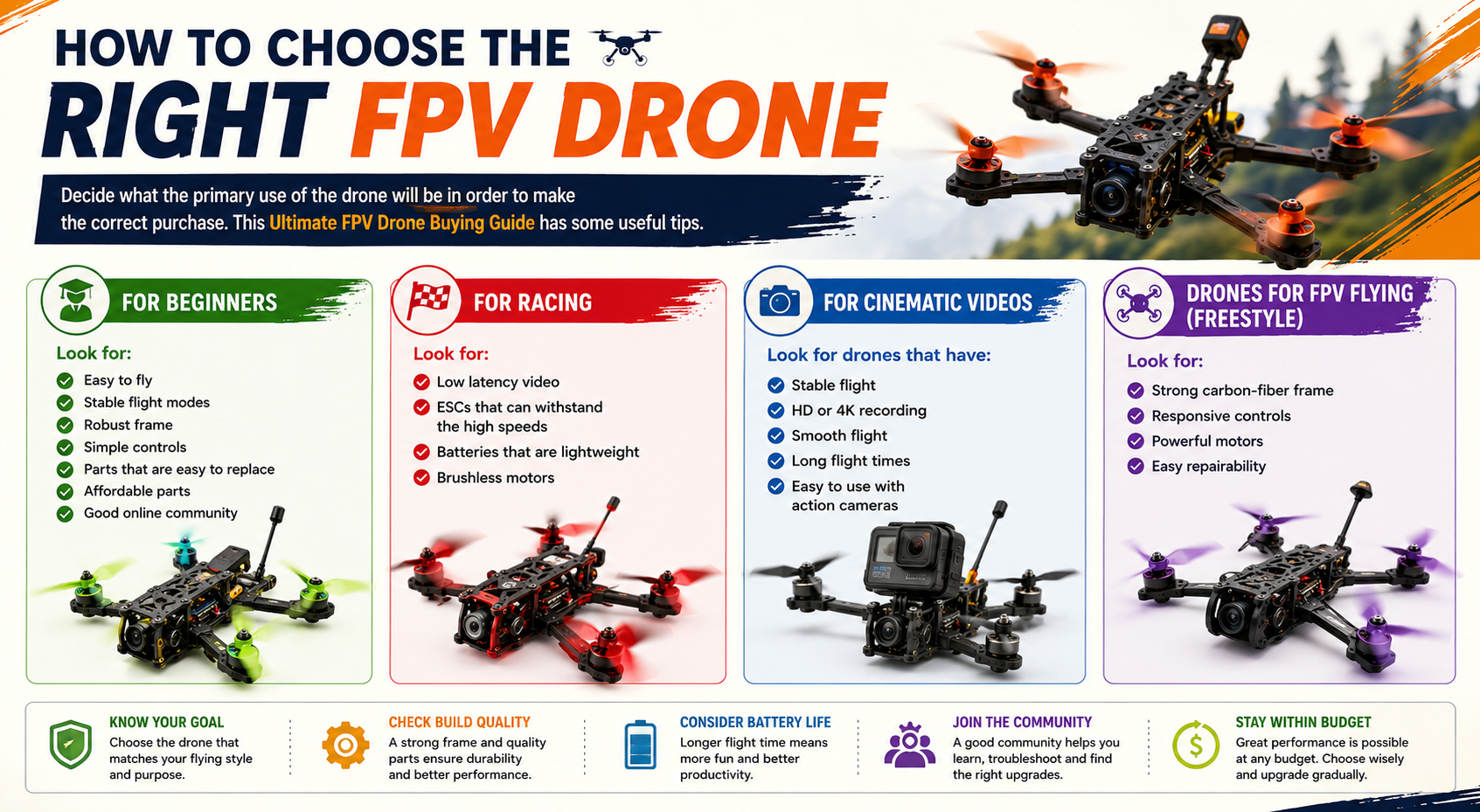
Decide what the primary use of the drone will be in order to make the correct purchase. This Ultimate FPV Drone Buying Guide has some useful tips.
For Beginners
Look for:
- Easy to fly
- Stable flight modes
- Robust frame
- Simple controls
- Parts that are easy to replace
- Affordable parts
- Good online community
For Racing
Look for:
- Low latency video
- ESCs that can withstand the high speeds
- Batteries that are lightweight
- Brushless motors
For Cinematic Videos
Look for drones that have:
- Stable flight
- HD or 4K recording
- Smooth flight
- Long flight times
- Easy to use with action cameras
Drones for FPV flying
Drones with a strong frame and responsive controls are needed for freestyle flying.
- Strong carbon-fiber frame
- Responsive controls
- Powerful motors
- Easy repairability
Essential Accessories for FPV Flying
FPV kits have everything you need beyond the flying drone.
| Accessory | Use |
|---|---|
| FPV Goggles | Provide a real-time first-person view for an immersive flying experience. |
| Radio Transmitter | Controls the drone’s movement and flight functions. |
| LiPo Batteries | Supply power to the drone for flight. |
| Battery Charger | Safely charges LiPo batteries for the next flight. |
| Spare Propellers | Allow quick replacement after crashes or damage. |
| Carrying Case | Protects and organizes your FPV drone and accessories during transport. |
| LiPo Safety Bag | Safely stores and charges LiPo batteries, reducing fire risks. |
| Prop Guards | Provide extra protection for propellers, making flying safer for beginners. |
All these things allow you to fly without the delay and frustration from other gear.
Maintenance Tips for Longer Drone Life
FPV drones fly well for a long time if you do these things:
- Propellers should be checked each flight
- Screws should be checked for tightness
- Dirt should be cleaned out after every flight
- Batteries should be kept at a safe storage voltage when not in use
- Keep the software updated
- Don’t fly heavily rainy days or windy days
- Check the motors after a flight for too long and check if they are too hot
- If parts are broken, they should be replaced
A few minutes spent keeping the drone maintained can save a big expense later on.
Is an FPV Drone Worth Buying?
Most yes
FPV drones, whether you want to race, film, create content, or just enjoy a new hobby, are hard to compete with against normal camera drones, because standard camera drones can’t give you the same experience that FPV drones can. FPV drones fly faster and give you a first-person experience while allowing the user to customize. This makes powerful drones more satisfying to own.
The key to being a satisfied drone owner is buying the right drone kit for your current skills instead of the fastest or most expensive kit. This Ultimate FPV Drone Buying Guide will help you make smarter purchases and fly with more confidence.
Conclusion
Your first FPV drone purchase doesn’t have to be a total hassle. Understanding the various categories of drones, comparing features, and steering clear of FPV drone rookie errors will help you buy a drone that meets your budget and flying intentions.
This Ultimate FPV Drone Buying Guide has plenty of information to help you out, including camera quality, battery life, flight modes, necessary accessories, maintenance, and helpful tips for when you go to buy a drone. Investing time in research will help you save money and keep frustrations to a minimum and will help you enjoy the process of learning to fly.
- Patience and practice will help you FPV fly to a new level.
- Regular flying, safety, and skill level based equipment upgrades are key.
- The Freedom and excitement of FPV flying are endless.
Frequently Asked Questions (FAQs)
1. What is an FPV drone?
FPV stands for First Person View, which means that when you fly and own an FPV drone, you have a live feed camera that sends video to your FPV goggles directly from the drone.
2. Are FPV drones good for novices?
Definitely FPV drones are a good option for novices. FPV drones are built for novices with flight stability features, a durable frame, and easier control features.
3. What is the flight duration of FPV drones?
The average flight duration per battery for most FPV drones is 4 to 10 minutes, but bigger, more expensive cinematic FPV drones can reach a 20-minute flight duration if the conditions are optimal.
4. What is the difference between analog and digital FPV systems?
The main difference is cost and latency. Compared to analog systems, digital systems have more cinematic flight capabilities, improved image quality and increased range, but are more expensive and have a higher latency.
5. Are FPV goggles a necessity?
For a true FPV experience, FPV goggles are a must, though some FPV systems can be linked to a monitor or even a smartphone. For the majority of FPV flight activities, especially racing FPV, the use of FPV goggles is highly recommended.
6. Can FPV drones film professional video?
Certainly. Many FPV drones are equipped with HD and even 4K cameras built-in, and some FPV drones even have the capability to deliver professional video flight services with the use of an Action Camera.