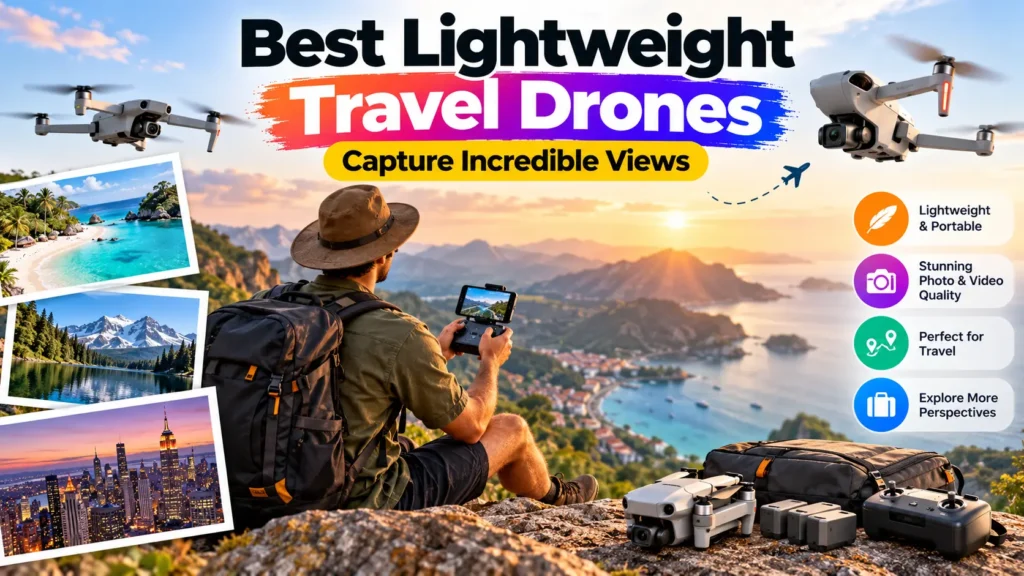
Best Lightweight Travel Drones: Capture Incredible Views
+
Table of Contents
- 1 Why Choose Lightweight Travel Drones?
- 2 Best Lightweight Travel Drones
- 2.1 1. DJI Mini 4 Pro
- 2.1.1 Key Features:
- 2.2 2. DJI Mini 3
- 2.2.1 Key Features:
- 2.3 3. DJI Mini 4K – Best Entry-Level Option
- 2.3.1 Key Features:
- 2.4 4. Autel EVO Nano+ – Best Alternative to DJI
- 2.4.1 Key Features:
- 2.5 5. HoverAir X1 – Best for Hands-Free Travel Videos
- 2.5.1 Key features:
- 3 Comparison Table: Best Lightweight Travel Drones
- 4 Conclusion
- 4.1 Frequently Asked Questions
- 4.1.1 1. What is the best lightweight drone for travel photography?
- 4.1.2 2. Are lightweight travel drones good for beginners?
- 4.1.3 3. Can I take travel drones on planes in the USA?
- 4.1.4 4. Do lightweight drones take good pictures?
- 4.1.5 5. Are small travel drones regulated by the FAA?
- 4.1.6 6. Which travel drone is best for vlogging?
Aerial photography has fundamentally changed the way we capture travel moments. Now people can photograph vistas that previously required a helicopter or airplane. The best lightweight travel drones provide portability, camera quality, intelligent flight features, and easy-to-use controls. While they are not the cheapest option, these features offer a ton of value when going on long trips.
Travelers in the United States must consider more than the camera specs when selecting a drone model. The complete package must include the duration of the battery, how well it is able to resist the wind, how portable it is, how safe it is to fly, and what the local laws are.
Why Choose Lightweight Travel Drones?
A lightweight drone usually fits in a bag much more easily than a big professional drone. Because many travelers already have a lot of gear from their camera and lenses, a lightweight drone can make a lot of sense.
The features that make a drone small can also lead to trade-offs. For example, a small drone may not have as many features to ensure flight safety. Ultimately, you must analyze the complete package.
Best Lightweight Travel Drones
1. DJI Mini 4 Pro
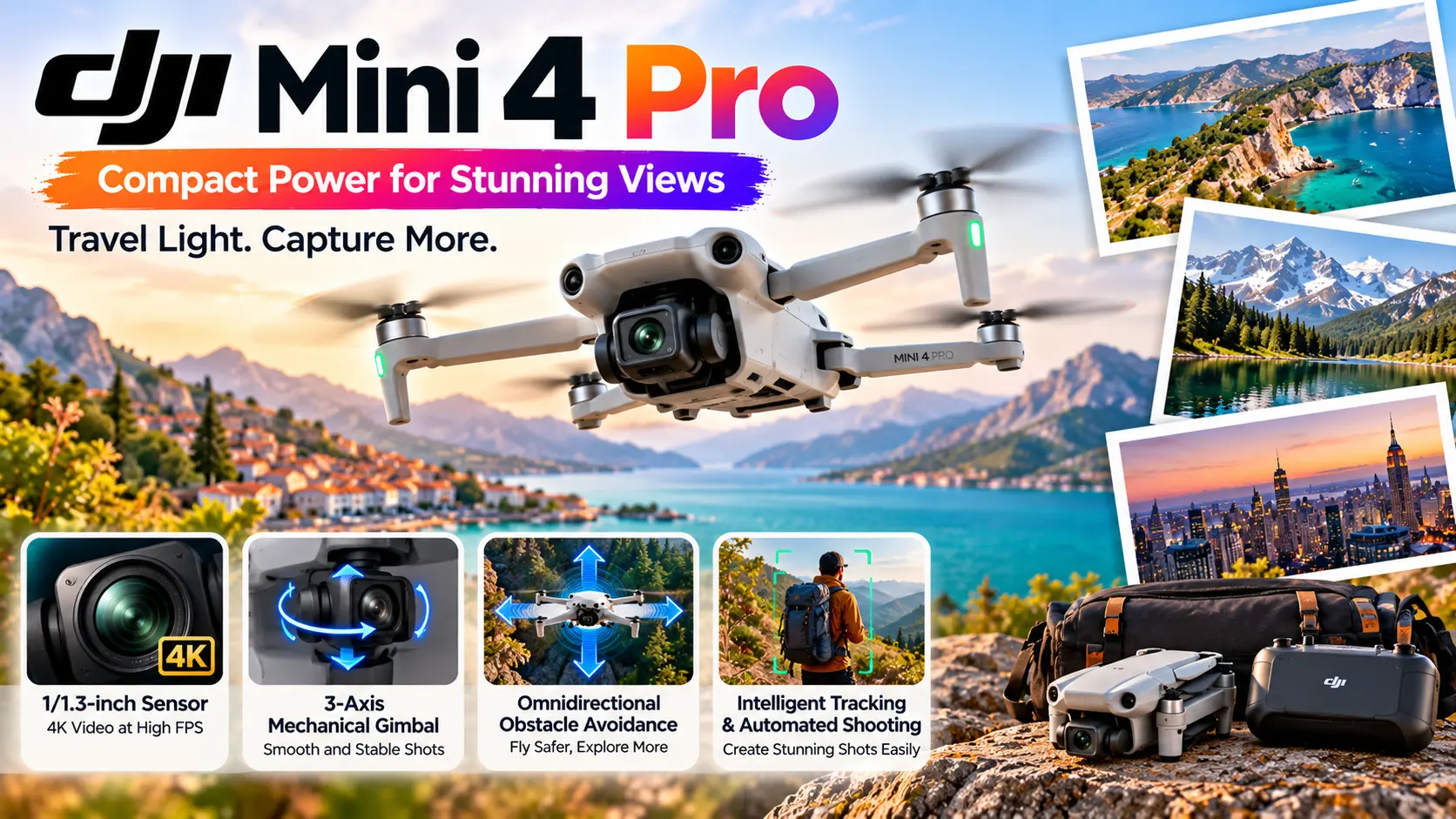
Whether you’re a travel photographer looking to up your game or just take better vacation pics, the DJI Mini 4 Pro is a compact option that offers a lot of imaging power. Its design, although somewhat large for a drone, makes it great for travel, landscape, and social media photography.
Key Features:
- Cameras with 1/1.3-inch sensors that can shoot 4K video at high FPS.
- 3-axis mechanical gimbal.
- Omnidirectional obstacle avoidance.
- Intelligent Tracking and Automated Shooting.
Benefits: The Mini 4 Pro offers advanced imaging power. Images and videos are sharp, and with obstacle sensing, collision risks are lowered. The drone can sense objects in front of, below, and above it. The 4 Pro’s intelligent tracking can fail but is easily fixable. It also has automated shooting modes for more difficult shots.
Best For: Travelers looking for a feature-rich drone while not wanting to carry a large, professional drone.
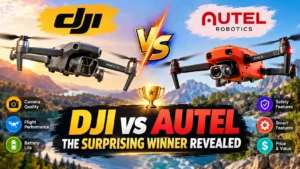
Also Read: DJI vs Autel: The Surprising Winner Revealed
2. DJI Mini 3
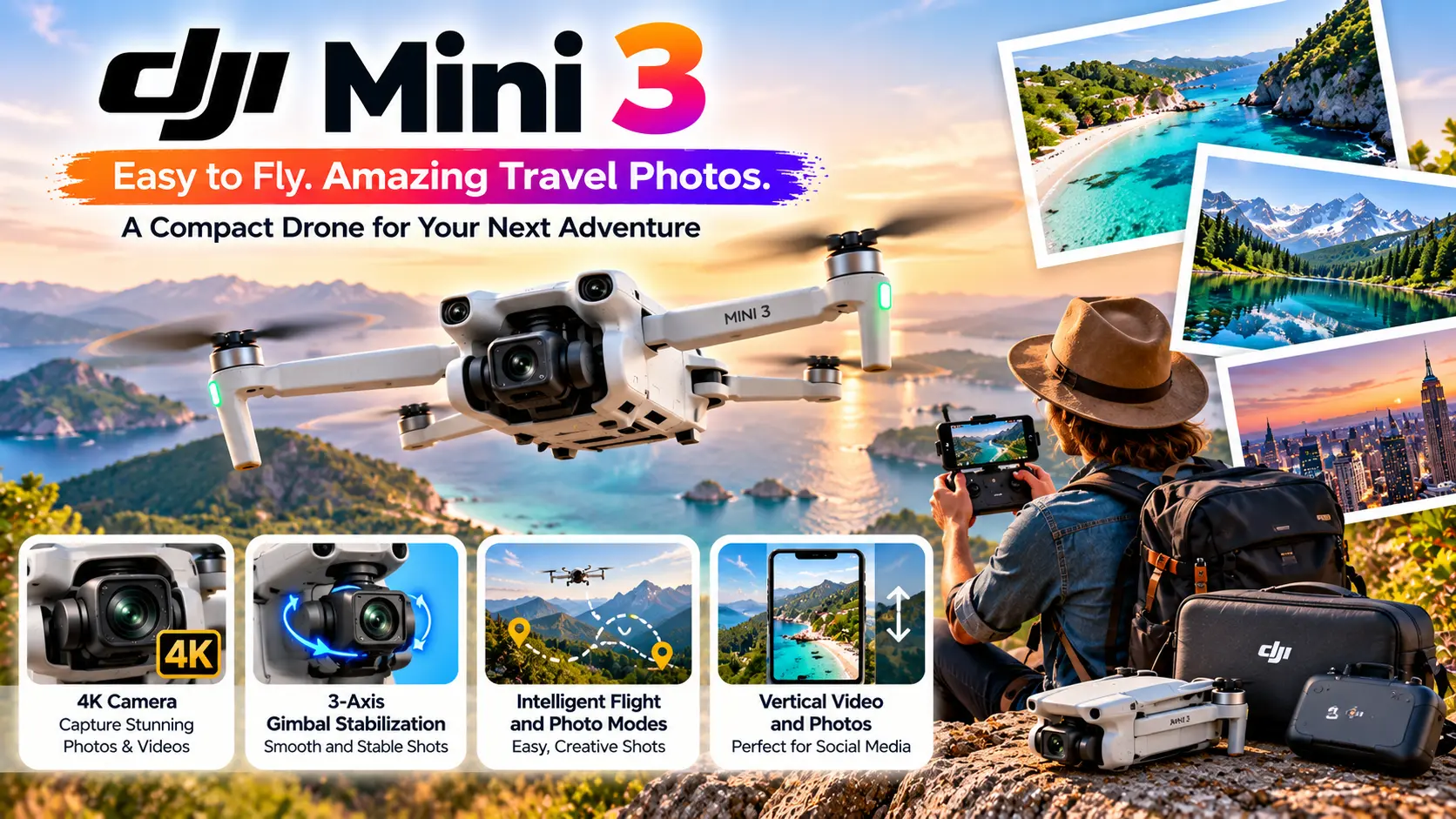
The Mini 3 is a great option for a traveler looking for an easy-to-use drone that can take high-quality photos. Although not as advanced as the Mini 4 Pro, its 4K camera and 3-axis gimbal help make video and images sharp and easy to shoot. This drone is great for vacations and easy to fly.
Key Features:
- 4K camera.
- 3-Axis Gimbal Stabilization.
- Intelligent Flight and Photo Modes.
- Vertical Video and Photos.
Benefits: As mentioned, it is great for vacations. The images and videos that come out are easy to take and sharp. It is a good choice for beginners.
Best for: Beginners and less-frequent photographers interested in a budget-friendly lightweight travel drone.
3. DJI Mini 4K – Best Entry-Level Option
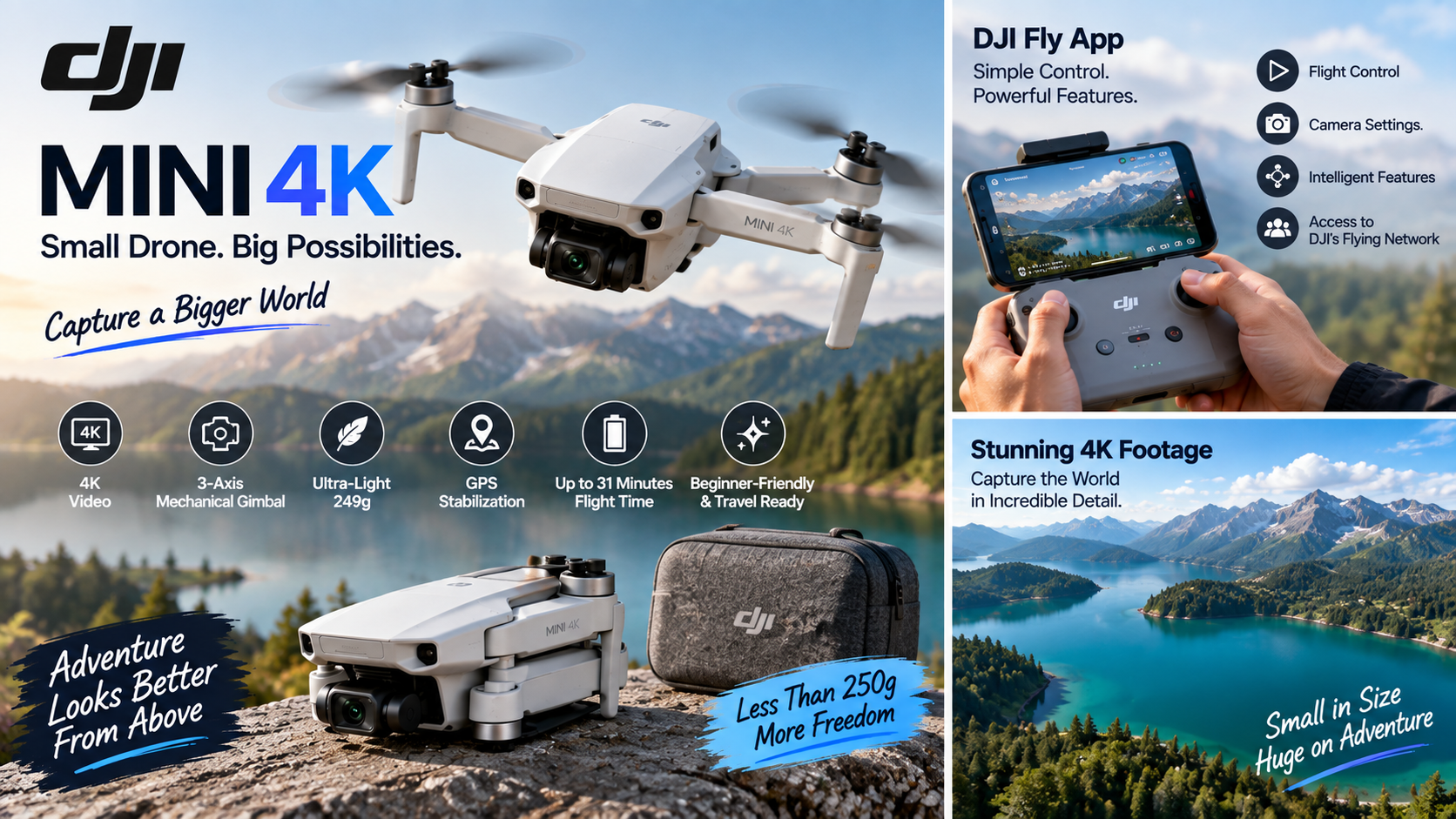
The DJI Mini 4K offers users the opportunity to experience aerial photography without having to pay for more advanced features. It provides a simple, collapsible design and is a great option for beginners to learn the art of aerial photography.
Key Features:
- Recording in 4K.
- 3-axis mechanical gimbal.
- QuickShots.
- Folding and collapsible design.
- App controls for flight and camera.
Benefits: 3-axis mechanical gimbal stabilization and QuickShots help create smoother, more stable videos by automating more complex movements. This is best for vacations where ease of use is more important than other features such as more advanced tracking or comprehensive obstacle sensing.
Best for: First-time drone buyers and vacationers looking to capture basic aerial photos.
4. Autel EVO Nano+ – Best Alternative to DJI
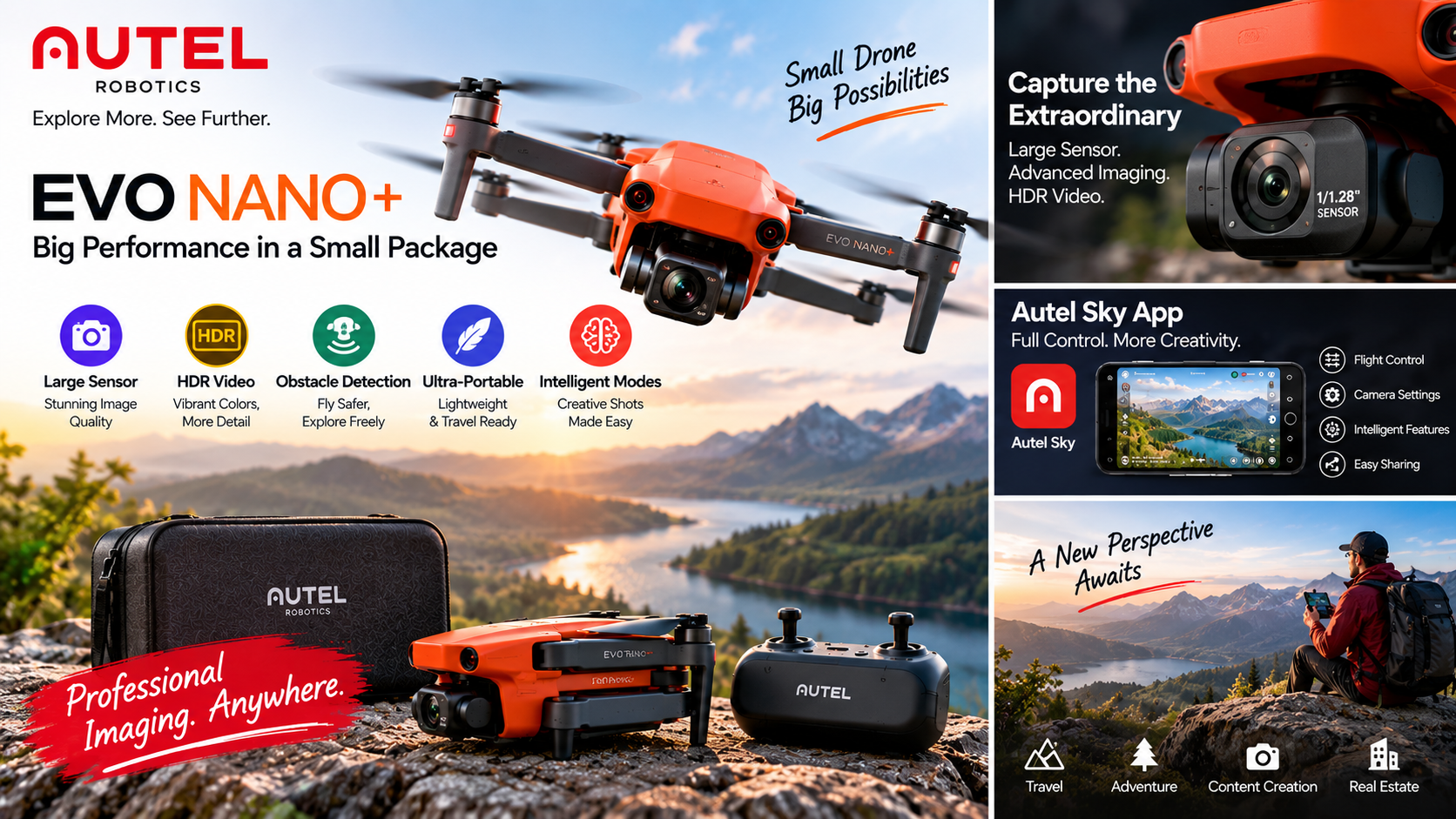
The Autel EVO Nano+ provides a similar design to the DJI Mini 3 Pro, but features a larger camera sensor for improved image quality.
Key Features:
- 1/1.28-inch type camera sensor.
- 20-megapixel stills.
- Three-axis gimbal.
- Obstacle avoidance.
- Smart flight and camera modes.
Benefits: The smaller, collapsible frame makes this drone more travel-friendly, and the larger camera sensor is better for capturing images with better detail in more difficult lighting. Users should check the most recent firmware version and consult their local dealers for service, replacement batteries, and app support before purchasing.
Best for: Photographers looking for an image quality focus with greater portability.
5. HoverAir X1 – Best for Hands-Free Travel Videos
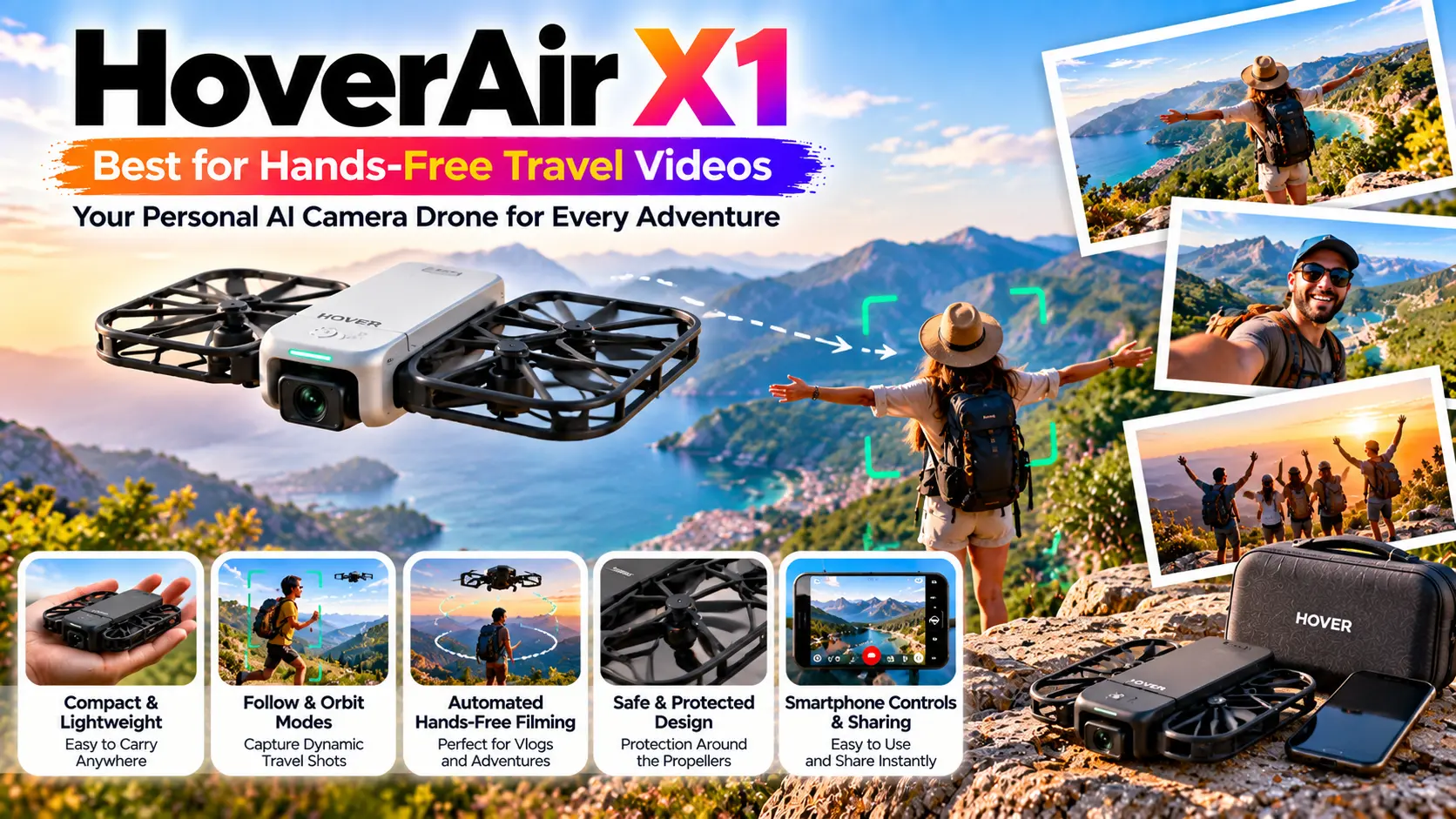
The HoverAir X1 focuses on different elements for travel photography compared to other drones. While most drones rely on a remote control for operation, the X1 uses automated, hands-free technology for filming.
Key features:
- A compact and lightweight frame.
- Automated follow and orbit shooting modes.
- Ability to follow a subject.
- Protection around the propellers.
- Smartphone controls and sharing.
Benefits: Automated filming allows users to capture moving subjects, including travel and lifestyle clips, without having to operate a controller. However, its flight performance and camera capabilities differ from camera-centered drones that have large sensors and three-axis gimbals.
Best for: Travelers and vloggers who prefer selfie-style filming rather than involved aerial photography.
Comparison Table: Best Lightweight Travel Drones
| Drone | Best for | Main advantage | Important consideration |
|---|---|---|---|
| DJI Mini 4 Pro | Premium travel photography | Impressive camera and advanced safety features | More expensive |
| DJI Mini 3 | Everyday travel | Good image quality and portability | Less advanced safety features than the Mini 4 Pro |
| DJI Mini 4K | Beginners | Easy-to-use 4K aerial filming | Fewer intelligent features |
| Autel EVO Nano+ | Alternative to DJI | Compact design and capable camera | Check current support and availability |
| HoverAir X1 | Hands-free videos | Automated self-filming | Different camera and flight capabilities |
Specifications, included accessories, availability, and prices can vary by retailer and package. Ensure you confirm the latest manufacturer’s specifications before buying.
Also Read: Best AI Photo Restoration Tools in 2026: Bring Old Photos Back to Life
What to Look for When Buying
Camera and Stabilization
Beyond the resolution of the sensor, consider factors such as sensor size, dynamic range, and lens quality. Electronic image stabilization (also known as “digital” or “optical” stabilization) can help smooth video, but mechanical stabilization (such as a three-axis mechanical gimbal) can help even more, especially in windy conditions or when capturing moving subjects.
Battery, Charging, and Flight Time
Flight time claims are usually made under ideal, lab-like conditions. Real-life conditions (wind, temperature, flight style, battery condition, etc.) can substantially reduce the flight time. Bringing along a spare battery might not be a bad idea for long trips.
Portability, Wind Resistance, and Travel
Aircraft made for travel usually fold up, but weight isn’t the only factor in determining how well it’ll fit in your bag. Other factors include the size of the carry case and how much other equipment you’ll be traveling with. Aircraft made for travel are usually also more impacted by wind.
Safety and Regulations
To be up to date with the latest regulations for drone use within the U.S. and find out about the airspace where you plan to fly, visit the FAA website. Recreational users must take the TRUST training. Registration and Remote ID requirements depend on the aircraft and how it is used; a sub-250 gram exemption does not automatically exempt a user from all rules. Operating or using a drone in a national park is usually prohibited.
Conclusion
Lightweight travel drones make taking aerial photos and videos fun and easy. If you prefer options with more photography features, the DJI Mini 4 Pro is a solid choice. The DJI Mini 3 and Mini 4K give you flexibility with your budget. The Autel EVO Nano+ is also a great option. If hands-free photography and videography are your thing, the HoverAir X1 is worth considering.
You should always do your own research, comparing camera quality and other features, before you spend your money on Lightweight Travel Drones. It’s also important to think about how your drone will help you capture memories, and about how it will help you do that while keeping your gear manageable.
Frequently Asked Questions
1. What is the best lightweight drone for travel photography?
The DJI Mini 4 Pro is probably the best all-around drone for travel and photography, due to features like end obstacle sensing and stabilization. The DJI Mini 3 and 4K offer good options for the budget conscious.
2. Are lightweight travel drones good for beginners?
Yes, because features like altitude hold and automated flight modes let beginners focus more on controlling the drone and less on flying it. But beginners should always practice flying before flying in populated or obstructed areas.
3. Can I take travel drones on planes in the USA?
Yes, as long as you follow the rules set by your airline and the batteries you are using meet capacity restrictions. Protective packaging is required for lithium batteries. Check your airline for up to date info.
4. Do lightweight drones take good pictures?
Compact drones can take good pictures for blog and social media use. The quality may vary depending on how good the sensor is, the optics, the available lighting, stability, and the workflow of the post-production team. Compact drones may not be able to take photos to the same level as a larger, more professional system.
5. Are small travel drones regulated by the FAA?
A Part 107 remote pilot certificate is usually not required for recreational flying, but in order to fly for recreation you must still obey all FAA rules, including participating in the TRUST training. Registration and Remote ID are determined by your drone and the purpose of your flight. Part 107 applies for all commercial flying.
6. Which travel drone is best for vlogging?
Hover Air X1 is a good option for hands free selfies. For more traditional aerial shots and control, the DJI Mini series would be a better option.