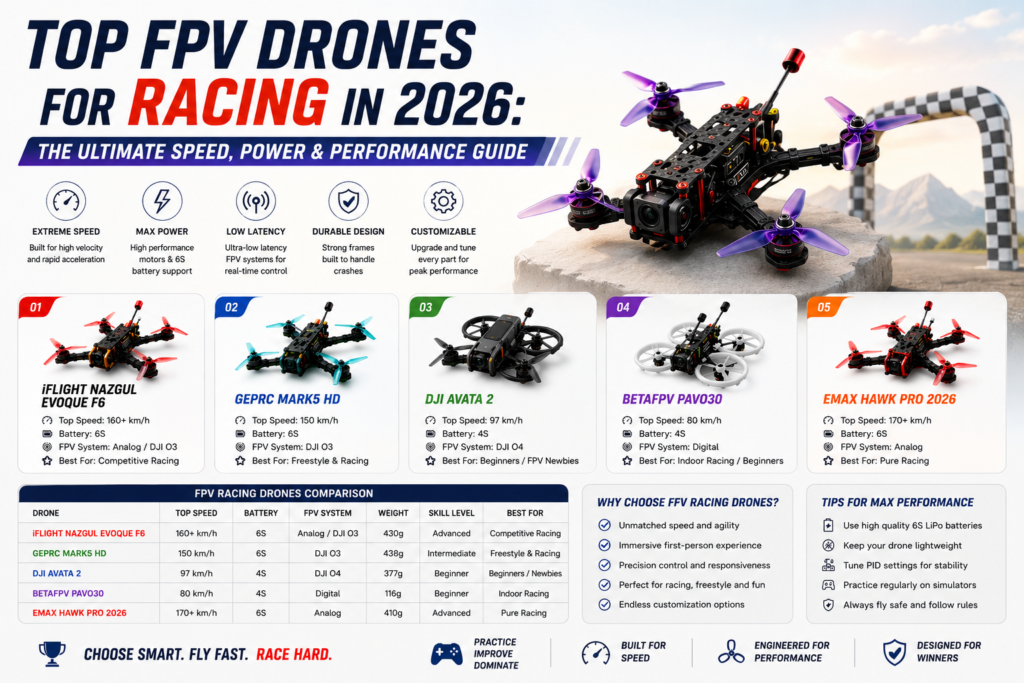
Top FPV Drones for Racing in 2026: The Ultimate Speed, Power & Performance Guide
+
Table of Contents
- 1 What Makes a Great FPV Racing Drone?
- 1.1 Key Features to Look For
- 1.1.1 1. Powerful Motors
- 1.1.2 2. Lightweight Frame
- 1.1.3 3. Low Latency FPV System
- 1.1.4 4. Flight Controller Quality
- 1.1.5 5. Battery Compatibility
- 1.1.6 6. Durability
- 1.2 Benefits of FPV Racing Drones
- 1.2.1 Incredible Speed
- 1.2.2 Real-Time Immersive Flying
- 1.2.3 Precision Control
- 1.2.4 Competitive Gaming Experience
- 1.2.5 Customization
- 1.2.6 Skill Development
- 2 Top FPV Drones for Racing in 2026
- 2.1 1. DJI Avata 2 Racing Edition
- 2.1.1 Key Features
- 2.1.2 Best For
- 2.1.3 Pros
- 2.1.4 Cons
- 2.2 2. iFlight Nazgul Evoque F6
- 2.2.1 Key Features
- 2.2.2 Best For
- 2.2.3 Cons
- 2.3 3. GEPRC Mark5 HD
- 2.3.1 Key Features
- 2.3.2 Best For
- 2.3.3 Pros
- 2.3.4 Cons
- 2.4 4. BetaFPV Pavo30 Racing Build
- 2.4.1 Key Features
- 2.4.2 Best For
- 2.4.3 Pros
- 2.4.4 Cons
- 2.5 5. EMAX Hawk Pro 2026
- 2.5.1 Key Features
- 2.5.2 Best For
- 2.5.3 Pros
- 2.5.4 Cons
- 3 FPV Drone Comparison Table
- 4 Analog vs Digital FPV Systems
- 4.1 Analog FPV
- 4.1.1 Advantages
- 4.1.2 Disadvantages
- 4.2 Digital FPV
- 4.2.1 Advantages
- 4.2.2 Disadvantages
- 4.3 Tips for Choosing the Right FPV Racing Drone
- 4.3.1 Choose Based on Skill Level
- 4.3.2 Consider Upgrade Potential
- 4.3.3 Focus on Durability
- 4.3.4 Battery Selection Matters
- 4.3.5 Check for Spare Parts Availability
- 4.3.6 FPV Racing Safety Tips
- 4.3.7 Proper Use and fit of FPV Goggles
- 4.3.8 Utilize Open Areas to Fly
- 4.3.9 Check Your Drone Before Flying
- 4.3.10 Utilize New Batteries
- 4.3.11 Abide by the Drone Laws in your Area
- 4.4 FPV Racing Drones of the future
- 5 Conclusion
- 5.1 FAQs
- 5.1.1 1. Who has the fastest FPV racing drone in 2026?
- 5.1.2 2. Do FPV drones require a lot of skill to operate?
- 5.1.3 3. What are the pros and cons of the analog and digital FPV systems?
- 5.1.4 4. What is the battery flight duration of FPV racing drones?
- 5.1.5 5. What are the price estimates for FPV racing drones?
- 5.1.6 6. Are FPV racing drones suitable for beginners?
- 5.1.7 7. Is a license required to operate FPV racing drones?
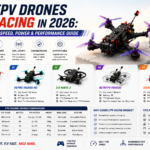
In the past few years, FPV (First-Person View) drone racing has become one of the fastest expanding competitive technology sports across the globe. Looking ahead, FPV racing drones in 2026 will be even faster, smarter, and more powerful, thanks to the integrated cutting-edge motors, optimized frames, advanced digital control systems, and ultra-low latency.
FPV drones can be used for leisure or professional racing. If you want to enter the drone racing scene, or are a seasoned drone racing veteran, choosing the right FPV drone can significantly elevate your skills, depending on how exactly you would be using it. Modern FPV racing drones are constructed to have extreme maneuverability, exceptional control, and extraordinary acceleration. Because of these features, they are perfect for racing circuits, freestyle flying, and advanced competitive tournaments.
The subsequent sections will show you the best FPV drones for racing in 2026, their advantages, key characteristics, and how they stack up against the competition.
What Makes a Great FPV Racing Drone?
Before you opt for any FPV racing drone, you need to have a full understanding as to why one racing drone might be better than another.
Key Features to Look For
1. Powerful Motors
Brushless Motors that have high KV ratings are a better choice because they offer quick acceleration and great maneuverability during races.
2. Lightweight Frame
When considering racing drones, look for carbon fiber frames, as they can absorb crashes and impacts without adding excessive weight to the drone.
3. Low Latency FPV System
Integrating the newest digital FPV systems, such as the DJI O4 or Walksnail, can capture clear images without a delay.
4. Flight Controller Quality
Flight controllers of the current era improve modern drones in terms of stability, great responsiveness, and more flexibility for tuning.
5. Battery Compatibility
Racing drones typically run on 4S or 6S LiPo batteries that allow them to reach peak speed and flight performance.
6. Durability
Having a sturdy structure and frame is important for racing drones as they often crash during practice and racing events.
Also Read- Gaming and FPV Drones – The Complete Guide to the Fastest Type of Fun For Gamers
Benefits of FPV Racing Drones
FPV drones offer far more than just speed. Here are the major benefits of modern racing drones in 2026.
Incredible Speed
The top-performing FPV racing drones can reach speeds of up to 150 km/h.
Real-Time Immersive Flying
FPV goggles build a bridge between the pilot and the drone, allowing users to see things from the pilot’s point of view.
Precision Control
Low Latency systems combined with advanced controllers allow for an incredibly accurate means to capture racing tracks.
Competitive Gaming Experience
FPV drone racing is a unique hobby that allows players to combine gaming and engineering with real-life piloting and racing.
Customization
FPV racing offers the means to pilots to change the performance of their racing drone to their liking by adjusting their frame, antennas, cameras, motors and propellers.
Skill Development
Flying at high speeds helps develop fine motor skills and can also help with technical skills, such as troubleshooting and control.
Top FPV Drones for Racing in 2026
1. DJI Avata 2 Racing Edition
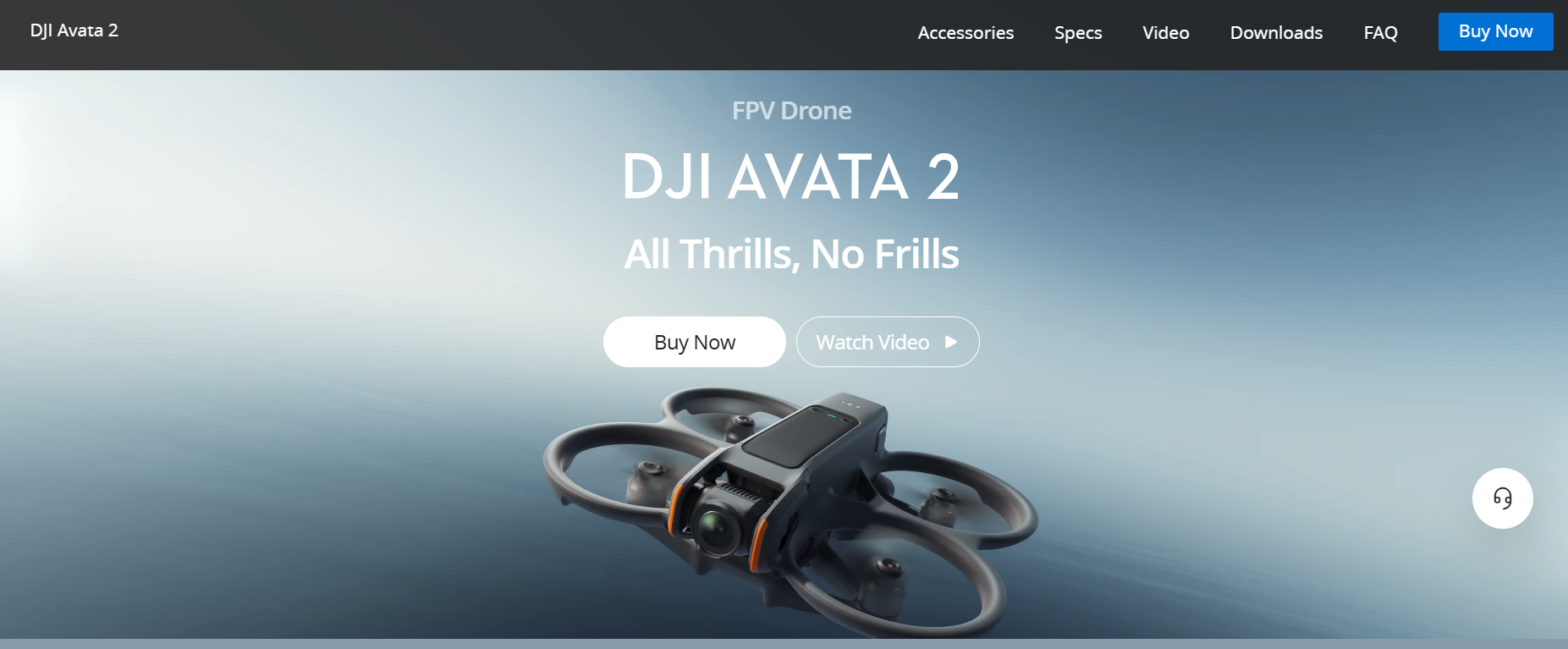
The DJI Avata 2 Racing Edition combines beginner-friendly controls with impressive speed and digital FPV quality.
Key Features
- DJI O4 digital transmission
- 4K stabilized camera
- Low-latency video feed
- Smart flight modes
- Strong obstacle sensing
Best For
- Beginners
- Casual racers
- Cinematic FPV flying
Pros
- Easy to control
- Excellent video quality
- Reliable digital connection
Cons
- Less customizable
- Slightly heavier than custom racers
2. iFlight Nazgul Evoque F6
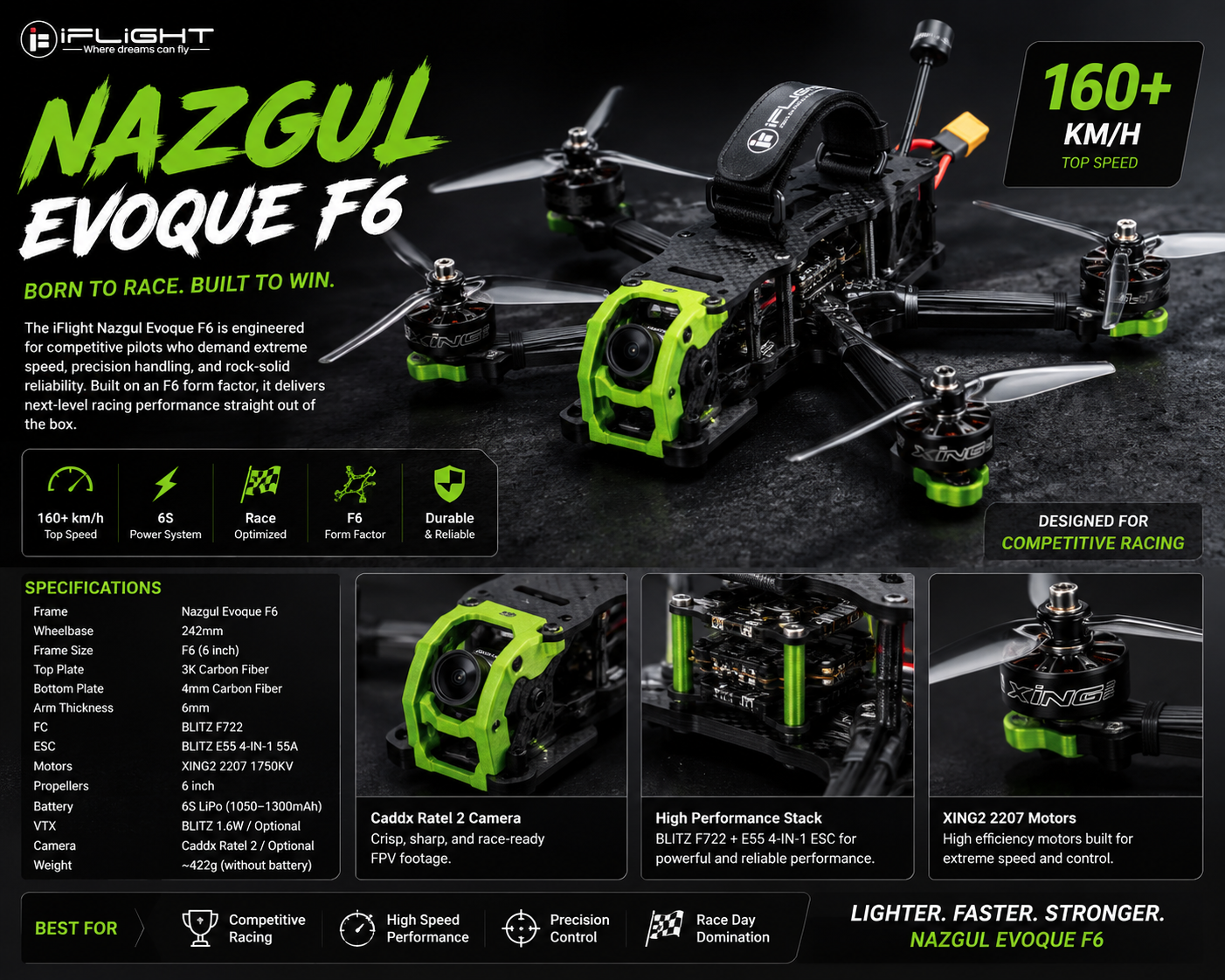
The iFlight Nazgul Evoque F6 is one of the most powerful FPV racing drones available in 2026.
Key Features
- Carbon fiber racing frame
- XING motors
- Excellent cooling
- Smooth control
Best For
- Advanced racers
- Pros
- High speed
- Durable
- Easily adjustable
Cons
- Higher maintenance
3. GEPRC Mark5 HD
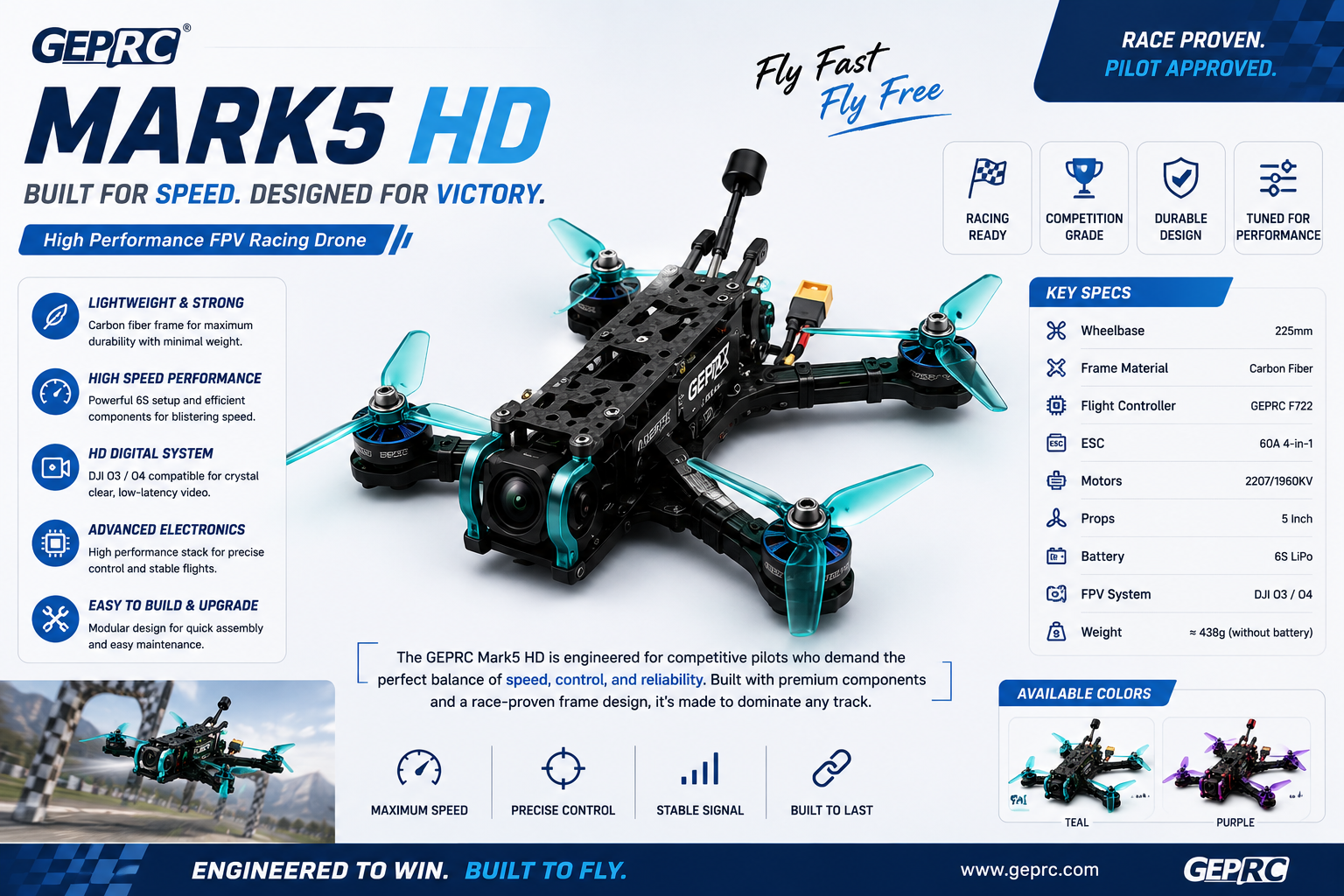
Professionals in FPV racing and freestyle prefer the GEPRC Mark5 HD.
Key Features
- DJI O4
- Lightweight
- High-speed brushless motors
Best For
- All racing levels
Pros
- High stability
- Strong video transmission
Cons
- High-speed drain
4. BetaFPV Pavo30 Racing Build
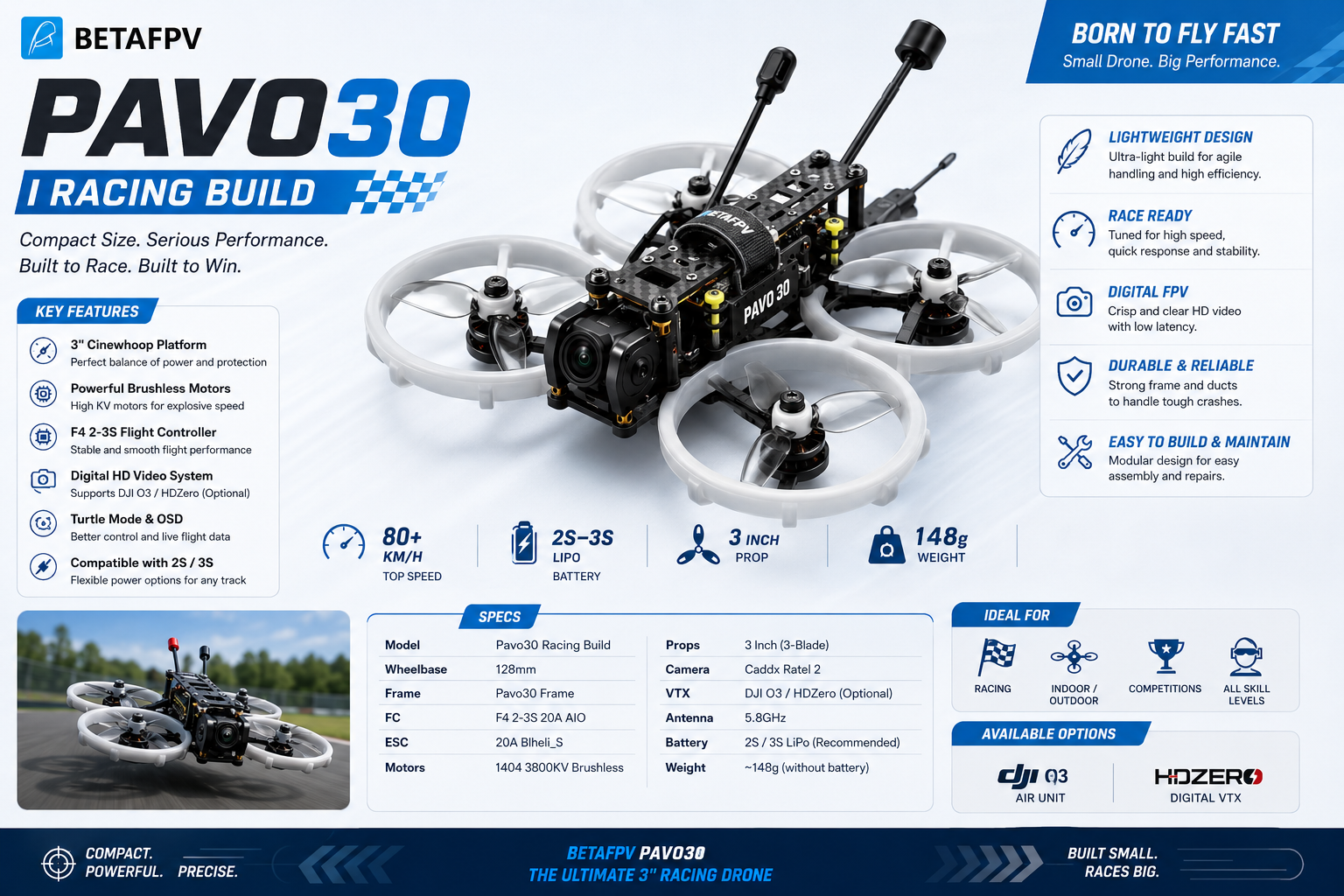
This offers compact racing performance for those who prefer having smaller drones.
Key Features
- Lightweight cinewhoop
- Better control
- Durable prop prop protection
Best For
- Beginners
- Indoor racing
- Small outdoor tracks
Pros
- Portable
- Safe design
Cons
- Lower speed
5. EMAX Hawk Pro 2026
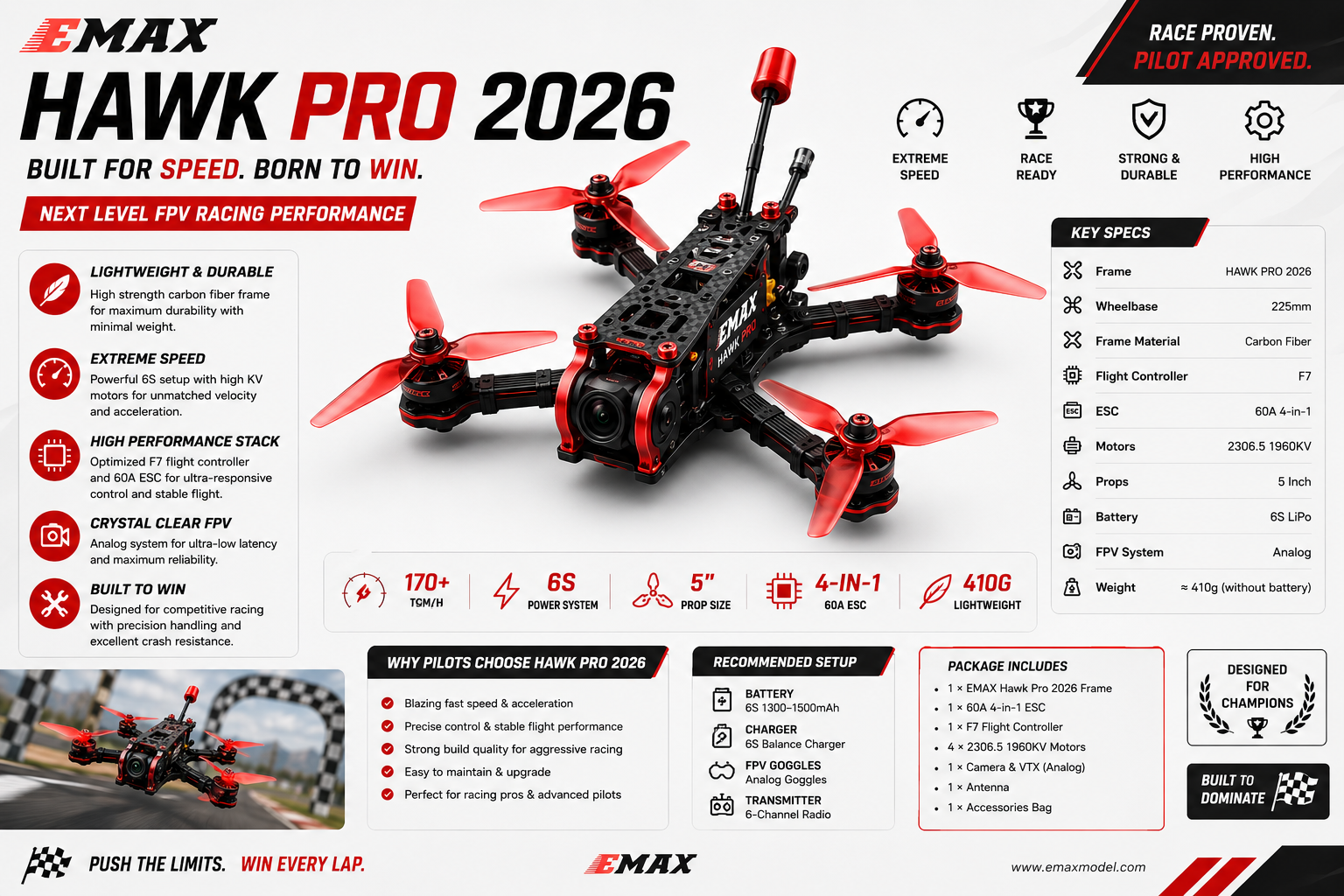
This is specifically for the FPV racing competitors.
Key Features
- Racing motors with a higher KV
- A lightweight aerodynamic structure
- An optimized ESC system
- Rapid acceleration
Best For
- The racing professional
- Pilots who are speed-oriented
Pros
- Incredibly responsive
- Ready-to-race tuning
- Great ability for cornering
Cons
- Fewer features for beginners
FPV Drone Comparison Table
| Drone Model | Top Speed | Best For | Battery Type | FPV System | Skill Level |
| DJI Avata 2 Racing Edition | 97 km/h | Beginners | 4S | DJI O4 | Beginner |
| iFlight Nazgul Evoque F6 | 160+ km/h | Competitive Racing | 6S | Analog/Digital | Advanced |
| GEPRC Mark5 HD | 150 km/h | Freestyle & Racing | 6S | DJI O4 | Intermediate |
| BetaFPV Pavo30 | 80 km/h | Indoor Racing | 4S | Digital | Beginner |
| EMAX Hawk Pro 2026 | 170 km/h | Pure Racing | 6S | Analog | Advanced |
Analog vs Digital FPV Systems
The racing performance relies on the choice of either analog or digital FPV systems.
Analog FPV
Advantages
- Cost benefit
- Significantly lighter setup
Disadvantages
- Greater signal interference
Digital FPV
Advantages
- HD video quality
- Better signal clarity
- Improvements in long-distance flying
Disadvantages
- More expensive
- Slightly higher latency
In 2026, digital FPV systems with notable latency improvement have become the industry standard.
Tips for Choosing the Right FPV Racing Drone
Choose Based on Skill Level
More stable drones with integrated safety features are ideal for beginner pilots.
Consider Upgrade Potential
Modular drones allow easier repairs and upgrades.
Focus on Durability
For racing, a carbon fiber frame is a good choice.
Battery Selection Matters
6S batteries provide more power and speed, while 4S batteries provide a better beginner control.
Check for Spare Parts Availability
Most drone manufacturers build in a pathway to support aftermarket replacement parts.
FPV Racing Safety Tips
FPV racing should always start with ensuring safety.
Proper Use and fit of FPV Goggles
Make sure to always have a clear vision and a secure fit of the FPV Goggles at all times before flying.
Utilize Open Areas to Fly
Stay away from congested areas and closed airspace.
Check Your Drone Before Flying
Make sure to check the propellers before each flight and to always check the battery and all the wiring to the motors.
Utilize New Batteries
LiPo batteries are known for having a higher risk of becoming dangerous and are prone to maybe exploding.
Abide by the Drone Laws in your Area
Comply with all the laws regarding drones in your area.
FPV Racing Drones of the future
FPV racing has given many new technologies and advancements to the rapidly changing field of drone racing that has much evolution and advancements to come in many years, with AI within the drones giving the drones the ability to do flight stabilization and with the advancement of carbon fiber, allowing for lighter and stronger drones which will allow for even longer battery life and digital systems giving the drones even faster speeds.
Conclusion
FPV race drones will be faster in the future, allowing for a better experience whether in 2026 or in the present day.
Beginners looking for easy controls will be able to find a racing drone, as well as a professional racer hoping to find a high-speed racing drone.
The DJI Avata 2 Racing Edition is a great choice for a beginner, while the iFlight Nazgul Evoque F6 and EMAX Hawk Pro are great for professional drones. The GEPRC Mark5 HD is a great choice for a good racing drone, as well as having more freestyle performance.
Your drone racing interests, budget, and skill level play a role in the FPV racing drone you decide to buy. Having a proper setup can make FPV racing a fully satisfying and exhilarating hobby due to the advanced technology involved.
FAQs
1. Who has the fastest FPV racing drone in 2026?
FPV racing drones that can achieve speeds over 160 km/h include the EMAX Hawk Pro 2026 and the iFlight Nazgul Evoque F6.
2. Do FPV drones require a lot of skill to operate?
FPV drones do require some amount of skill, however, there are beginner FPV kits and simulators that help.
3. What are the pros and cons of the analog and digital FPV systems?
Less latency is a benefit of analog systems, however, digital systems offer better video quality and a more reliable clear signal.
4. What is the battery flight duration of FPV racing drones?
FPV racing drones can fly for 4 to 10 minutes, which mostly depends on the size of the battery and the overall racing speed of the drone.
5. What are the price estimates for FPV racing drones?
FPV racing drones generally sell between $300 and $1500, with $300 being a good entry level drone price, and $1500 being the price for the professional racing kits.
6. Are FPV racing drones suitable for beginners?
Yes, the DJI Avata 2 and the BetaFPV Pavo30 make excellent beginner drones.
7. Is a license required to operate FPV racing drones?
National/regional FPV racing laws vary, so it is best to look at the policy of the local governing authority.