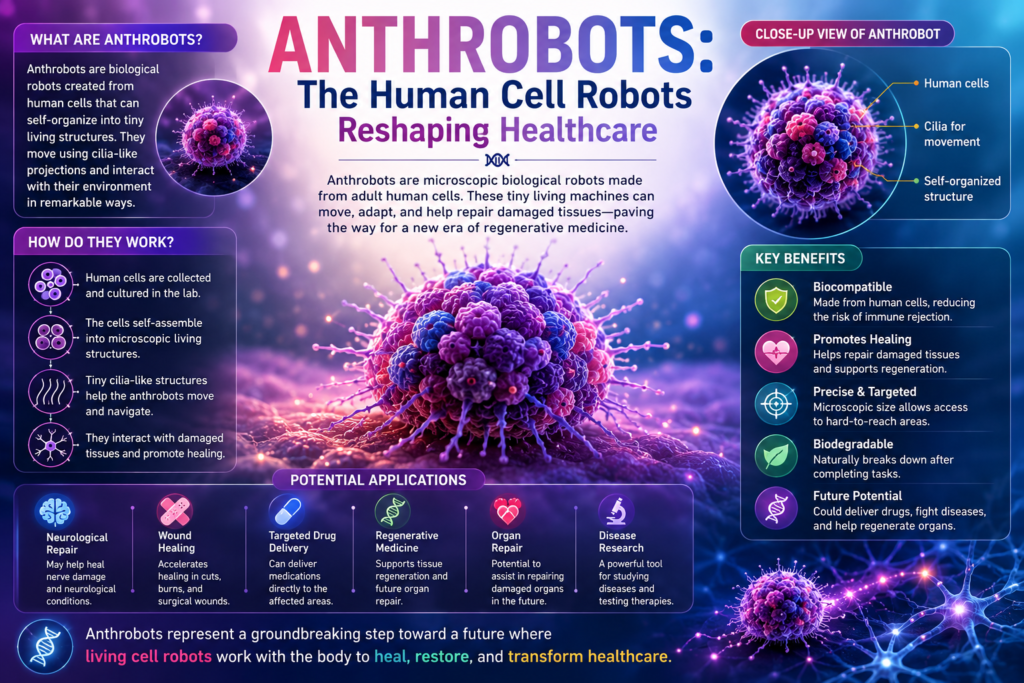
Anthrobots: The Human Cell Robots Reshaping Healthcare
+
Table of Contents
- 1 What are Anthrobots?
- 1.1 How do biological robots function?
- 1.2 Anthrobots: A New Technology
- 1.2.1 1. Construction with Human Cells
- 1.2.2 2. Self-Assembly
- 1.2.3 3. Microscopic Size
- 1.2.4 4. Natural Movement
- 1.2.5 5. Regenerative Capacity
- 1.2.6 6. Naturally Decomposing Design
- 1.3 Features and Benefits for Biological Robotics
- 1.4 Benefits of Biological Robots in Healthcare
- 1.4.1 Enhanced Tissue Repair
- 1.4.2 Improved Treatment
- 1.4.3 Improved Biocompatibility
- 1.4.4 Future Drug Delivery Systems
- 1.4.5 Support for Personalized Medicine
- 1.4.6 Environmentally friendly technology
- 1.4.7 Potential Applications
- 1.4.8 Neurological Healing
- 1.4.9 Wound Recovery
- 1.4.10 Regenerative Medicine
- 1.4.11 Targeted Drug Delivery
- 1.4.12 Disease Research
- 1.4.13 Organ Repair
- 1.5 Anthrobots vs Traditional Medical Robots
- 1.6 Challenges and Limitations
- 1.6.1 Research Is Still Ongoing
- 1.6.2 Regulatory Approval
- 1.6.3 Manufacturing Complexity
- 1.6.4 Long-Term Safety Evaluation
- 1.6.5 Economic Considerations
- 1.7 The Future of Anthrobots
- 2 Conclusion
- 2.1 Frequently Asked Questions
- 2.1.1 1. What are Anthrobots?
- 2.1.2 2. How are they different from traditional robots?
- 2.1.3 3. What are the main benefits of biological robots?
- 2.1.4 4. Are Anthrobots used in hospitals currently?
- 2.1.5 5. Can these biological robots repair tissue?
- 2.1.6 6. Why do scientists take an interest in Anthrobots?
Anthrobots are some of the latest biotechnologies and have the potential to change the face of healthcare; specifically, regenerative medicine, repair of body tissues, and the customization of personal healthcare.
These biological ‘robots’ are not designed and constructed using metals like traditional robots. Instead, they are built using the adult human cells. The cells have the ability to freely move and interact with the tissues and are believed to assist and/or heal the tissues and/or the body. Because of this, researchers have dedicated much of their time to studying the robots. Anthrobots will soon be at the forefront of a way to change and assist the health and problems of people globally.
Anthrobots will represent a breakthrough in biology, engineering, and medical sciences and will open new avenues to care for and treat patients.
What are Anthrobots?
Anthrobots are microscopic robots that are biological and were built using the human adult airway cells. Researchers have shown that when the adult airway cells are put into specific conditions in the lab, they are able to spontaneously assemble into small living structures that are capable of freely moving and interacting.
These biological robots are much different than other robotic devices. Anthrobots do not have circuitry embedded in them, nor do they have any outer mechanical power sources. Biological robots are much more autonomous than the typical robotic systems used in medicine.
Anthony and his colleagues believe that these living cell robots will soon be able to constructively assist and/or heal tissues, and deliver treatment and medicines.
How do biological robots function?
Biological robots derive their functionality from the innate behavior of human cells. When scientists place human cells in a specific environment, they are able to control the conditions such that the cells themselves organize and form structures.
These biological robots contain hair-like organelles called cilia. Cilia are capable of coordinated movement, allowing cells to travel across surfaces and interact with tissues.
Studies in laboratories have demonstrated that Anthrobots support the healing of damaged neural tissues. Although the studies are ongoing, biological robots may offer a pathway to repairing injuries and restoring cellular dysfunction in the future.
Anthrobots: A New Technology
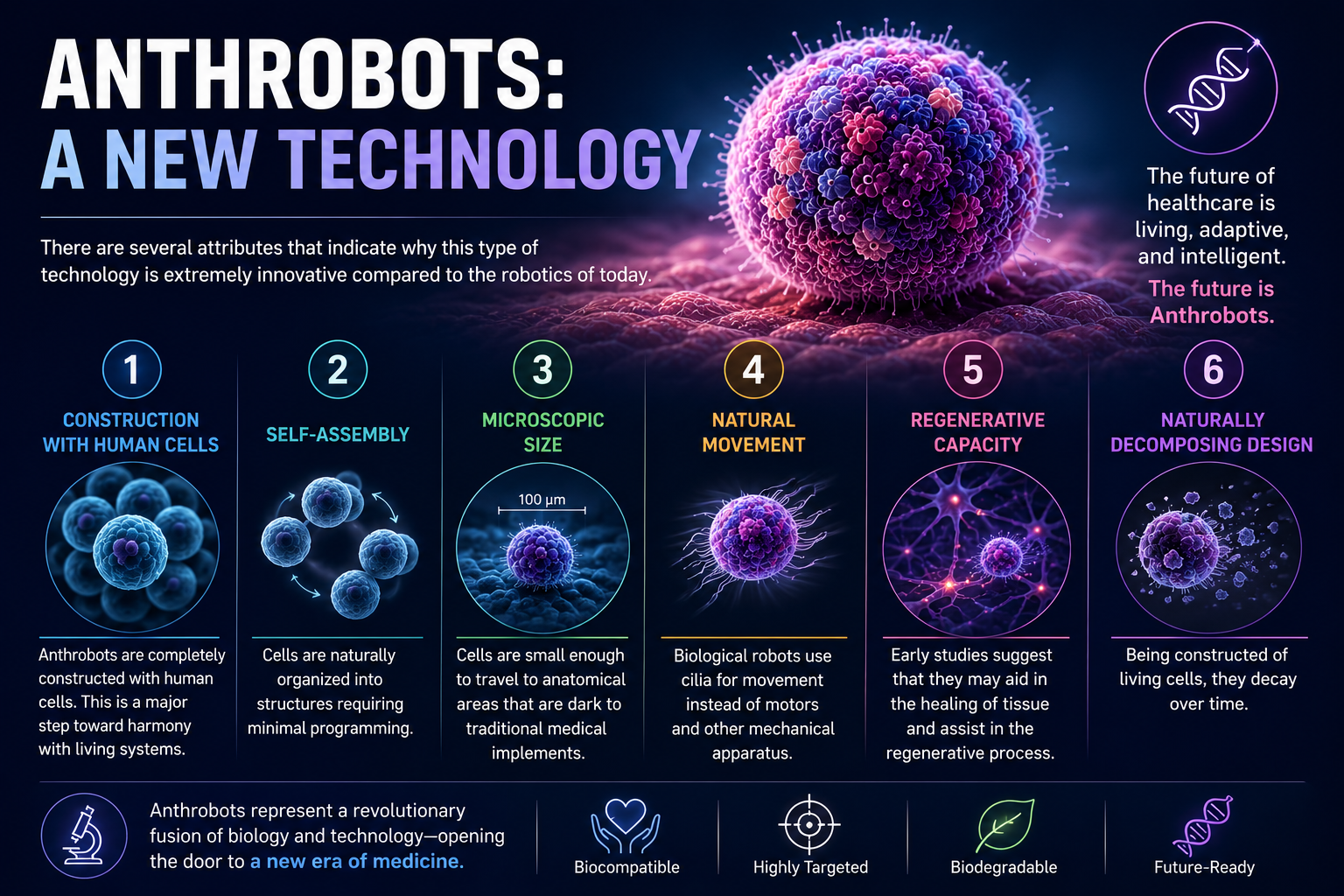
There are several attributes that indicate why this type of technology is extremely innovative compared to the robotics of today.
1. Construction with Human Cells
Anthrobots are completely constructed with human cells. This is a major step toward harmony with living systems.
2. Self-Assembly
Cells are naturally organized into structures requiring minimal programming.
3. Microscopic Size
Cells are small enough to travel to anatomical areas that are dark to traditional medical implements.
4. Natural Movement
Biological robots use cilia for movement instead of motors and other mechanical apparatus.
5. Regenerative Capacity
Early studies suggest that they may aid in the healing of tissue and assist in the regenerative process.
6. Naturally Decomposing Design
Being constructed of living cells, they decay over time.
Features and Benefits for Biological Robotics
| Feature | Benefit |
|---|---|
| Human-built | Better biocompatibility |
| Self-organizing | Less complicated for engineers |
| Microscopic | Targets tissues with greater accuracy |
| Natural | Enables easier movement within the body |
| Regenerative | Promotes tissue healing |
| Biodegradable | Safer for long-term human health |
| Adaptive | Better interaction with living systems |
| Non-mechanical | Lower risk of mechanical failure |
Benefits of Biological Robots in Healthcare
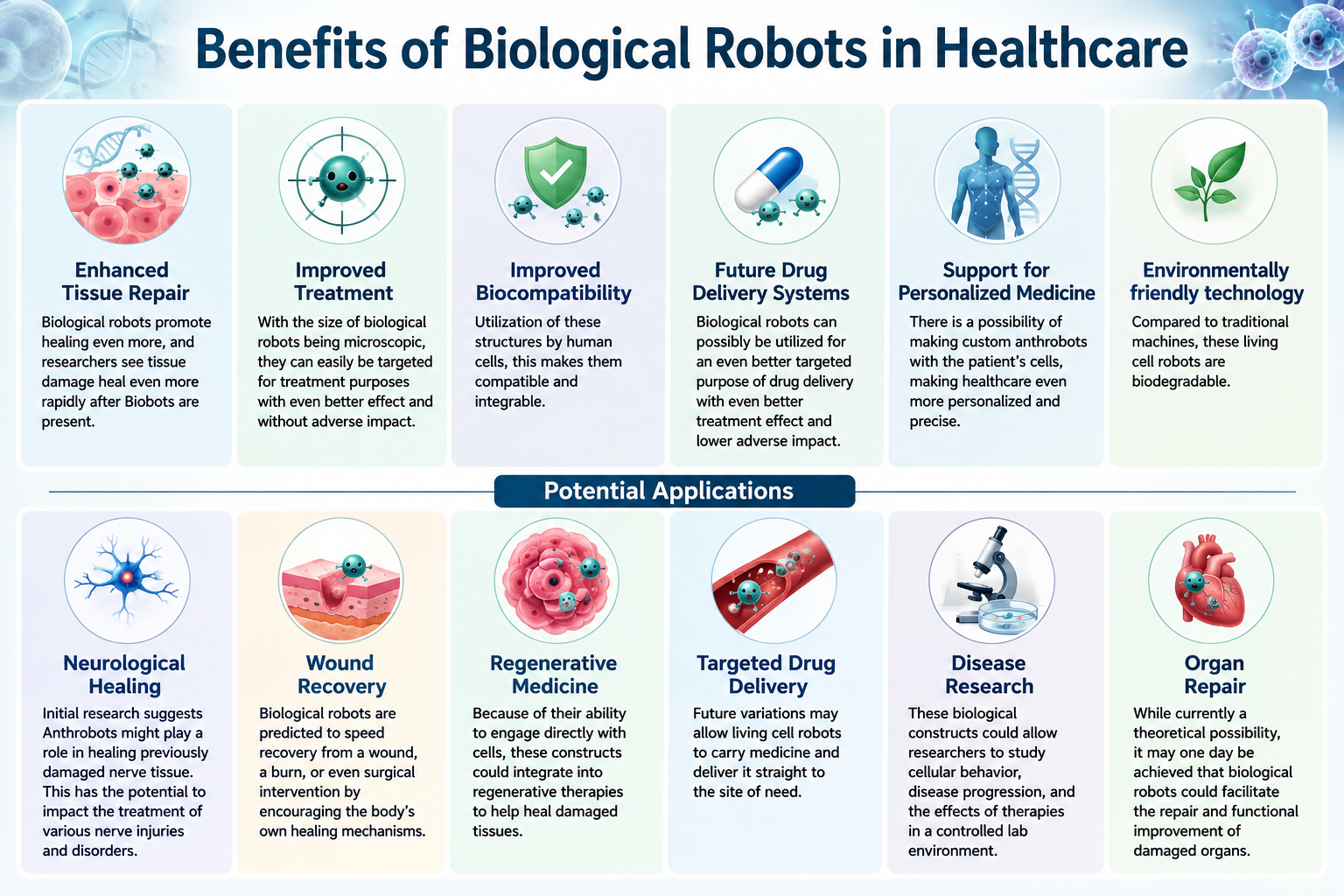
Enhanced Tissue Repair
Biological robots promote healing even more, and researchers see tissue damage heal even more rapidly after Biobots are present.
Improved Treatment
With the size of biological robots being microscopic, they can easily be targeted for treatment purposes with even better effect and without adverse impact.
Improved Biocompatibility
Utilization of these structures by human cells, this makes them compatible and integrable.
Future Drug Delivery Systems
Biological robots can possibly be utilized for an even better targeted purpose of drug delivery with even better treatment effect and lower adverse impact.
Support for Personalized Medicine
There is a possibility of making custom anthrobots with the patient’s cells, making healthcare even more personalized and precise.
Environmentally friendly technology
Compared to traditional machines, these living cell robots are biodegradable.
Potential Applications
A wide range of uses in the medical field are being considered for this technology.
Neurological Healing
Initial research suggests Anthrobots might play a role in healing previously damaged nerve tissue. This has the potential to impact the treatment of various nerve injuries and disorders.
Wound Recovery
Biological robots are predicted to speed recovery from a wound, a burn, or even surgical intervention by encouraging the body’s own healing mechanisms.
Regenerative Medicine
Because of their ability to engage directly with cells, these constructs could integrate into regenerative therapies to help heal damaged tissues.
Targeted Drug Delivery
Future variations may allow living cell robots to carry medicine and deliver it straight to the site of need.
Disease Research
These biological constructs could allow researchers to study cellular behavior, disease progression, and the effects of therapies in a controlled lab environment.
Organ Repair
While currently a theoretical possibility, it may one day be achieved that biological robots could facilitate the repair and functional improvement of damaged organs.
Also Read- AMD Ryzen AI Max: Revolutionary AI Power in Your Pocket
Anthrobots vs Traditional Medical Robots
| Aspect | Anthrobots | Traditional Medical Robots |
|---|---|---|
| Construction Material | Human cells | Metal and electronics |
| Size | Microscopic | Larger mechanical systems |
| Energy Source | Cellular activity | External power |
| Biocompatibility | High | Moderate |
| Biodegradability | Yes | No |
| Adaptability | Natural biological response | Programmed response |
| Primary Focus | Regenerative medicine | Surgical assistance |
Challenges and Limitations
Despite the potentially huge impact of Anthrobots, some challenges do remain.
Research Is Still Ongoing
Currently, most biological robots, including Anthrobots, are laboratory research. Considerable research is required before human clinical use.
Regulatory Approval
Biological robots are a completely new class of medical technology. As a result, they will be subject to a great deal of regulatory scrutiny.
Manufacturing Complexity
Creating a large quantity of living cell robots that are consistent and safe poses a large number of technical challenges.
Long-Term Safety Evaluation
There is much to be understood and assessed concerning the safety and behavior of these systems once implemented in the human body and used over long periods.
Economic Considerations
The maturing technology will bring down the high cost of initial development and production.
The Future of Anthrobots
The outlook regarding Anthrobots is overwhelmingly positive. Research and development will continue to identify more uses in the fields of treatment, disease control, and more.
Scientists and researchers are investigating the technology to ensure their safety and effectiveness. Future iterations may be designed to target specific medical conditions.
The safety and effectiveness of Anthrobots as living systems will bring positive improvements to the health and recovery of patients. Their unique safety and their potential to grow and change with medicine make them a great new addition to the fastest-growing industries on the planet.
Conclusion
The transformation of living cells into bio-robotic systems represents a truly incredible breakthrough in Biological medicine. Although the technology is in its infancy, the impact it will have on the world will be immeasurable.
The addition of biological robotics and the potential it brings will take healthcare to a different level and help address the challenges faced in medicine.
Frequently Asked Questions
1. What are Anthrobots?
Anthrobots are microscopic biological systems made from adult human cells that can move and act in their surroundings.
2. How are they different from traditional robots?
Anthrobots are created from living human cells.
3. What are the main benefits of biological robots?
Potential benefits may include the development of regenerative medicine, targeted treatments, and improved biological versatility and compatibility.
4. Are Anthrobots used in hospitals currently?
No, research is in the experimental stage, and there are no current clinical uses.
5. Can these biological robots repair tissue?
Preliminary research studies may show that they could stimulate tissue repair, specifically in the case of damaged neural tissues.
6. Why do scientists take an interest in Anthrobots?
Scientists deem them useful for the advancement of regenerative medicine and even personalized medicine, and the development of future treatment techniques that may function harmoniously in the human body.