Top Drone Startups in the USA: Powerful Companies to Watch in 2026
+
Table of Contents
- 1 What Makes a Drone Startup Important in 2026?
- 2 Top Drone Startups to Watch in 2026
- 2.1 1. Skydio
- 2.1.1 Key features
- 2.1.2 Benefits
- 2.2 2. Zipline
- 2.2.1 Key features
- 2.2.2 Benefits
- 2.3 3. Wing
- 2.3.1 Key features
- 2.3.2 Benefits
- 2.4 4. Shield
- 2.4.1 Key features
- 2.4.2 Benefits
- 2.5 5. Anduril
- 2.5.1 Key features
- 2.5.2 Benefits
- 3 U.S. Drone Startups Compared
- 3.1 Benefits of the Top Drone Startups
- 3.1.1 Increased velocity
- 3.1.2 Decreased costs
- 3.1.3 Improved data
- 3.1.4 Increased safety
- 3.1.5 Infinite flexibility
- 3.2 The U.S. Drone Startups Trends
- 4 Conclusion
- 4.1 FAQs
- 4.1.1 1. What are the Top Drone Startups in the USA?
- 4.1.2 2. Which drone companies use artificial intelligence?
- 4.1.3 3. Is drone delivery available in the USA?
- 4.1.4 4. What are drone apps used for?
- 4.1.5 5. Why are autonomous drones important?
- 4.1.6 6. What is the potential of drone startups in America?
Drones can now be used for a variety of commercial purposes that go beyond hobby and aerial photography. These purposes range from aerial transport and logistics to surveying and inspection of civilian and military infrastructure, public safety and response, agriculture and rural development, and various other emergency response activities.
Some of the most innovative and fastest-growing Drone Startups in the industry integrate software and computer technology with mechanical hardware and drone systems to develop end-to-end solutions for various industries and commercial activities. Compared to other modes of transport and systems, drones are well positioned to address various challenges of economic activities and public safety and response.
What Makes a Drone Startup Important in 2026?
A drone startup can no longer be defined as a hardware company. Innovation is focused on designing end-to-end solutions that integrate hardware with a host of other advanced complementary technologies.
The most innovative drone companies of the year integrated the following technologies:
- High-tech and intelligent imaging systems
- Artificial Intelligence and other computer-based vision systems
- Navigation and management of drone fleets
- Obstacle avoidance and other advanced systems for autonomous flight
- Other systems for data and technical management of drone flights
- Defense and other systems for public safety
- Inspection of critical infrastructures
- Mapping
The systems designed by the most innovative companies of the year integrated all the capabilities required to serve the needs of the commercial and public safety sectors.
Top Drone Startups to Watch in 2026
1. Skydio
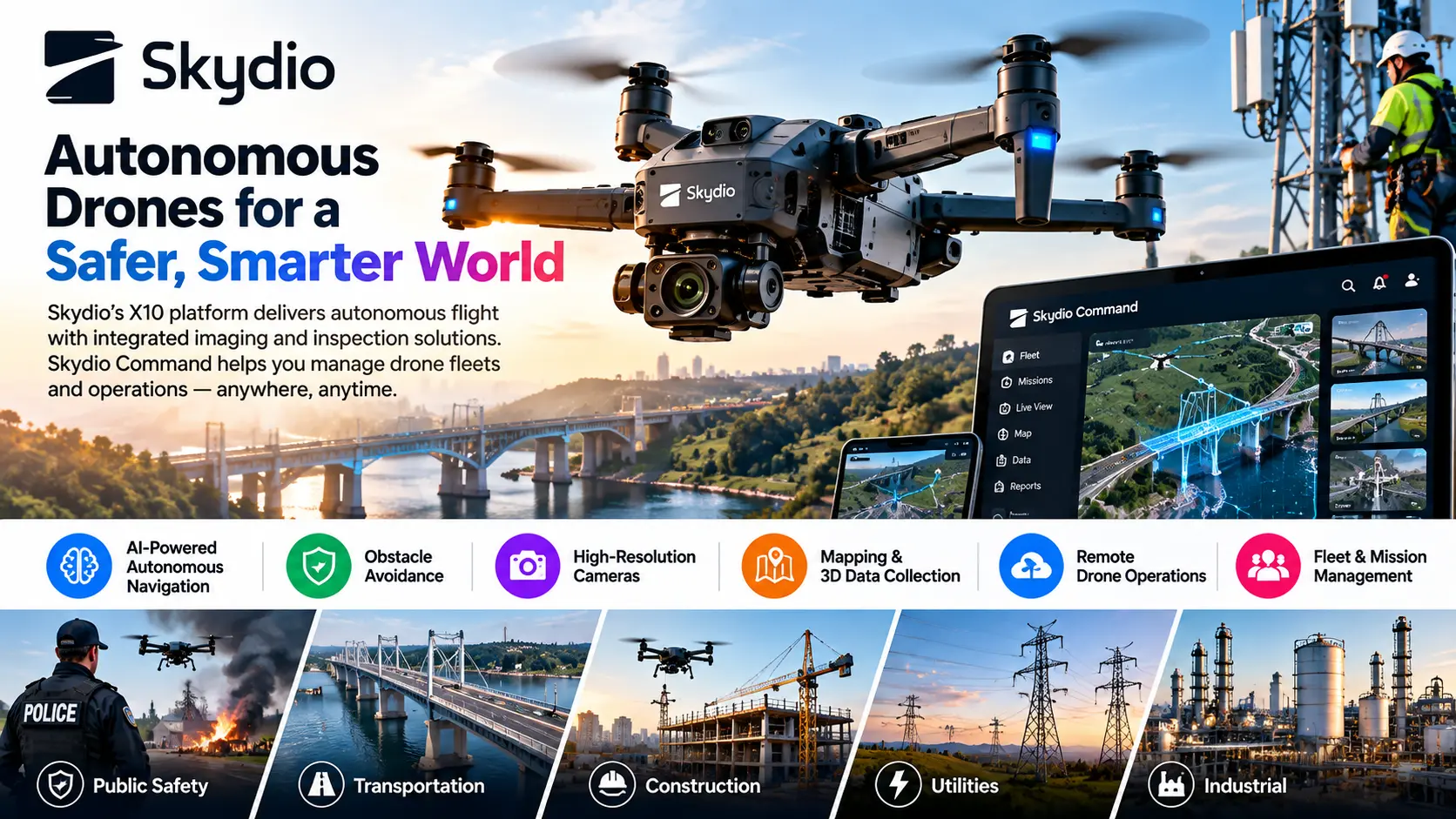
Skydio’s X10 platform allows for autonomous flight and integrated imaging and inspection solutions. Skydio also offers Skydio Command, a software solution for management of drone fleets and operations.
Skydio’s products facilitate autonomous drone operations for a range of industries, including public safety and transportation.
Key features
- AI-powered autonomous navigation
- Obstacle avoidance
- High-resolution cameras
- Mapping and 3D data collection
- Remote drone operations
- Fleet and mission management
Benefits
Skydio can reduce the complexity of drone operations by automating navigation and repeatable missions. This can be particularly useful for infrastructure inspection, public safety, construction, utilities, and industrial applications.
Also Read- FAA Drone Registration: Avoid Costly Mistakes & Fly Legally
2. Zipline
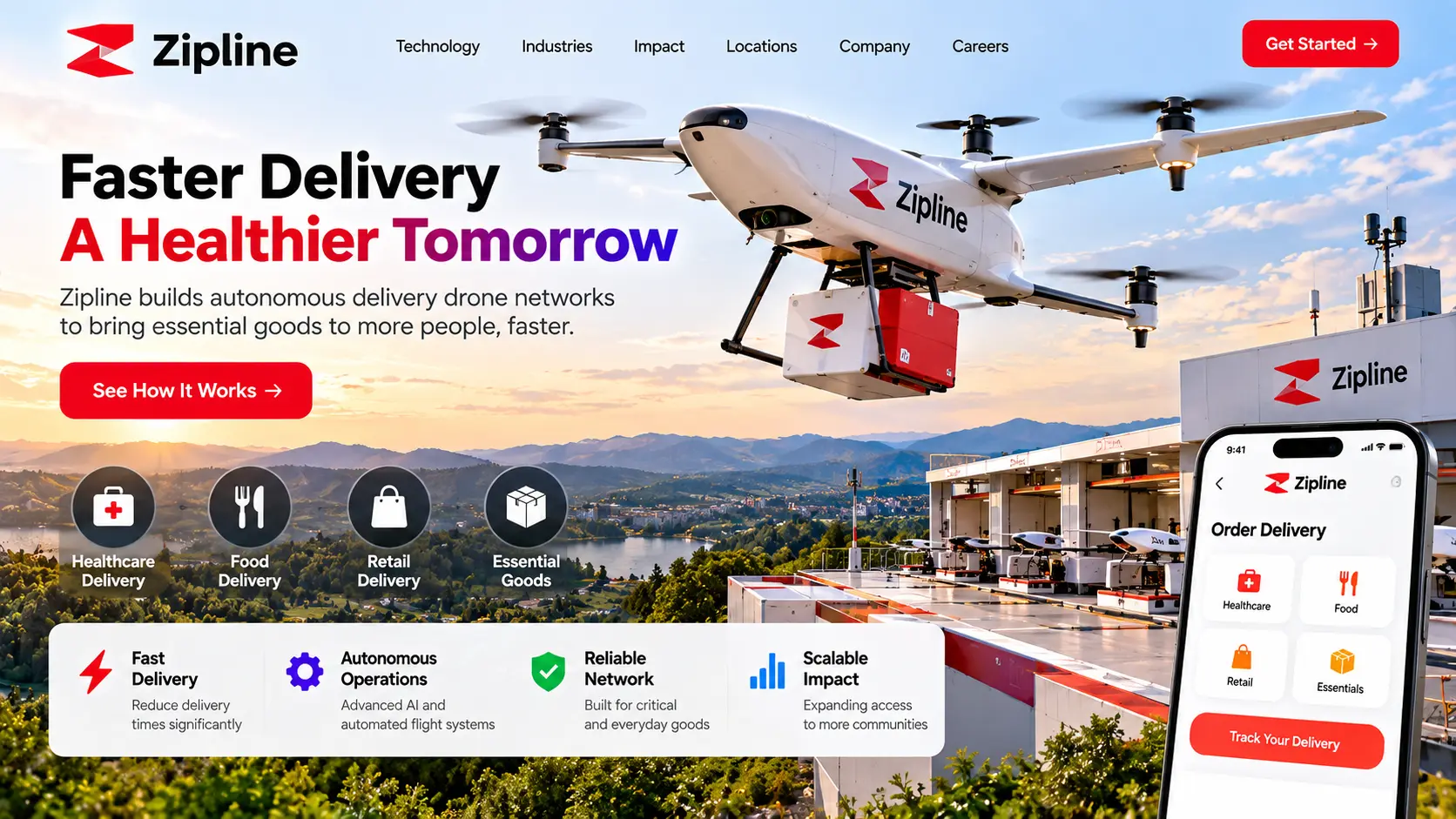
Zipline, on the other hand, focuses on developing large-scale autonomous delivery drone networks. The company provides an end-to-end logistics system and does not manufacture drones for consumer use.
Zipline’s drone network gained significant traction in the healthcare sector, especially for rapid and reliable delivery of medical supplies. Other sectors, including food and retail, also benefitted from similar delivery models.
Key features
- Autonomous delivery aircraft
- Customer ordering app
- Healthcare delivery
- Food and retail delivery
- Automated flight operations
- Rapid last-mile logistics
Benefits
The biggest advantage is speed. Drone delivery can potentially reduce the time required to move smaller packages through congested urban environments. It can also provide useful logistics options for healthcare and other time-sensitive products.
3. Wing
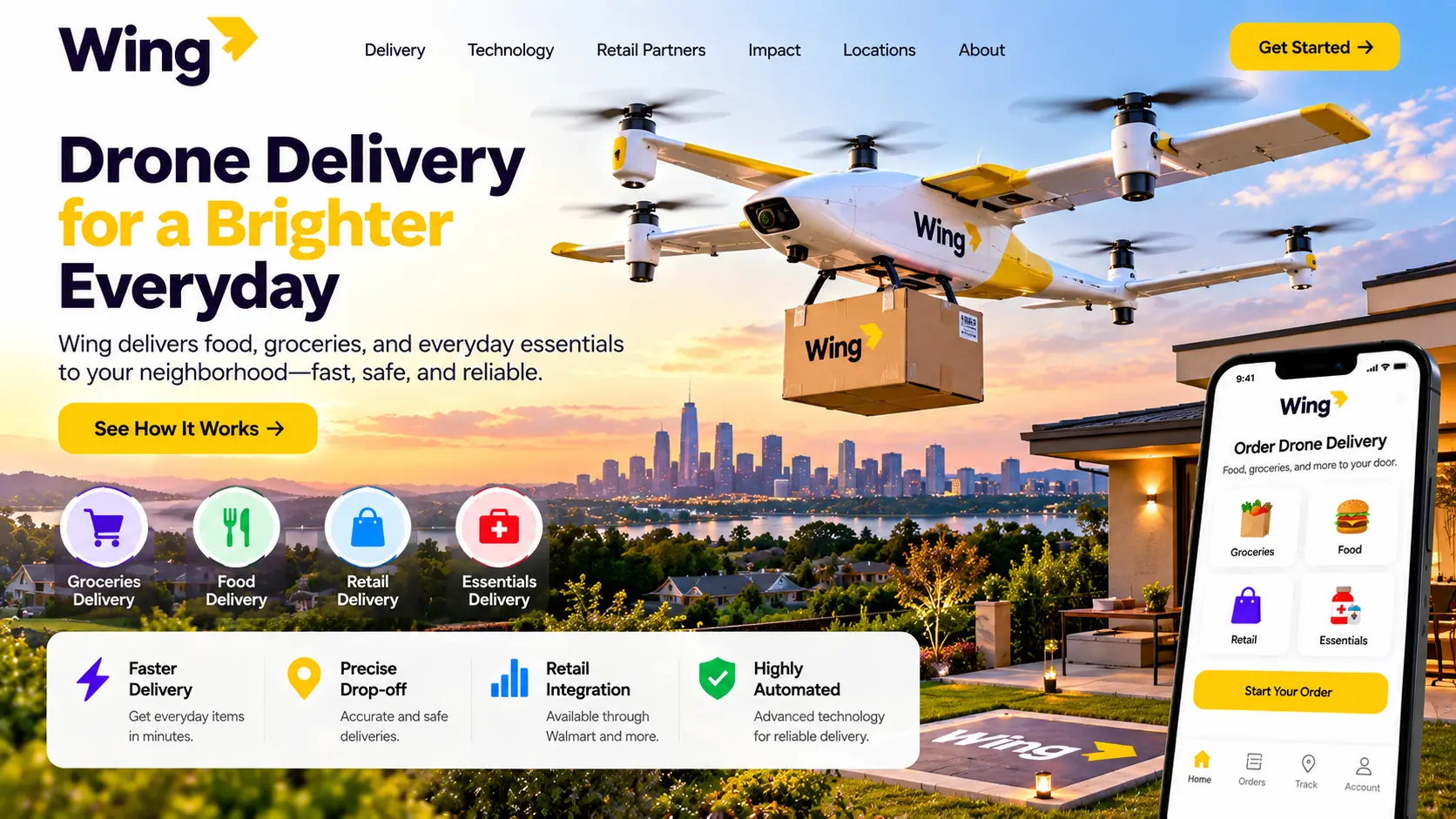
Wing and other drone delivery services operated by Alphabet and Amazon also offer similar delivery models for food, retail, and other items.
Wing says customers will be able to use its service through Walmart and other delivery platforms, as well as its own. Customers will be able to select drone delivery and will be shown delivery locations and times.
Wing has shared that it has completed over 1 million commercial deliveries. Additionally, it announced an expansion of its partnership with Walmart to further expand its drone delivery service in the U.S.
Key features
- Automated drone delivery
- Customer-facing ordering
- Delivery tracking
- Retail integration
- Precise drop-off locations
- Highly automated flight systems
Benefits
Wing’s model could make last-mile delivery faster while reducing dependence on conventional delivery vehicles for eligible small orders.
Automated drone delivery is its core service. Wing states that with its system, customers will be able to place delivery orders and track deliveries.
Its technology automates the delivery process for retail and guarantees precise deliveries.
In addition to automating drone delivery, Wing states that its system will allow delivery service providers to increase capacity and improve delivery times.
4. Shield
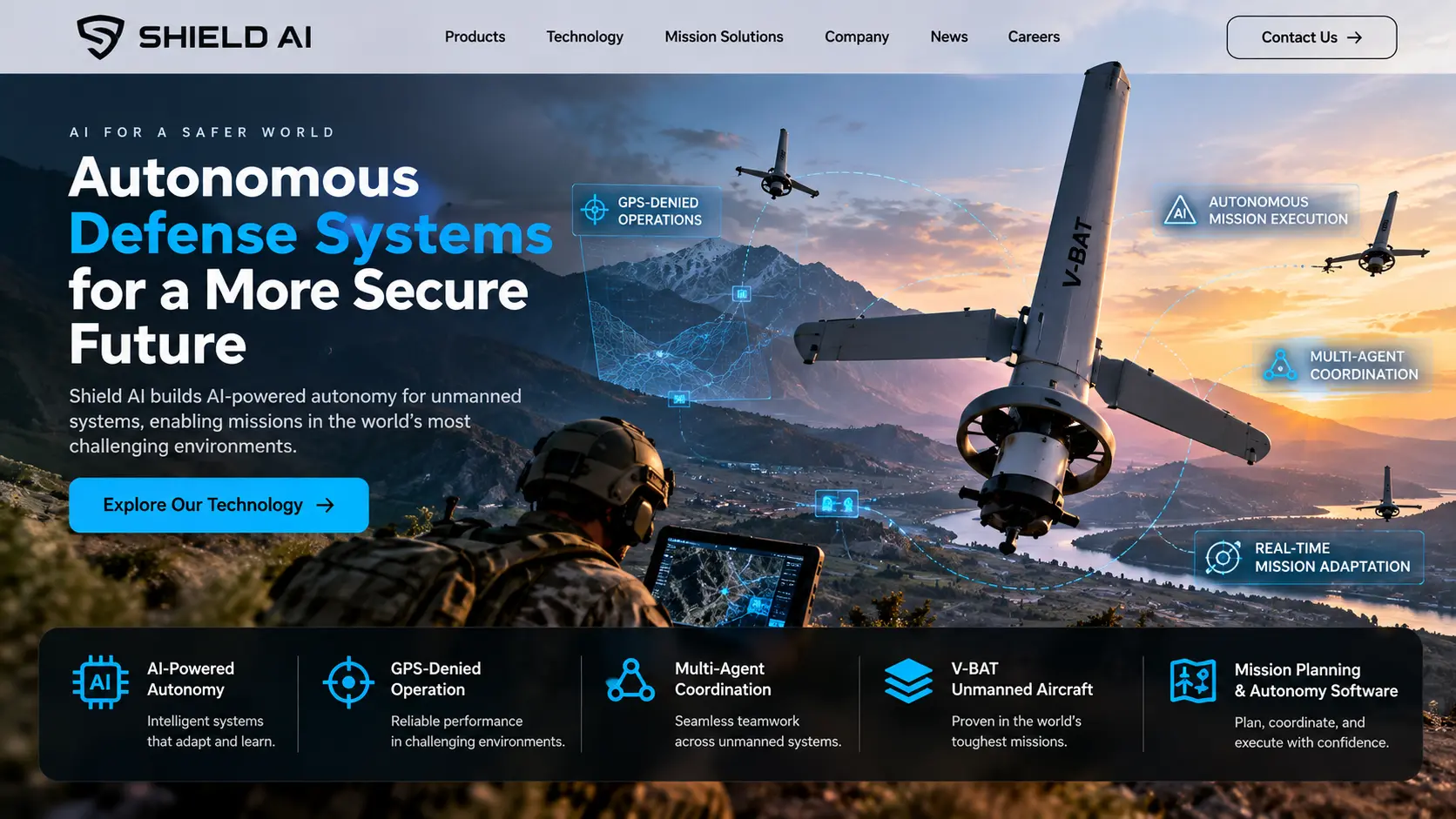
Shield AI takes a different approach with drone technology and focuses on defense systems.
Shield AI’s Hivemind integrates AI to enable unmanned systems to operate autonomously to plan, coordinate, and carry out missions in GPS-denied environments. The company’s V-BAT unmanned aircraft is powered by Hivemind and is designed to operate in diverse environments.
Due to the limitations of human operators, systems integrated with Shield AI’s technology will likely carry out missions in environments beyond the reach of existing unmanned systems. Shield AI illustrates the rising impact of AI on unmanned aerial systems.
Key features
- AI-powered autonomy
- Autonomous mission execution
- Multi-agent coordination
- GPS-denied operation
- V-BAT unmanned aircraft
- Mission-planning and autonomy software
Benefits
Autonomous systems can potentially perform missions in environments where conventional remotely piloted aircraft face communications or navigation limitations. Shield AI’s technology demonstrates how AI is becoming an increasingly important part of modern unmanned aviation.
5. Anduril
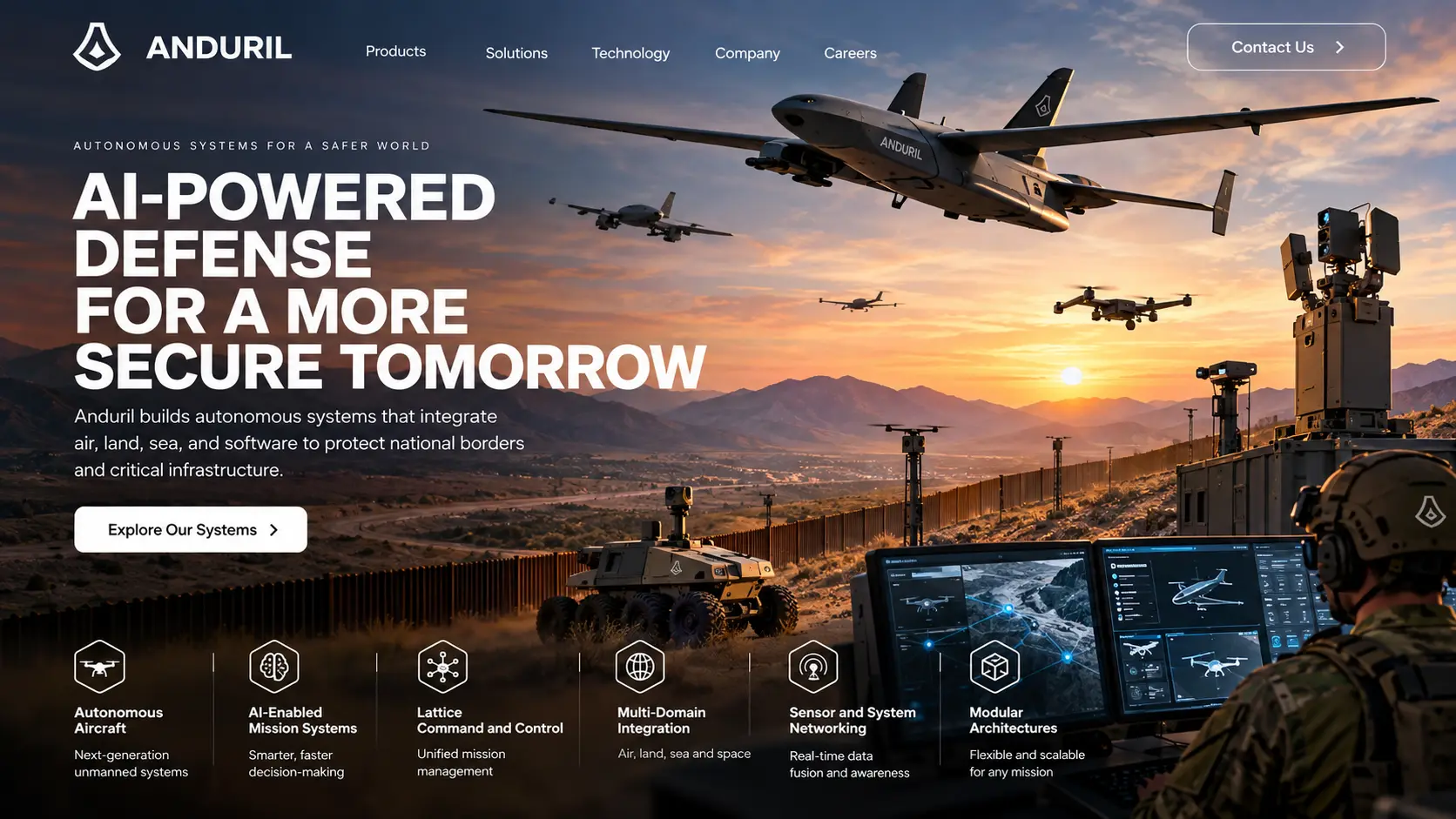
Anduril is focused on developing integrated, autonomous systems to protect national borders. The company has other projects, including anti-drone systems.
Key features
- Autonomous aircraft
- AI-enabled mission systems
- Lattice command and control
- Multi-domain integration
- Sensor and system networking
- Modular architectures
Benefits
Anduril’s approach demonstrates the move from individual drones toward interconnected autonomous systems. This can provide organizations with a common software layer for managing sensors, aircraft, and other autonomous platforms.
U.S. Drone Startups Compared
| Company | Main Business Activity | Main Technology | Main Application | Main Benefit |
|---|---|---|---|---|
| Skydio | Manufacturing of commercial drones | Skydio Command | Drone inspections | Automated and efficient inspections |
| Zipline | Drone delivery | Zipline App | Drone transport and delivery | Fast and efficient delivery |
| Wing | Drone delivery | Wing Marketplace | Drone delivery | Faster last-mile delivery |
| Shield AI | Defense | Hivemind | Autonomous drone missions | AI-powered autonomous operations |
| Anduril | Defense | Lattice | Connected autonomous systems | Integrated autonomous operations |
| American Robotics | Commercial drones | Operational Control Center | Drone inspections | Automated data collection and inspections |
Benefits of the Top Drone Startups
The leading drone companies provide and deliver a number of benefits.
Increased velocity
Drone technology allows for high-velocity inspections and deliveries.
Decreased costs
Drone technology can automate a repetitive and often dangerous task.
Improved data
Drone technology allows for collection of data that was previously difficult to gather.
Increased safety
Drone technology can collect data in unsafe and inaccessible areas.
Infinite flexibility
Drone technology allows for scalable and repeatable operations.
The U.S. Drone Startups Trends
Most drone companies partner with suppliers to integrate their technology. Defense drone companies are following the trends of the other markets by developing AI to manage and integrate autonomous systems.
Industrial drone companies are developing inspection and monitoring drones. Delivery drone companies are focusing on logistics and transport.
The lack of regulatory frameworks hinders the development of advanced air mobility, including operations beyond visual line of sight (BVLOS) and urban air transportation. Given the evolving regulations, the use case scenarios for advanced air mobility are anticipated to expand.
Conclusion
Drones are no longer flying cameras. The Top Drone Startups in the USA showcases companies that are leveraging emerging technologies such as artificial intelligence (AI) and robotics to revolutionize various industries. Examples include Shield AI, Anduril Industries, Zipline, Skydio, Wing Aerospace, American Robotics, and many more.
Different from drones that primarily focus on delivery, their counterparts in the defense and automation industries have also significantly benefited from the integration of advanced technologies into commercial drones.
It is inevitable that in the coming years, drones will change the way goods are transported, infrastructure is inspected, and even how data is collected.
FAQs
1. What are the Top Drone Startups in the USA?
prominent companies are Shield AI, Skydio, Anduril Industries, American Robotics, Zipline and Wing Aerospace.
2. Which drone companies use artificial intelligence?
Besides Skydio, both Shield AI and Anduril have integrations of AI/Edgineered Computing in their drones for autonomous systems.
3. Is drone delivery available in the USA?
Zipline and Wing have initiated drone delivery services in certain regions of the USA. Availability is determined by numerous factors such as the regulatory framework, participating retailers and the nature of goods to be delivered.
4. What are drone apps used for?
Drone apps assist in flight planning, mission management, and overall control of drone fleets. They are used in surveying, mapping, and data collection. The apps also integrate delivery services. They offer real-time control of drone operations.
5. Why are autonomous drones important?
The use of autonomous drones permits the execution of more missions with less supervision and control by an operator. They can perform missions to inspect and assess various situations including emergency and disaster response and recovery. Autonomous drones can also be used for logistics and delivery.
6. What is the potential of drone startups in America?
There is potential for integrated drone systems that comprise unmanned aerial vehicles, surface and underwater vehicles. The systems will utilize Artificial Intelligence (AI) and advanced sensors for autonomous fleet management. Regulations will also determine how quickly we can see integrated drone systems on a large scale.