
10 Powerful Team Collaboration Tools That Boost Success in 2026
+
Table of Contents
- 1 Understanding Team Collaboration Tools
- 2 Top 10 Team Collaboration Tools of 2026
- 2.1 1. Slack
- 2.1.1 Principal Elements:
- 2.1.2 Advantages:
- 2.2 2. Microsoft Teams
- 2.2.1 Principal Elements:
- 2.2.2 Advantages:
- 2.3 3. Asana
- 2.3.1 Principal Elements:
- 2.3.2 Advantages:
- 2.4 4. Trello
- 2.4.1 Key Features:
- 2.4.2 Benefits:
- 2.5 5. Monday.com
- 2.5.1 Key Features:
- 2.5.2 Benefits:
- 2.6 6. ClickUp
- 2.6.1 Key Features:
- 2.6.2 Benefits:
- 2.7 7. Notion
- 2.7.1 Key Features:
- 2.7.2 Benefits:
- 2.8 8. Zoom Workplace
- 2.8.1 Key Features:
- 2.8.2 Benefits:
- 2.9 9. Google Workspace
- 2.9.1 Key Features:
- 2.9.2 Benefits:
- 2.10 10. Basecamp
- 2.10.1 Key Features:
- 2.10.2 Benefits:
- 3 Comparison Table of Best Team Collaboration Tools
- 4 Conclusion
Since the pandemic, offices have become obsolete as the digital world improves. Advanced Team Collaboration Tools have helped businesses employ better techniques to get in touch with employees, manage their work, and get better results. Whether your employees work from home, go to the office, or work from different offices, the correct collaboration app is crucial.
Collaboration Tools of the Future will enhance and expedite communication and workplace automation. In 2026, businesses will implement and invest in even smarter collaborative and communicative tools with automation and AI integration.
The following 10 Team Collaboration Tools will help your business help its employees and achieve greater results.
Understanding Team Collaboration Tools
Team Collaboration Tools are programs used by employees to improve communication and workplace efficiency. They provide employees with the ability to message one another, conduct video meetings, and share files, as well as manage and oversee work-related tasks and projects.
Most businesses integrate collaboration software to streamline workplace communications, documentation, and projects.
Advantages of Using Team Collaboration Tools
Using collaboration and communication tools of the right kind results in the following:
1. Enhanced Communication
Teams no longer have to wait to hear back from someone. Decisions can be made via a call or a quick message.
2. Improved Productivity
Most collaboration and communication tools have productivity features that help employees plan and track work-related tasks and projects.
3. Better Accommodating for Remote Work
Flexible work environments succeed at maintaining an employed workforce. Collaboration tools help remote employees make and keep necessary business communications.
4. Enhanced Project Oversight
Management can make assignments, keep an eye on timeframes, and assess project advancement without ambiguity.
5. Closer Team Bonds
Engagement and teamwork are optimally cultivated in a workplace where meaningful interpersonal connections are established.
Top 10 Team Collaboration Tools of 2026
1. Slack
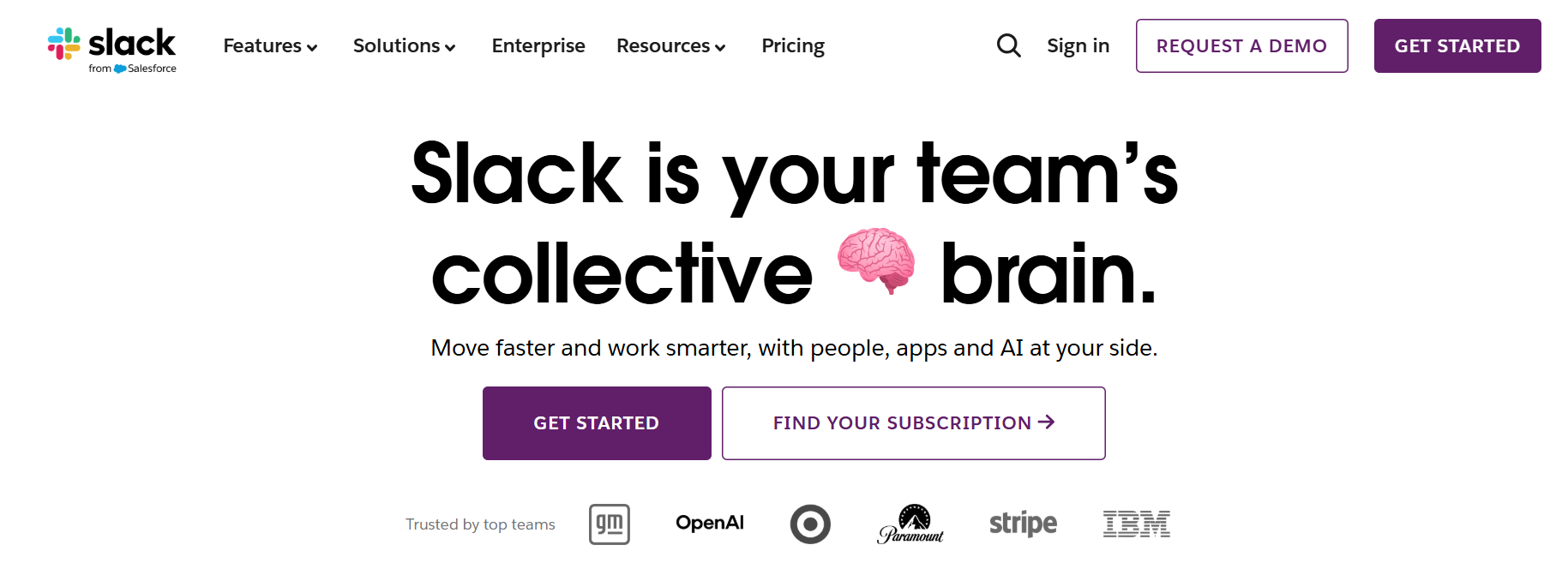
Slack has stood the test of time as one of the preferred platforms for workplace communication. It epitomizes the replacement of long email threads with fast and structured communication.
Principal Elements:
- Channels are open to the team, and private chat
- Audio and video chat
- File transfers
- Automation of workflow
- Integration of apps (thousands)
Advantages:
The time of communications is decreased, and employees are able to locate the pertinent communications. It is employed to forge transparent and connected work cultures.
2. Microsoft Teams
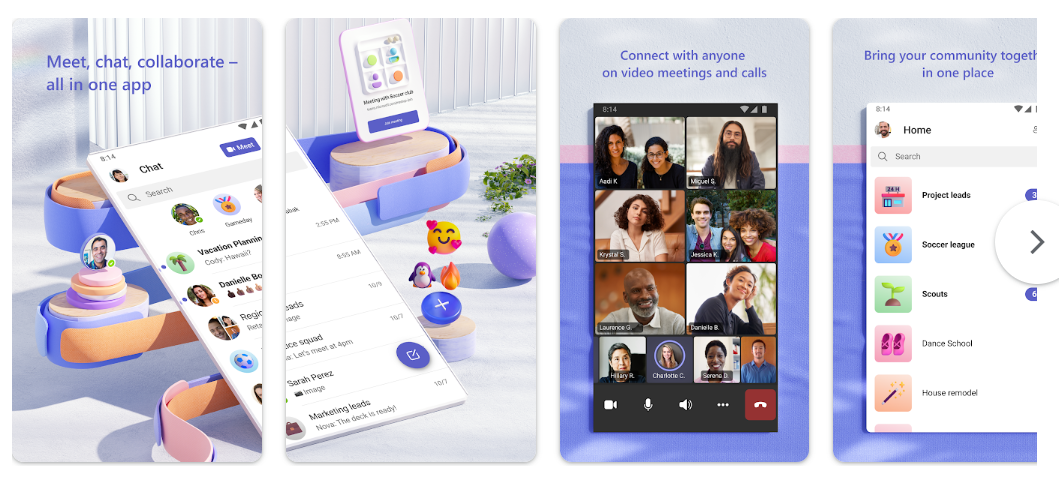
At the level of small, medium, and large enterprises, Microsoft Teams is geared toward business collaboration. As one platform, it merges communications, meetings, and all that pertains to business productivity.
Principal Elements:
- Conferencing with a clarity that is HD
- Integration of the entire Microsoft 365 Suite
- Collaboration on Documents
- Spaces for Team Chats
- Security for the Enterprise
Advantages:
Microsoft Teams facilitates the real-time communication of employees while working on a document. It also serves a greater purpose for Organizations that have already adopted the full suite of Microsoft products.
3. Asana
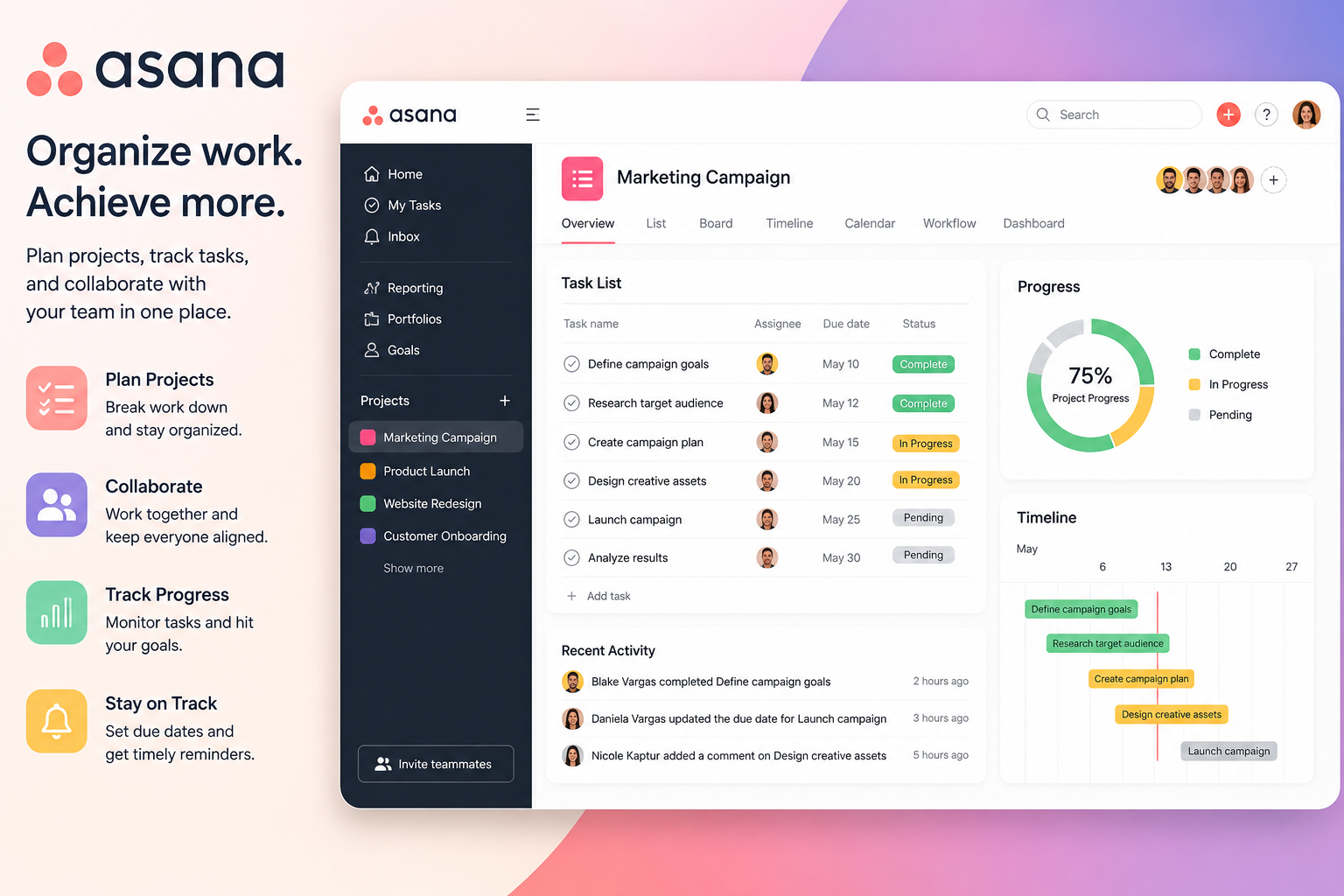
Asana is among the elite Team Collaboration Tools in relation to the management of tasks. The organizational clarity that Asana brings is unparalleled.
Principal Elements:
- Assigned tasks
- Timelines for Projects
- Automation of Forms
- Reports on Progress
- Goals
Advantages:
Asana facilitates a full view of the Project for Managers and enhances employees’ priorities.
4. Trello
Trello is a simple way of facilitating an extremely visual method of managing and tracking the productivity of work. The card system is especially useful.
Key Features:
- Drag-and-drop boards
- Custom workflows
- Project templates
- Team notifications
- Automation tools
Benefits:
Trello is ideal for startups, creative teams, and small businesses looking for simple organizational tools.
5. Monday.com
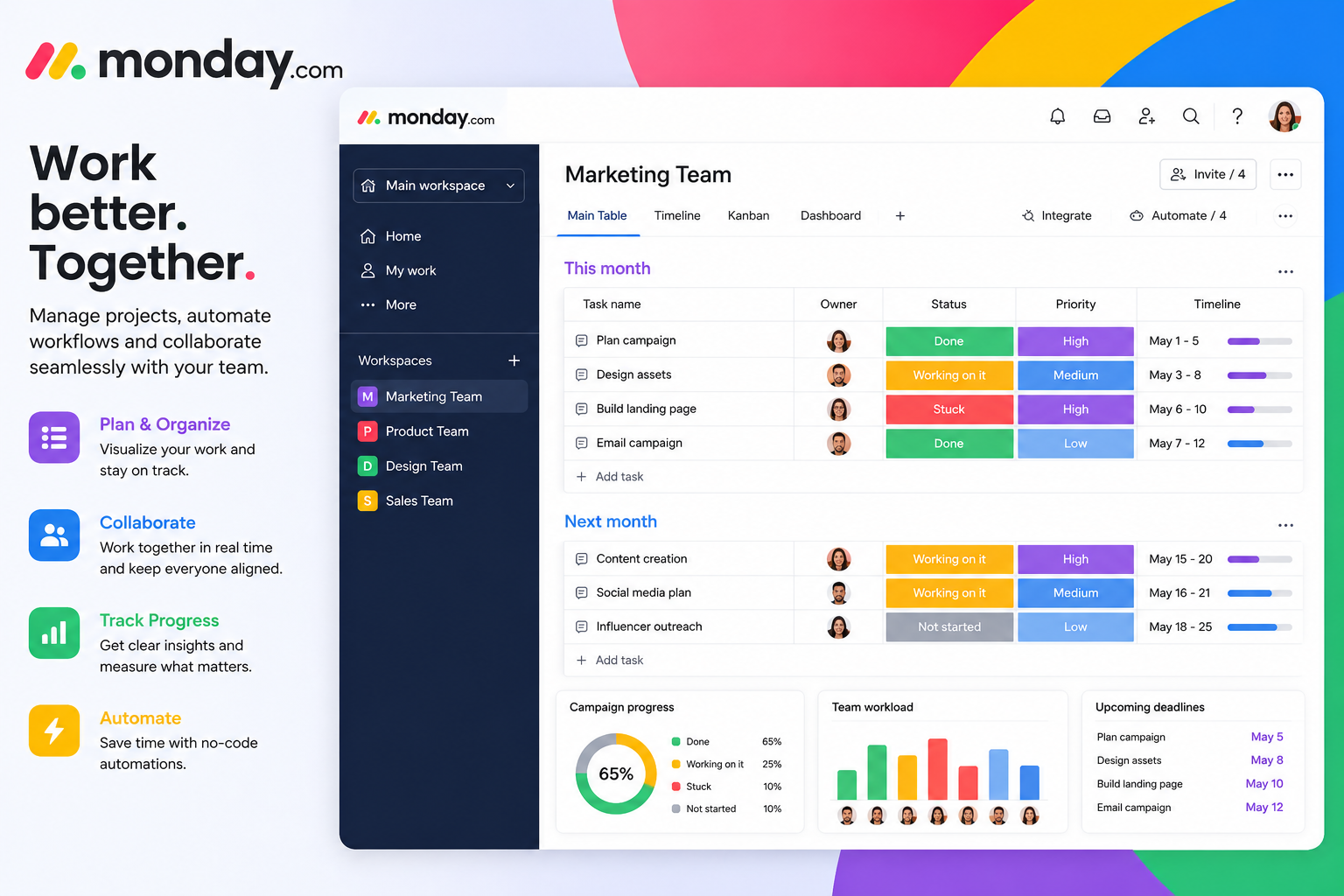
Monday.com is a customizable, flexible work management system that meets the modern-day demands of an organization.
Key Features:
- Custom dashboards
- Automation tools
- Project tracking
- Data visualization
- Multiple integrations
Benefits:
Monday.com enhances planning and offers better control to businesses for complex projects.
Also Read- Top 10 Essential Cybersecurity Tools to Defeat Online Threats
6. ClickUp

ClickUp is an all-in-one productivity tool that combines tasks, documents, goals, and communications.
Key Features:
- Task management
- AI productivity features
- Time tracking
- Document collaborations
- Custom workspaces
Benefits:
ClickUp consolidates productivity features and eliminates the need for multiple apps.
7. Notion
Notion has become a highly used tool for teams that require knowledge management and organization.
Key Features:
- Shared documents
- Company knowledge base
- Project planning
- Custom databases
- AI writing aid
Benefits:
Notion promotes the organization of information and enhances knowledge sharing for employees.
8. Zoom Workplace
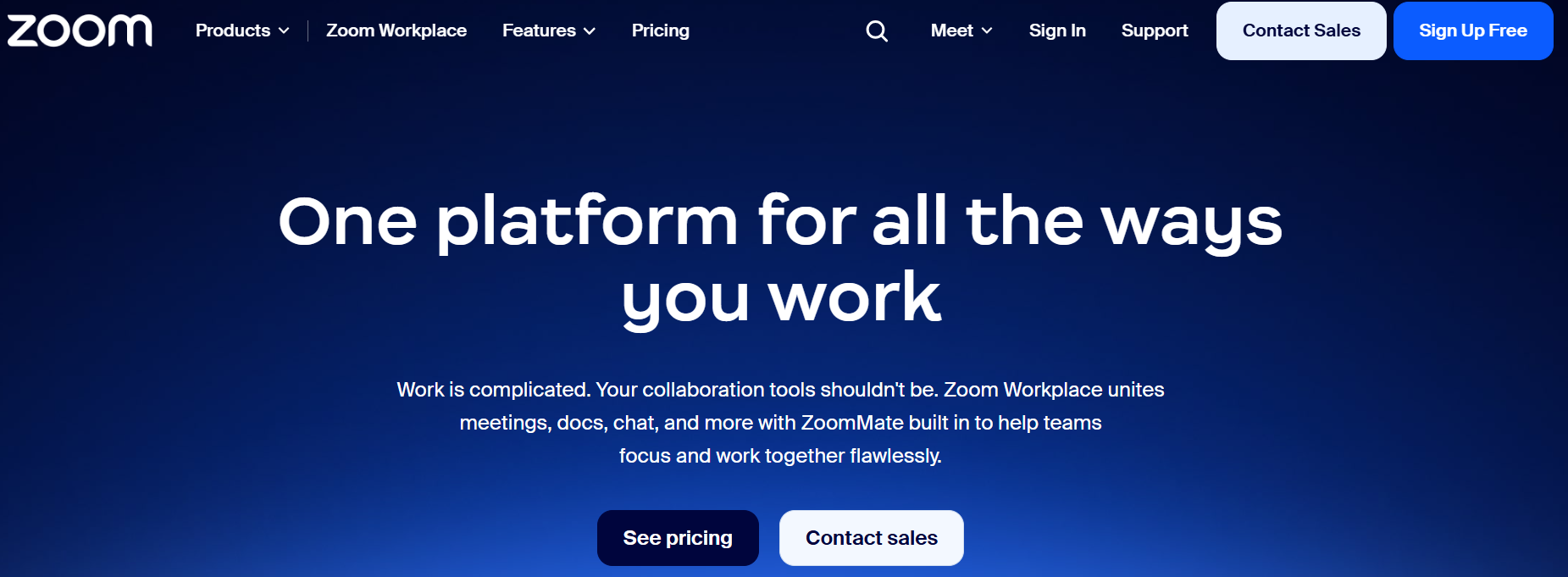
Zoom has gone beyond simple video meetings to offer full workplace collaboration.
Key Features:
- Video meetings
- Team chat
- AI meeting summaries
- Online events
- Calendar integration
Benefits:
Zoom’s advanced meeting features promote collaboration for remote teams and save them time.
9. Google Workspace

Google Workspace offers cloud-based productivity tools that improve team collaboration.
Key Features:
- Gmail
- Google Drive
- Google Docs
- Google Meet
- Real-time editing
Benefits:
Google Workspace allows employees to create, edit, and share files securely from any location.
10. Basecamp
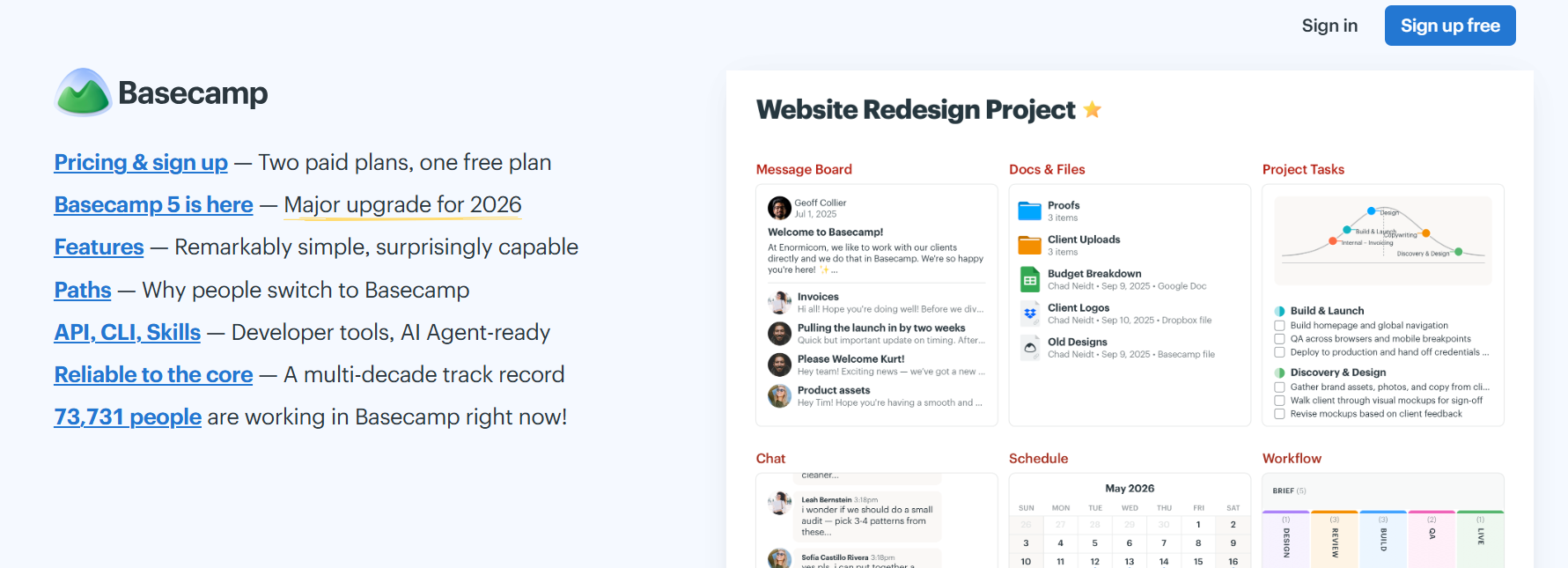
Basecamp is a simple project collaboration tool that helps you and your team stay organized.
Key Features:
- Message boards
- Task lists
- File storage
- Team schedules
- Progress tracking
Benefits:
Basecamp cuts down confusion at work by having everything project- or work-related in one place.
Comparison Table of Best Team Collaboration Tools
| Tool | Best For | Key Features | Platform |
|---|---|---|---|
| Slack | Communication | Team Messaging | Web, Desktop, Mobile |
| Microsoft Teams | Enterprises | Microsoft Integration | Web, Desktop, Mobile |
| Asana | Project Management | Task Tracking | Web, Mobile |
| Trello | Small Teams | Visual Boards | Web, Mobile |
| Monday.com | Workflow Management | Custom Automation | Web, Mobile |
| ClickUp | Productivity | All-in-One Workspace | Web, Mobile |
| Notion | Knowledge Management | Smart Documents | Web, Mobile |
| Zoom Workplace | Meetings | Video Collaboration | Web, Mobile |
| Google Workspace | Cloud Teams | File Collaboration | Web, Mobile |
| Basecamp | Simple Management | Project Organization | Web, Mobile |
How to Choose the Best Collaboration Tool?
When putting together software, companies need to think about:
- Team size
- Cost
- Ease of use
- Security
- Required features
The best team collaboration tools help you meet company goals while keeping your processes as uncomplicated as possible.
Future of Team Collaboration Software
The future of collaboration software is leaning in the direction of being powered by AI to help you be more productive. Companies in 2026 will be using more advanced collaboration software that helps them enforce better business practices, from automation to meeting summaries to performance analysis features that aid in thoughtful process improvement and risk mitigation.
The Advanced Team Collaboration Tools will focus on the core purpose of collaboration software – to help businesses communicate and be productive.
Conclusion
Digital-age teams can only be built using the best collaboration software. The trade-offs between communication apps such as Slack and Teams and productivity apps such as ClickUp and Monday are only some examples of the unique trade-offs every app offers.
The best Team Collaboration Tools build stronger teams and reduce confusion and communication barriers. The continued rise of remote and hybrid working models in 2026 will mean the right collaboration software will focus on the productivity of the business.
FAQs About Team Collaboration Tools
-
What are the best Team Collaboration Tools in 2026?
The best Team Collaboration Tools will most likely be Slack, MS Teams, Asana, ClickUp, Trello, Monday, Notion, Zoom Workplace, Google Workspace, and Basecamp.
-
Why are collaboration tools important for businesses?
These tools simplify communication, improve project organization, and increase productivity and teamwork.
-
Which collaboration tool is best for remote teams?
These tools are all great options for remote work: Slack, MS Teams, Zoom Workplace, Google Workspace.
-
Are collaboration platforms useful for small businesses?
Absolutely. Small businesses can achieve all the benefits of large workgroup collaboration by using these tools to manage and organize communication and work.
-
What features should a good collaboration tool include?
These tools should include messaging and file sharing with task management, security, and integration and automation features.