10 Game-Changing Accounting Software Solutions for 2026
+
Table of Contents
Managing the finances of a business has become increasingly difficult. Management of invoices and payroll, along with the preparation of taxes and financial reporting, is much simpler with the right tools. Modern accounting platforms have made the bookkeeping process much simpler with the use of automation, cloud technology, artificial intelligence, and integrations.
The right accounting solution can provide your business, regardless of its size, the tools necessary to improve the productivity and efficiency of financial decisions.
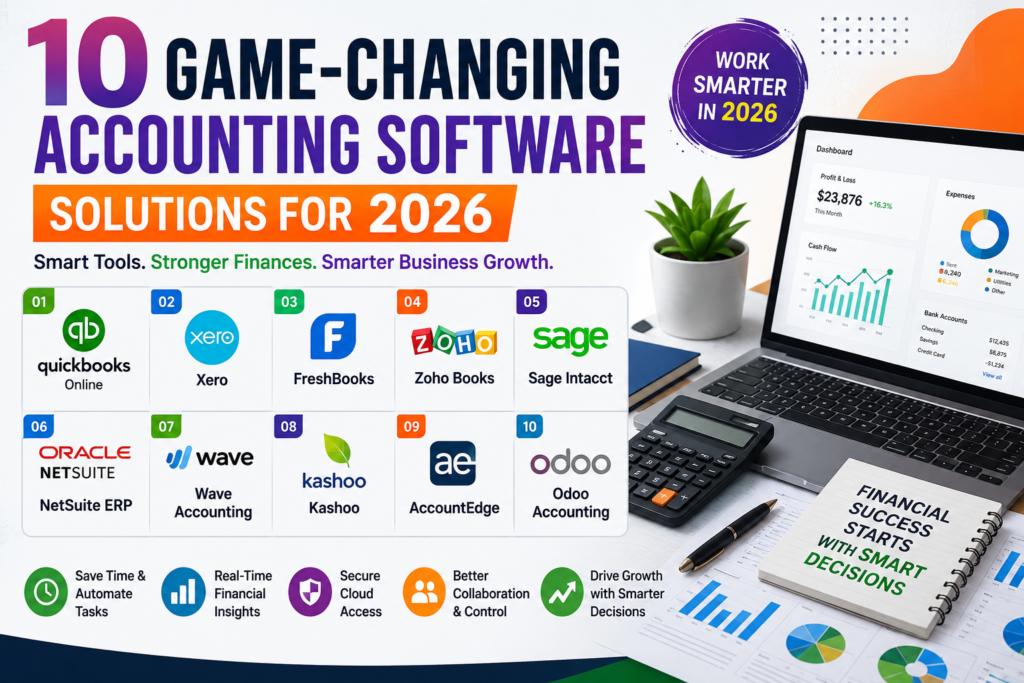
The following guide lists the accounting software (10 in total) that are anticipated to lead the accounting software industry and businesses in the years leading up to 2026.
Comparison Table
| Software | Best For | Cloud-Based | Free Plan | Starting Price |
|---|---|---|---|---|
| QuickBooks Online | Small Businesses | Yes | No | From $35/month |
| Xero | Growing Businesses | Yes | No | From $20/month |
| FreshBooks | Freelancers | Yes | No | From $21/month |
| Zoho Books | Small Businesses | Yes | Yes | Affordable Plans |
| Sage Intacct | Medium & Large Businesses | Yes | No | Custom Pricing |
| NetSuite ERP | Enterprises | Yes | No | Custom Pricing |
| Wave Accounting | Startups | Yes | Yes | Free |
| Kashoo | Solo Entrepreneurs | Yes | No | Affordable |
| AccountEdge | Desktop Users | Optional Cloud | No | One-Time Purchase |
| Odoo Accounting | Custom Businesses | Yes | Community Edition | Flexible Pricing |
1. QuickBooks Online
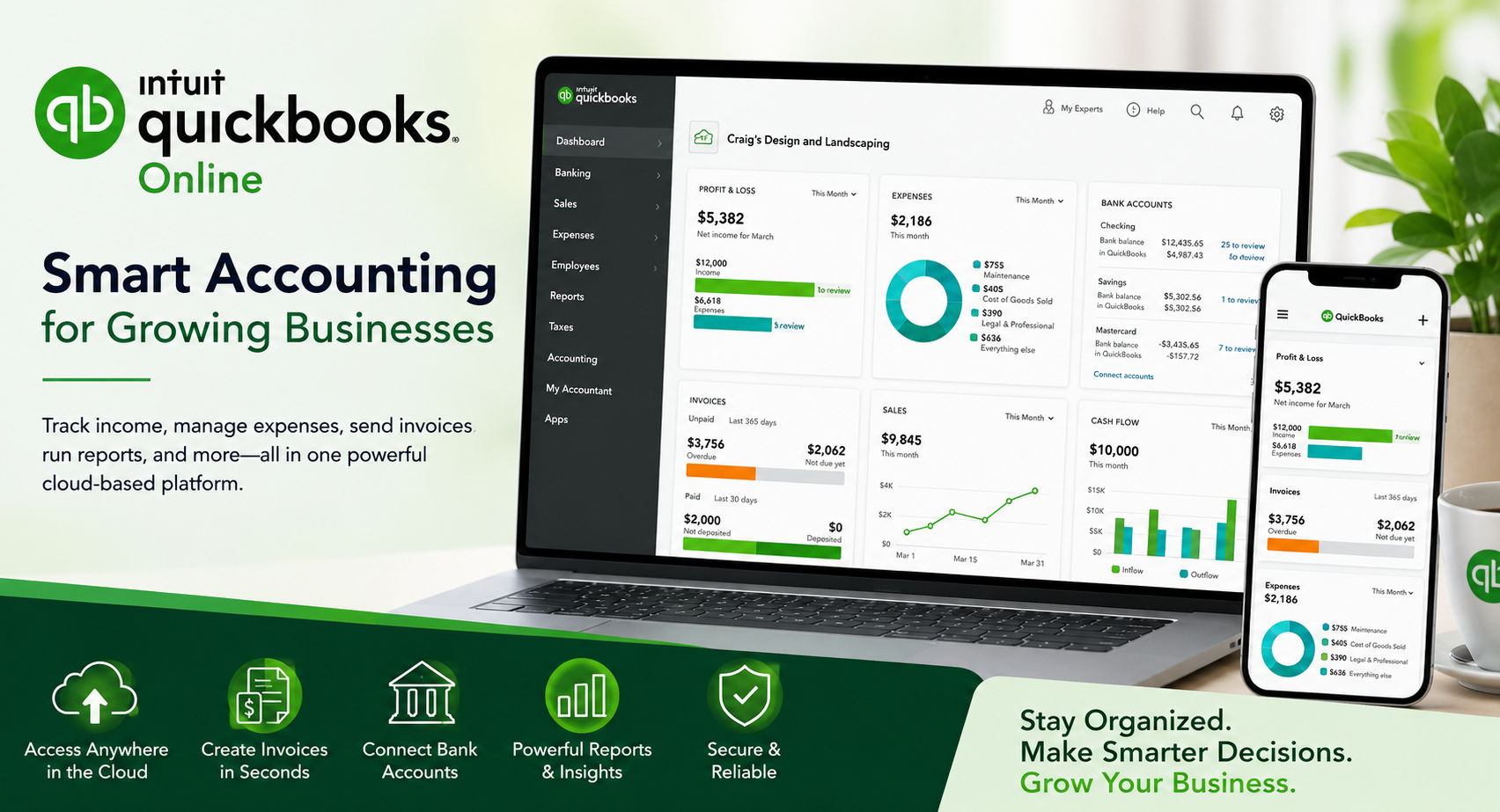
QuickBooks Online remains one of the most popular accounting platforms around the world. It has an excellent automated interface and comprehensive financial management tools that are suited for most businesses.
Features
- Bank connection automation
- Expense tracker
- Invoices
- Manage inventory
- Integrate payroll
- Mobile app
- Financial reports
- Tax calculations
Benefits
- Saves tons of bookkeeping hours
- Easy learning curve
- Good third-party integrations
- Great reporting dashboards
- Good for accountants and business owners
2. Xero
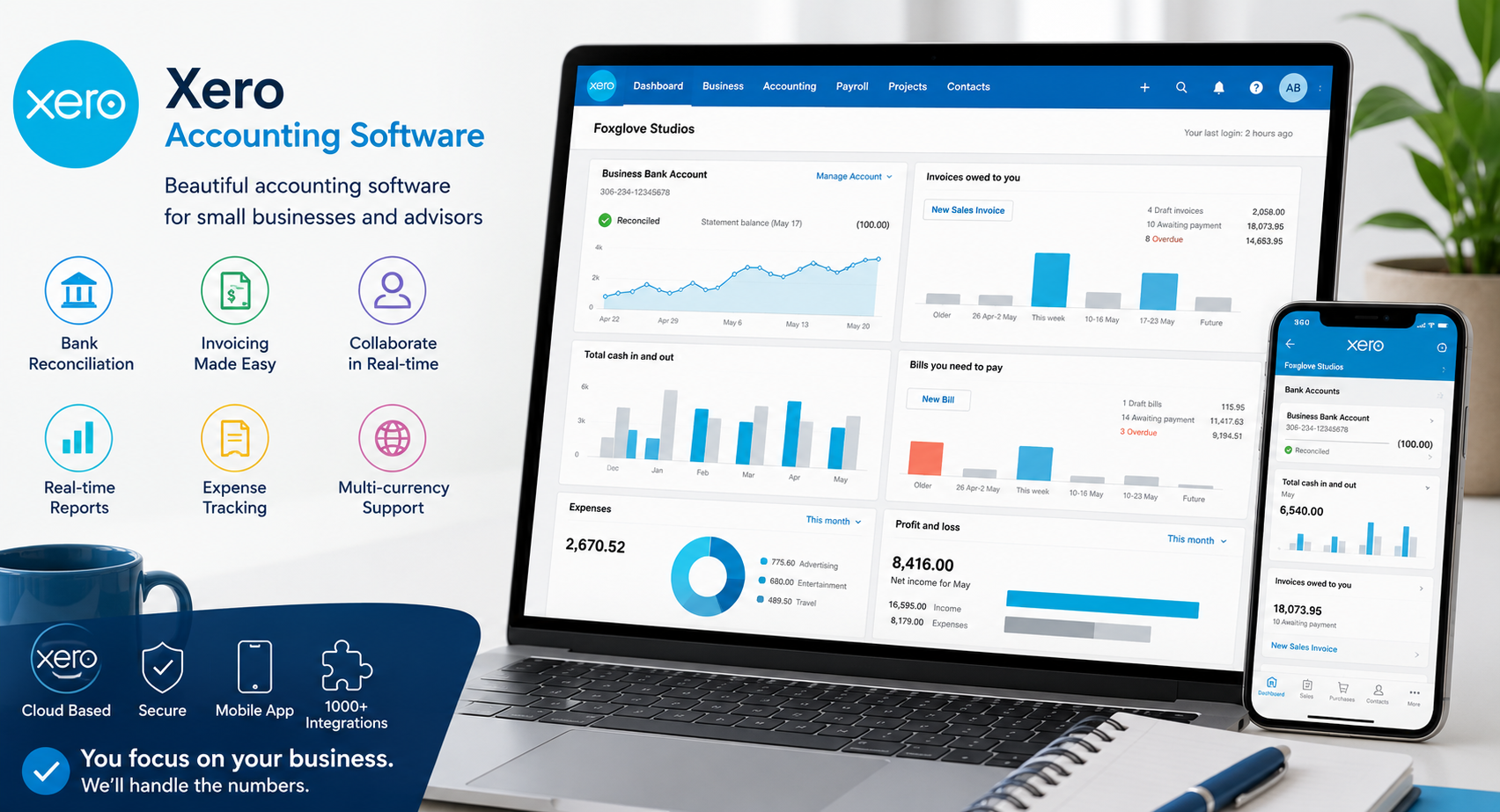
Xero is known for its collaborative nature and powerful cloud accounting. With an easy-to-use interface, complex tasks are easy to accomplish.
Features
- Unlimited users
- Bank reconciliation automation
- Managing inventory
- Custom invoices
- Track fixed assets
- Support for multiple currencies
- Instant reports
Benefits
- Great for collaboration
- Safe cloud environment
- Easy integration with business apps
- Great automation
- Great for growing businesses
3. FreshBooks
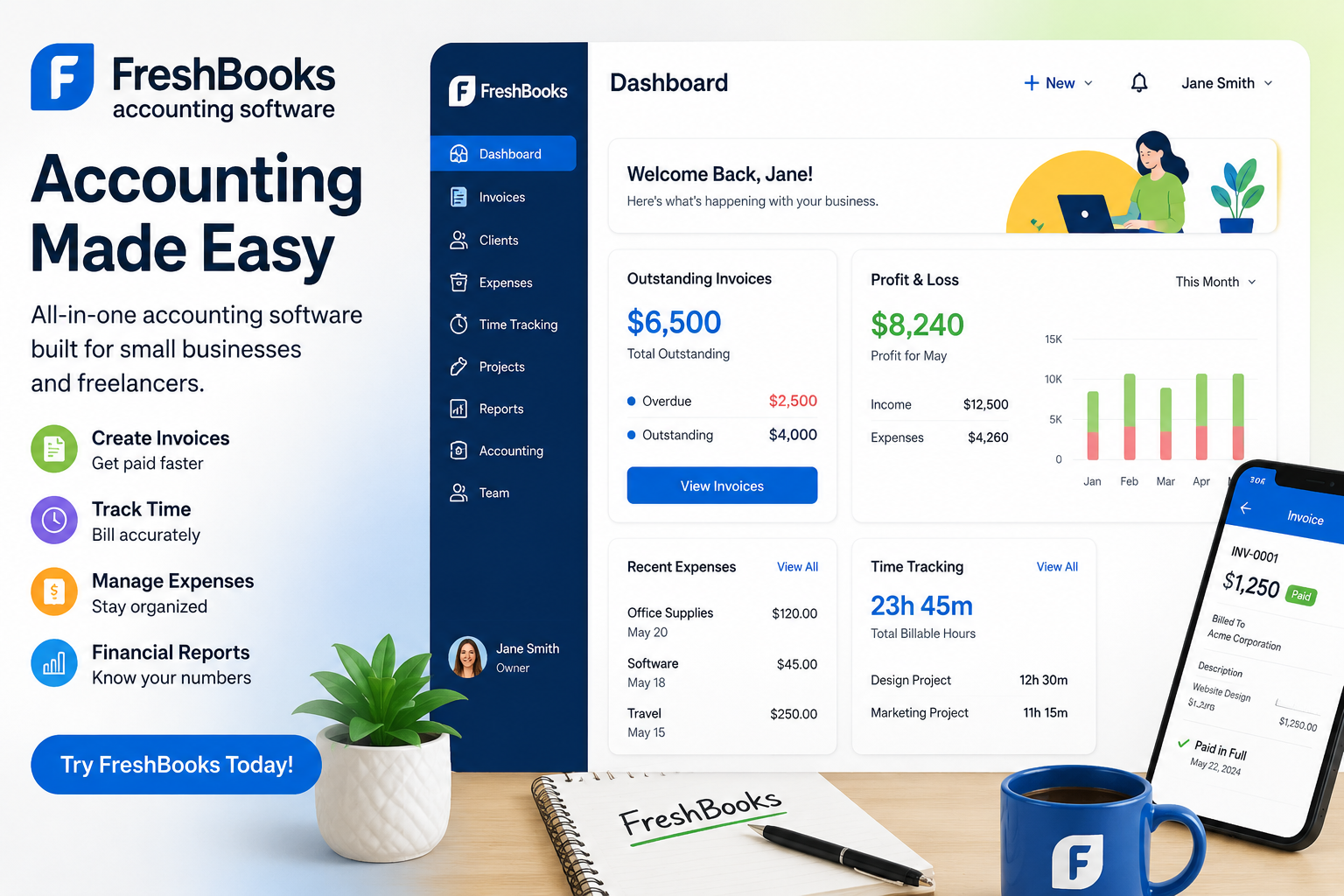
FreshBooks works best for freelancers and service-based businesses. It streamlines billing and invoicing customers while packing in powerful accounting features.
Features
- Track time
- Manage expenses
- Automate invoicing
- Accept online payments
- Profitability reports by project
- Capture expense via app
- Client portal
Benefits
- Great for service business
- Professional invoicing
- Easy to use
- Fast payment collection
- Great for accurate project costing
4. Zoho Books
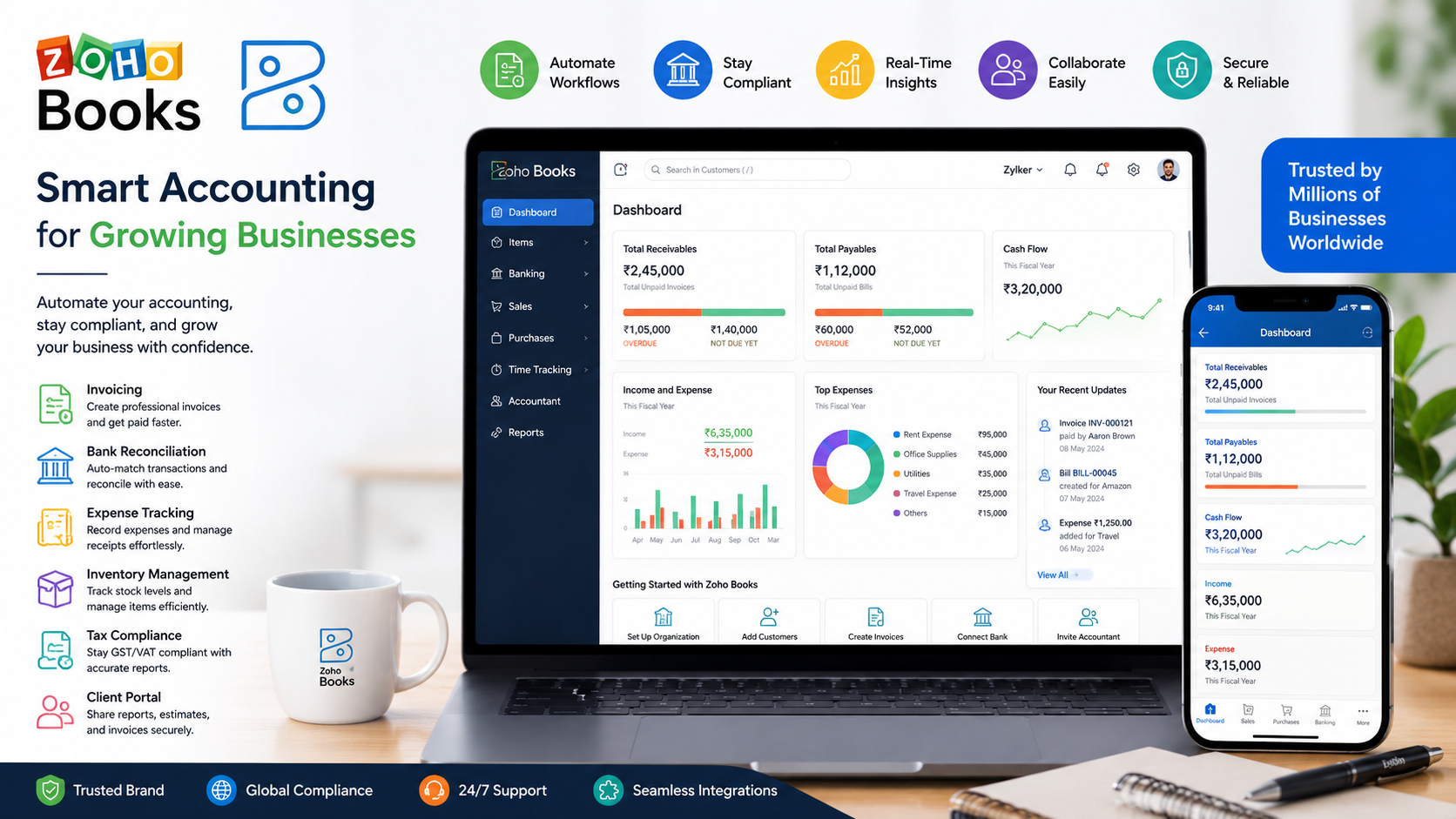
With its value for money, Zoho Books is great for small businesses and startups because of its automation.
Features
- Automate workflows
- Support for GST and VAT
- Customer portal
- Track inventory
- Bank reconciliation
- Multi-user teams
- Mobile accounting
Benefits
- Inexpensive
- Great automation
- Integrates with Zoho
- Compliance features
- Easy dashboard
5. Sage Intacct
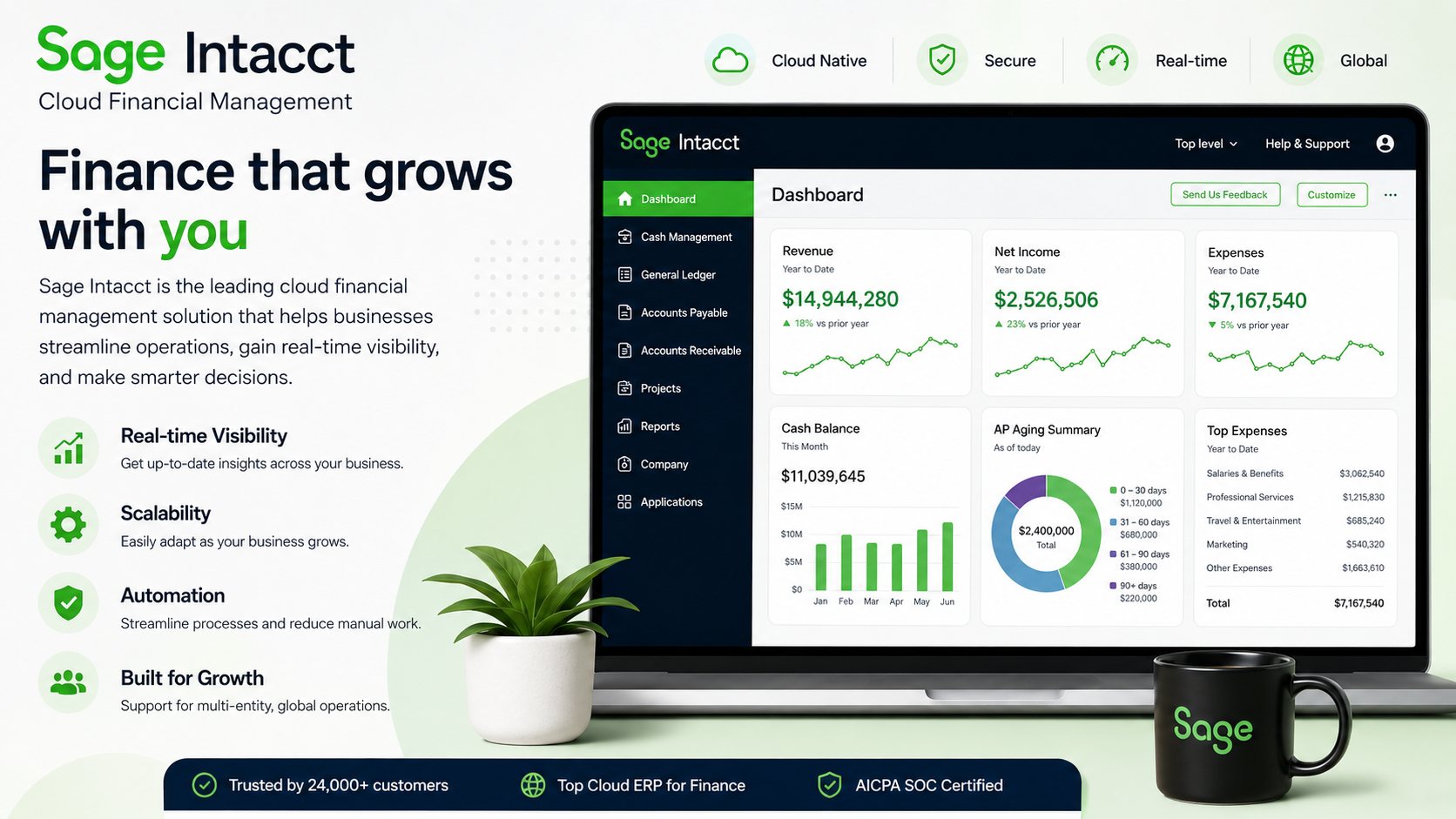
Great for mid-sized businesses and scaling up, Sage Intacct is for organizations with advanced financial automation and reporting needs.
Features:
- Multi-entity accounting
- Revenue recognition
- Budget management
- Cash flow forecasting
- AI-powered reporting
- Financial consolidation
- Role-based security
Benefits:
- High scalability
- Enterprise-grade reporting
- Enhanced financial visibility
- Robust compliance features
- Business growth support
Also Read- 10 Best Password Managers for Ultimate Online Security
6. NetSuite ERP
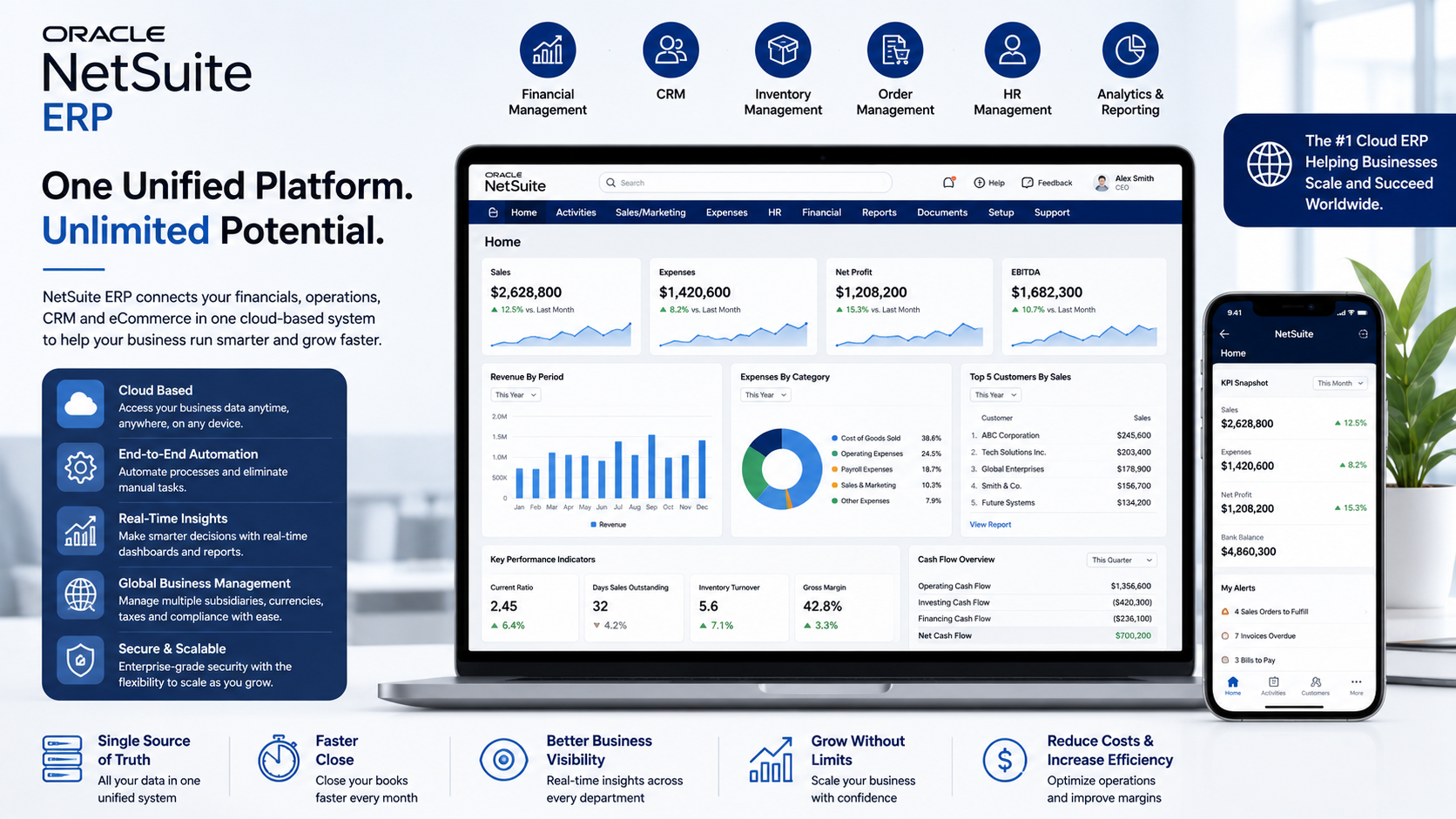
NetSuite ERP is a cloud-based integrated accounting and enterprise resource planning system for mid- and large-sized companies. It integrates accounting with modules for managing inventory, CRM, and business intelligence.
Features:
- General ledger and financial management
- Accounts payable and receivable
- Revenue recognition
- Budgeting and forecasting
- Multi-currency and multi-company support
- Inventory and order management
- Real-time financial dashboards
Benefits:
- Automates all accounting tasks
- Supports international business
- Instant view of financial status
- Scalable
- Enhances operational efficiency
7. Wave Accounting
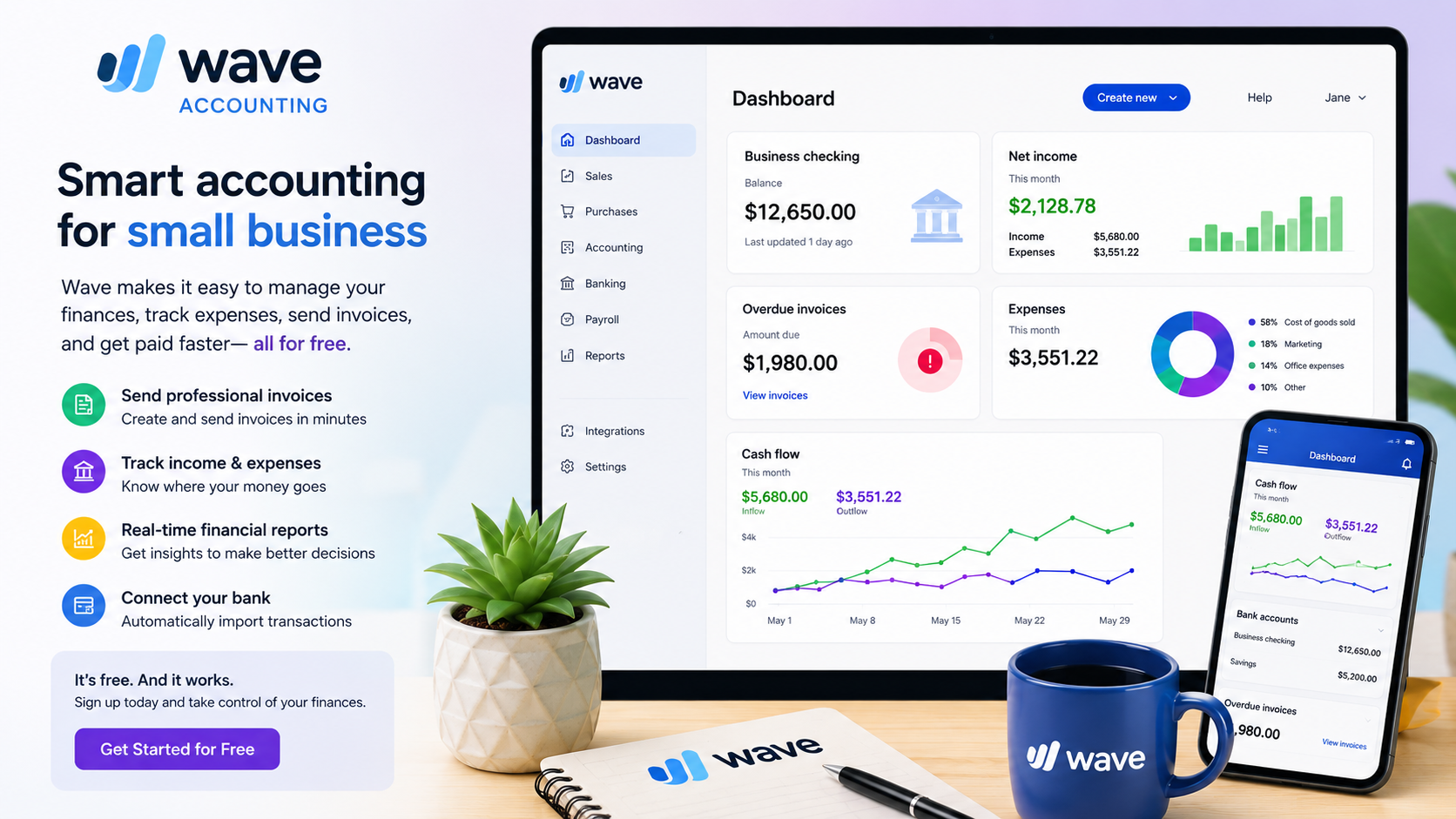
Wave Accounting is the top free accounting software for freelancers, small businesses, and new startups. It provides functionality for managing core accounting tasks with no monthly subscription.
Features:
- Free bookkeeping
- Income and expense tracking
- Unlimited invoicing
- Receipt scanning
- Financial reports
- Bank connections
- Mobile invoicing
Benefits:
- Core accounting features are free
- Easy for beginners to create an account
- Sleek and easy UI
- Reduces time for bookkeeping
- Ideal for startups on a budget
8. Kashoo
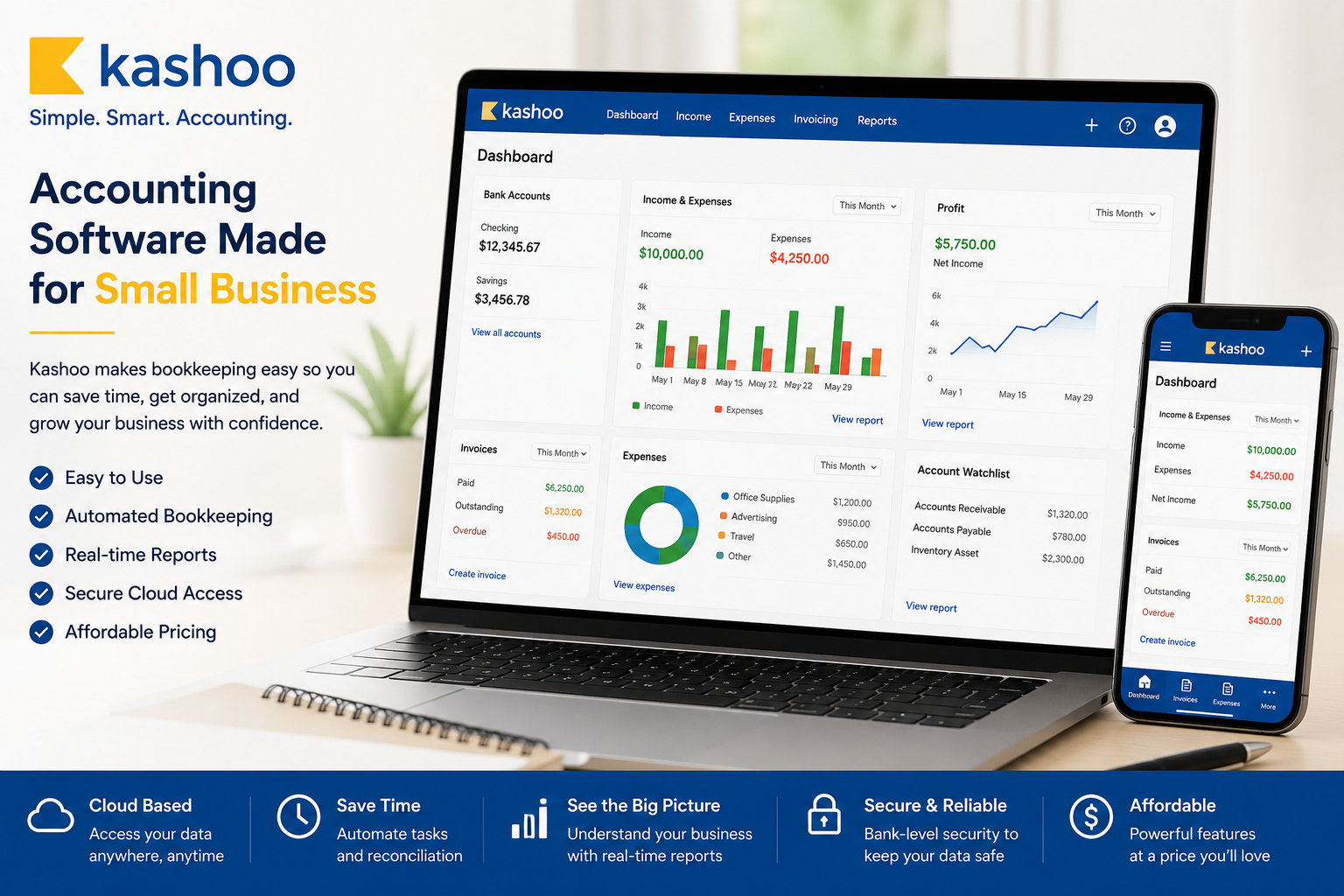
Kashoo is an accounting software for small business owners and entrepreneurs to easily perform accounting without a bunch of features they don’t need. It automates repetitive bookkeeping.
Features
- Automated transaction categorization
- Invoice creation
- Expense tracking
- Tax reporting
- Financial statements
- Secure cloud storage
- Bank reconciliation
Benefits
- Simple learning curve
- Time-saving automation
- Reliable financial reporting
- Affordable pricing
- Excellent for solo business owners
9. AccountEdge
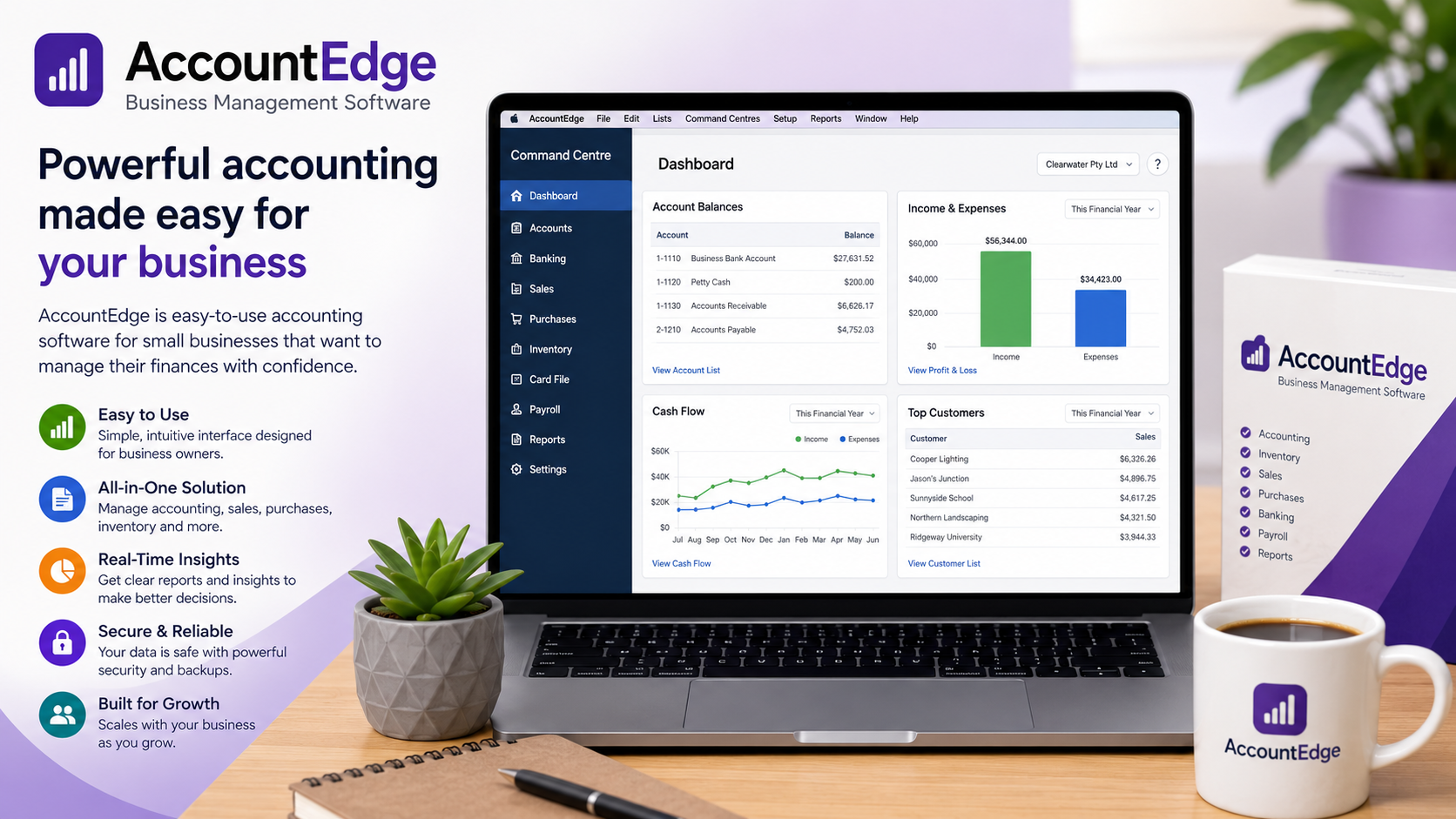
AccountEdge is preferred by companies that want the flexibility of using desktop accounting software that is cloud-enabled. Strong bookkeeping and advanced inventory management tools are included.
Features
- Payroll processing
- Sales and purchase management
- Inventory management
- Time billing
- Custom reports
- Job costing
Benefits
- Strong desktop bookkeeping
- Advanced inventory controls
- Flexible cloud options
- Comprehensive reports
- Established businesses
10. Odoo Accounting
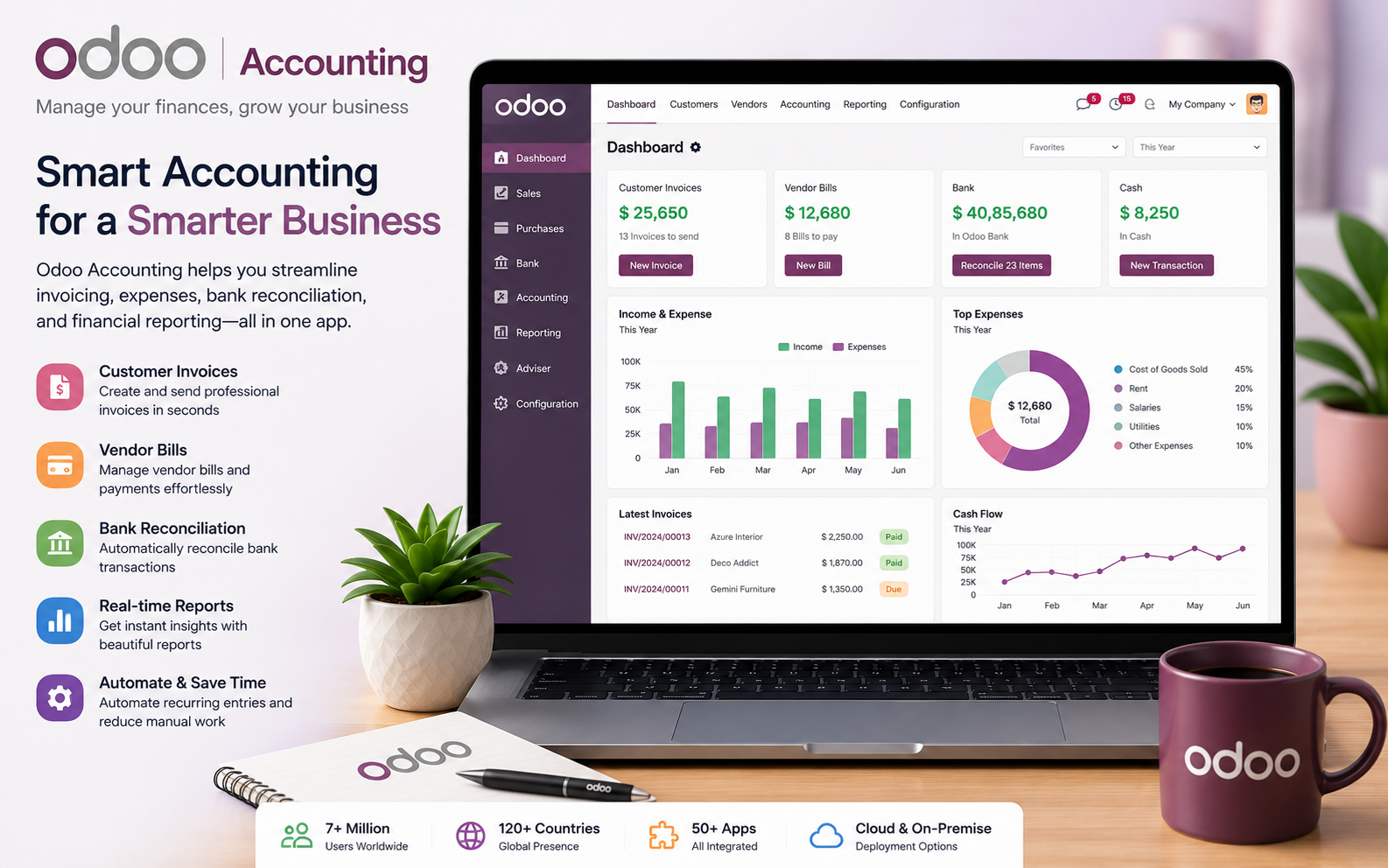
Odoo Accounting is one of the many highly customizable and flexible Odoo apps. Integrating multiple business functions is easy with Odoo Accounting.
Features
- Automated invoicing
- Banking integration
- Expense Control
- Budgeting
- Asset management
- Tax automation
Benefits
- Highly customizable
- Ideal for businesses in transition
- All-in-one business platform
- Flexible pricing
- Strong automation
Also Read- Future Unlocked: 12 Game-Changing Humanoid Robots Transforming Our Future
How to Choose the Right Accounting Software
Consider these factors before choosing an accounting solution:
- Business size and future growth
- Budget and subscription costs
- Ease of Use
- Automation
- Tax compliance
- Third-party integrations
- Customer support
- Security and data backup
- Mobile access
- Reporting and analytics
Maximize return on investment by choosing software that meets current and future business needs.
Conclusion
The accounting software of 2026 is highly advanced, intuitive, and automated. There are so many options available that no matter the size of your business, from freelance to corporate, there is a software solution to meet your needs.
QuickBooks Online is well established among small businesses, while Xero has an advantage in collaboration. FreshBooks caters best to service professionals, while Zoho Books is quite inexpensive, and Sage Intacct is highly regarded for enterprise financial solutions. NetSuite ERP is a better pick for larger businesses; Wave Accounting is great for free software; Kashoo is great for solo business owners; AccountEdge works well with a desktop focus, and Odoo Accounting is best for an all-inclusive business solution.
Considering features, pricing, scalability, and integrations will allow you to select the best software to bring ease to your accounting needs and help grow your business.
FAQs
1. What is accounting software?
Accounting software provides a way for businesses to complete the tasks of bookkeeping, invoicing, accounts payable and receivable, payroll, tax, and financial statement reporting in one place.
2. Which accounting software is best for small businesses?
Some of the most common small business accounting software include QuickBooks Online, Xero, Zoho Books, and Wave Accounting due to their ease of use and extensive features.
3. Is free accounting software reliable?
Yes. Wave Accounting is an example of free accounting software that has reliable core accounting features for freelancers and small businesses, but may lack more advanced features.
4. Can accounting software automate bookkeeping?
With most modern accounting platforms, plenty of tasks are automated such as bank reconciliation, invoicing, expense reporting, and tax reporting, significantly lessening the manual work required.
5. What do I need to consider before selecting accounting software?
Look at cost, flexibility and growth over time, user friendly design, data protection, automated processes, analysis options, help resources time, software connections, and regulations pertaining to tax in your area.