Amazing Long-Range Drone Guide: Find Your Perfect Drone
+
Table of Contents
- 1 Comparison of Long Range Drones
- 1.1 1. DJI MAVIC 3 PRO
- 1.1.1 Key Features
- 1.1.2 Benefits
- 1.2 2. DJI Air 3S
- 1.2.1 Key Features
- 1.2.2 Benefits
- 1.3 3. Autel EVO II Pro V3
- 1.3.1 Key Features
- 1.3.2 Benefits
- 1.4 4. DJI Mini 4 Pro
- 1.4.1 Key Features
- 1.4.2 Benefits
- 1.5 5. Autel EVO Lite+
- 1.5.1 Key Features
- 1.5.2 Benefits
- 2 The Best Mobile Apps for Long Range Drones
- 2.1 1. DJI Fly
- 2.2 2. DJI Pilot 2
- 2.3 3. Autel Sky
- 2.4 4. Litchi
- 2.5 5. DroneDeploy
- 2.6 Key Features of Long-Range Drone
- 2.6.1 1. Battery Performance
- 2.6.2 2. High-Quality Camera
- 2.6.3 Here are some particulars on premium drone cameras:
- 2.6.4 3. Dependable Video Transmission
- 2.6.5 4. Obstacle Avoidance
- 2.6.6 5. GPS Navigation
- 2.6.7 Some of the advantages include:
- 2.7 Benefits of Long-Range Drones
- 2.7.1 Capture Stunning Aerial Shots
- 2.7.2 Cinematic Content
- 2.7.3 Boost Productivity
- 2.7.4 Improve Safety
- 2.8 Buying Guide: How to Choose the Best Long-Range Drone
- 2.8.1 1. Explain Your Reason for the Drone
- 2.8.2 2. Flight Range Should be Considered
- 2.8.3 3. Check Battery Performance
- 2.8.4 4. Camera Quality Matters
- 2.8.5 5. Intelligent Flight Modes
- 2.9 Safety Tips for Long-Range Drone Flying
- 2.9.1 1. Keep Firmware Updated
- 2.9.2 2. Monitor Weather Conditions
- 2.9.3 3. Maintain Visual Awareness
- 2.9.4 4. Check Battery Levels
- 2.9.5 5. Use Return-to-Home
- 2.9.6 6. Respect Local Regulations
- 2.10 Common Mistakes to Avoid
- 3 Conclusion
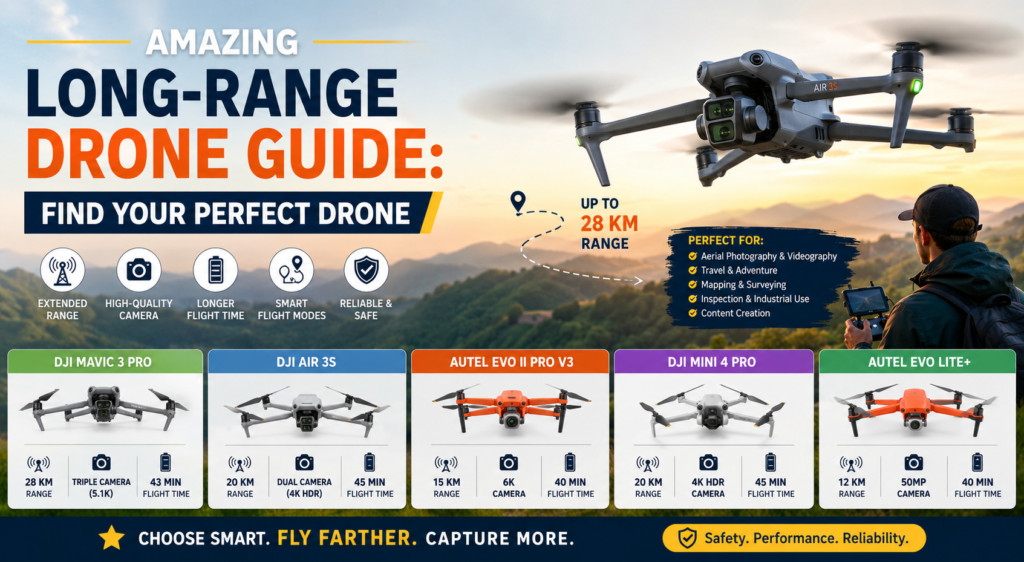
If you want to inspect structures or shoot aerial photos, long-range drones make that fun and easy. Advanced technology and features add to the fun. Choosing the right drone will depend on how far you plan to fly, how much you will spend, and how experienced you are. Below you will find each drone’s salient features.
Comparison of Long Range Drones
| Drone | Maximum Range | Camera | Flight Time | Best For |
|---|---|---|---|---|
| DJI Mavic 3 Pro | 28 km | Triple Camera (Hasselblad) | 43 Minutes | Professional Photography |
| DJI Air 3S | 20 km | Dual Camera | 45 Minutes | Travel & Content Creation |
| Autel EVO II Pro V3 | 15 km | 6K Camera | 40 Minutes | Commercial Projects |
| DJI Mini 4 Pro | 20 km | 4K HDR Camera | 45 Minutes | Beginners & Travelers |
| Autel EVO Lite+ | 12 km | 50MP Camera | 40 Minutes | Landscape Photography |
1. DJI MAVIC 3 PRO
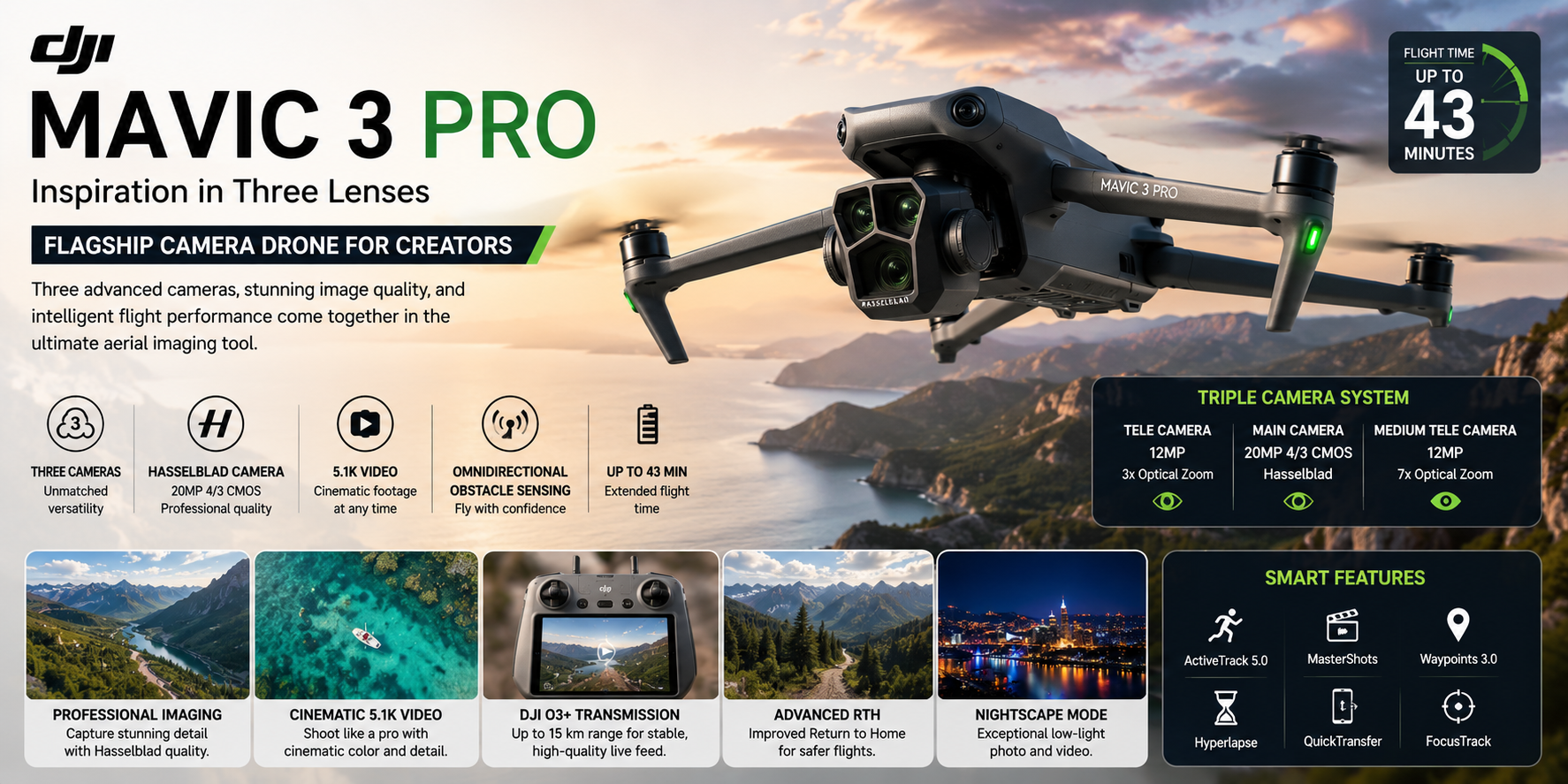
The three-camera system of the DJI Mavic 3 Pro brings long-range drone shooting to the highest professional level. Because of its excellent camera systems, filmmakers and commercial drone operators will find that it suits their needs perfectly.
Key Features
- Triple-camera System
- 5.1K Video Recording
- 28 km HD Transmission
- Omnidirectional Obstacle Avoidance
- ActiveTrack 360°
- Up to 43 Minutes Flight Time
Benefits
- High Quality Images
- Excellent Long Distance Signal
- Reliable Autonomous Flight Modes
- Perfect for Photography and Filmmaking
2. DJI Air 3S
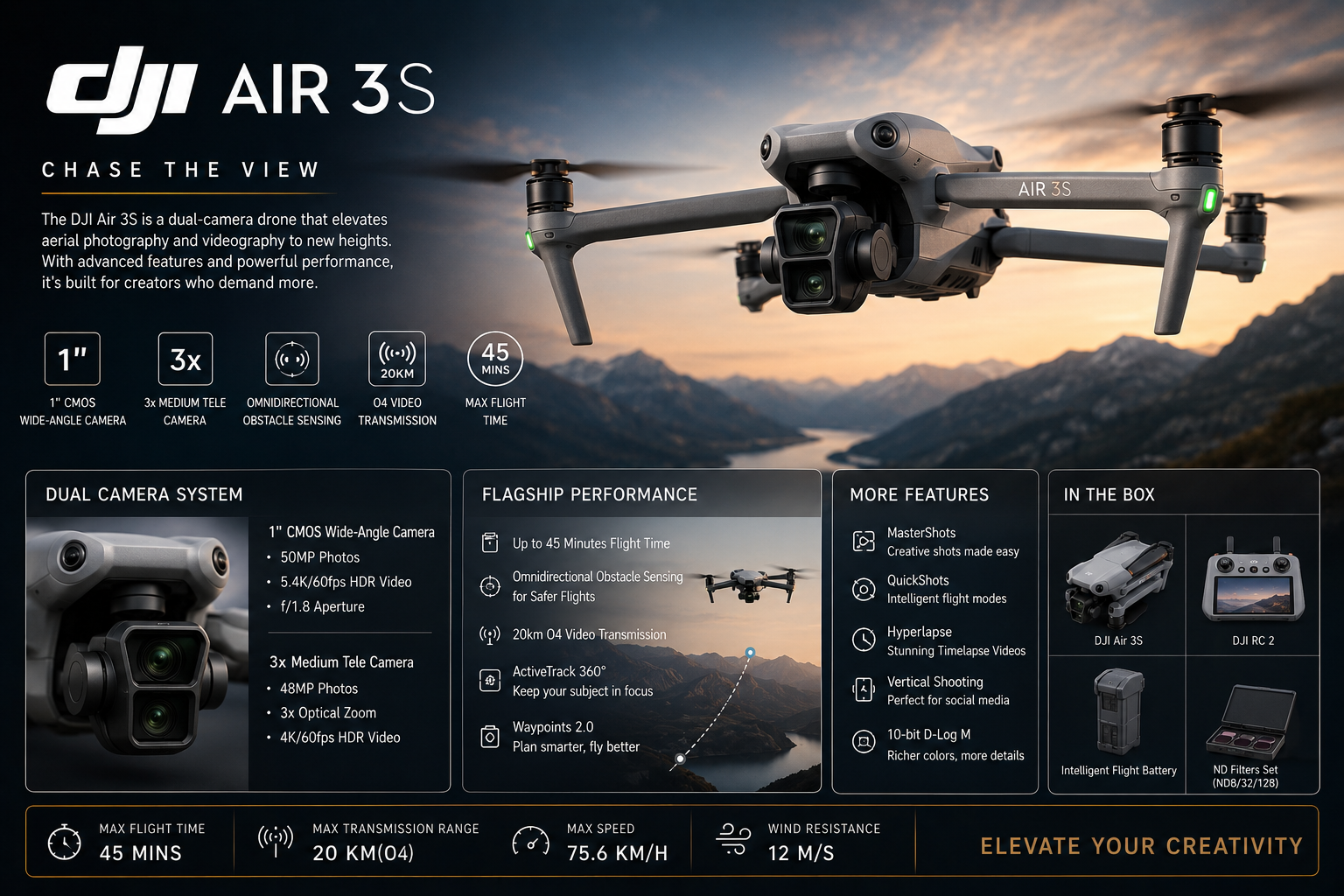
The DJI Air 3S is an excellent option for travelers, YouTubers, and Content Creators seeking a portable, affordable, and high-performance solution. This model is much smaller compared to other professional-quality drones.
Key Features
- Dual-Camera Setup
- 4K HDR Video
- 20 km Transmission
- Intelligent Obstacle Sensing
- MasterShots
- 45 Minute Battery
Benefits
- Portable and Lightweight
- Excellent Image Stabilization
- Great Battery Efficiency
3. Autel EVO II Pro V3
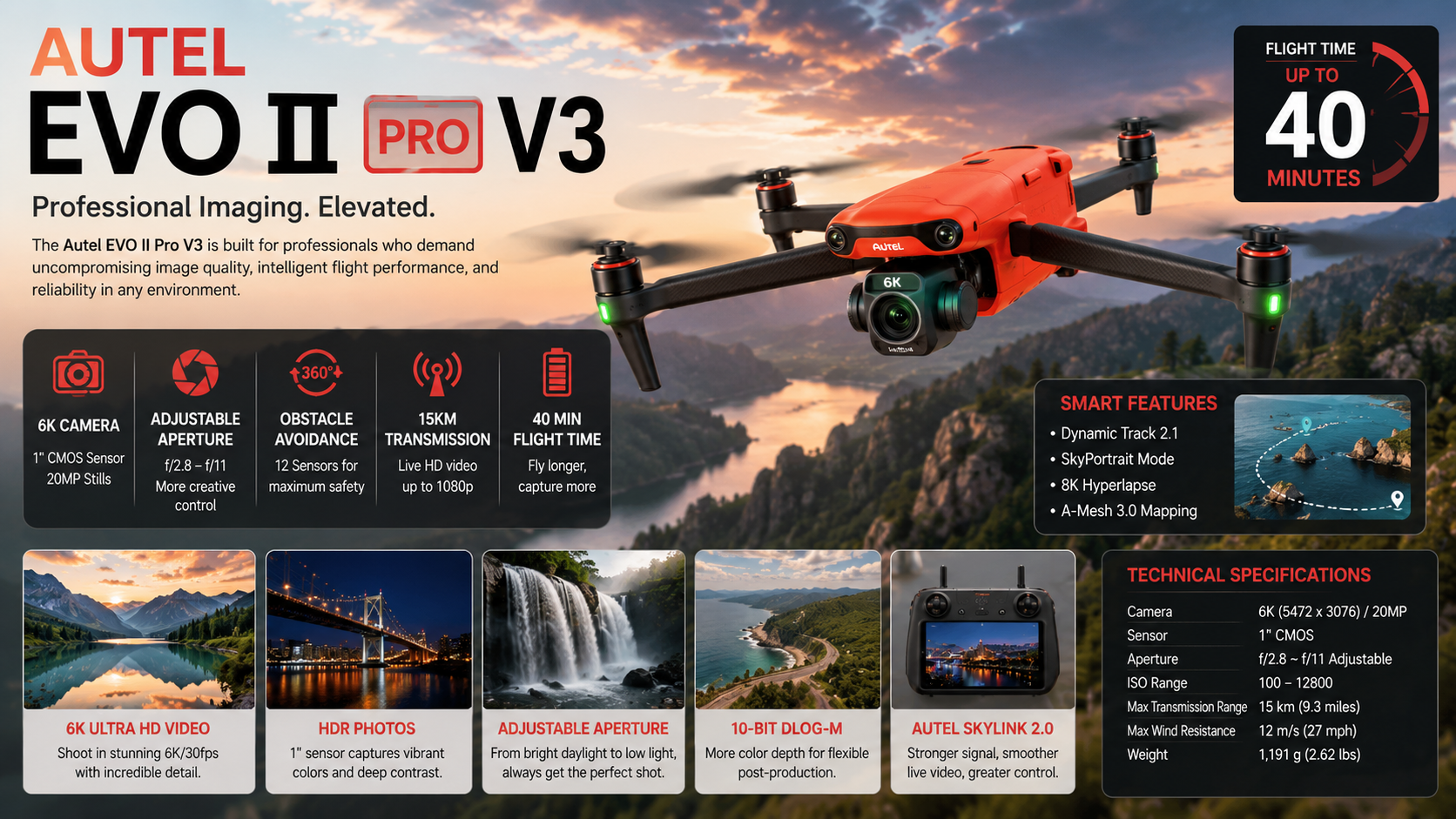
The Autel EVO II Pro V3 is an excellent option for Commercial Users, Surveyors, and Inspectors seeking a high-quality drone. Photographers will especially appreciate the high-resolution 6K Camera, a feature not offered by many of its competitors.
Key Features
- 6K Ultra HD Camera
- 1 Inch CMOS Sensor
- 15 km Image Transmission
- Dynamic Track 2.0
- 360° Obstacle Avoidance
- 40 Minute Flight Time
Benefits
- Great Video Quality
- Excellent Low Light Performance
- Strong Wind Resistance
- Commercial Drone Work
4. DJI Mini 4 Pro
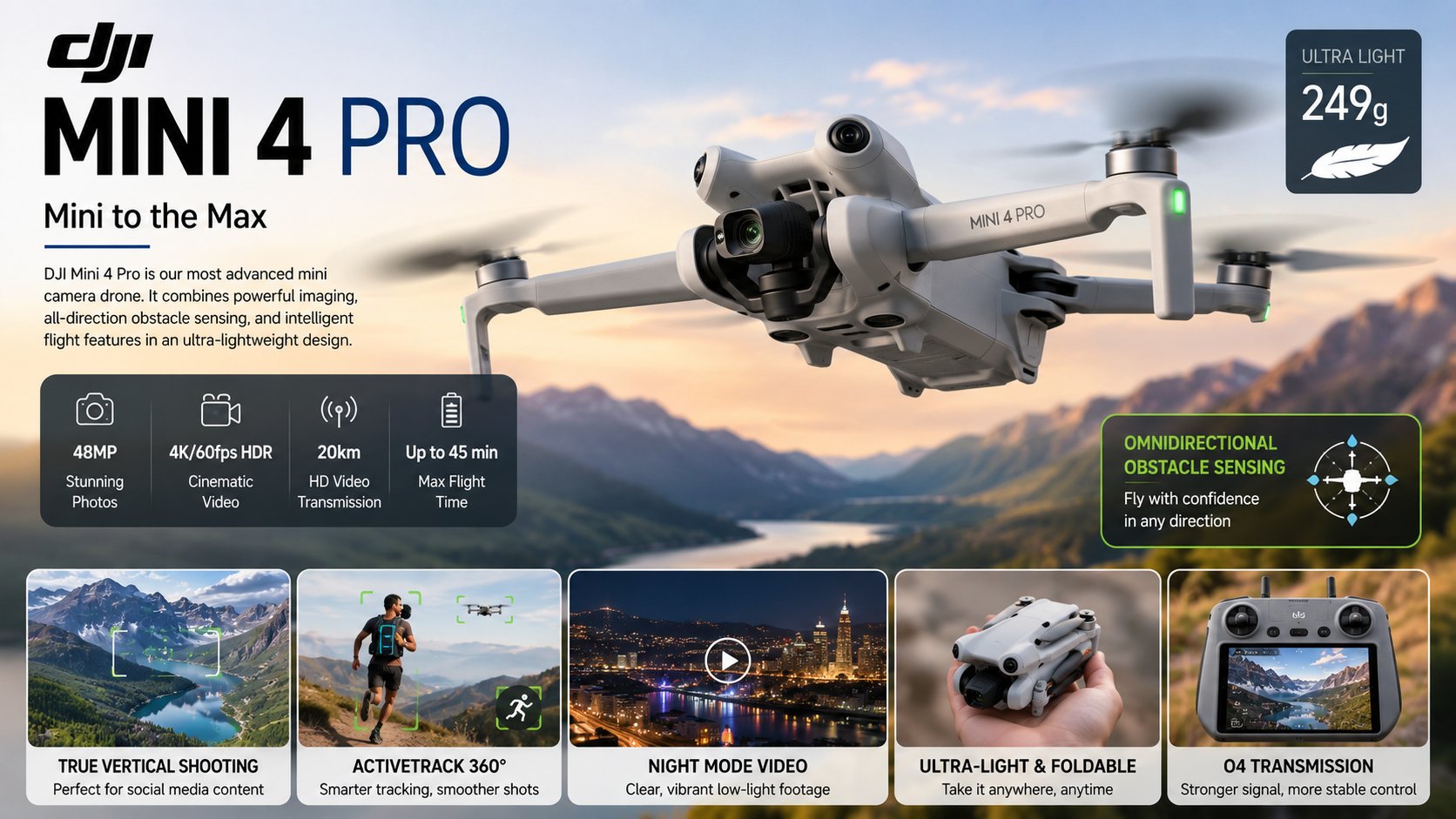
The DJI Mini 4 Pro is a lightweight, portable model that is easy to transport and compliant with regulations in most countries. Unlike most of its competitors, the DJI Mini 4 Pro proves that compact traditional drones can perform professionally.
Key Features
- Compact Design – Under 249 g
- 4K HDR Video
- Transmission Distance – 20 km
- Omnidirectional Obstacle Sensing
- ActiveTrack 360°
- Flight Time – 45 mins
Benefits
- Easy to use & beginner-friendly
- Lightweight – easy to pack
- Great camera
- Intelligent flight modes
5. Autel EVO Lite+
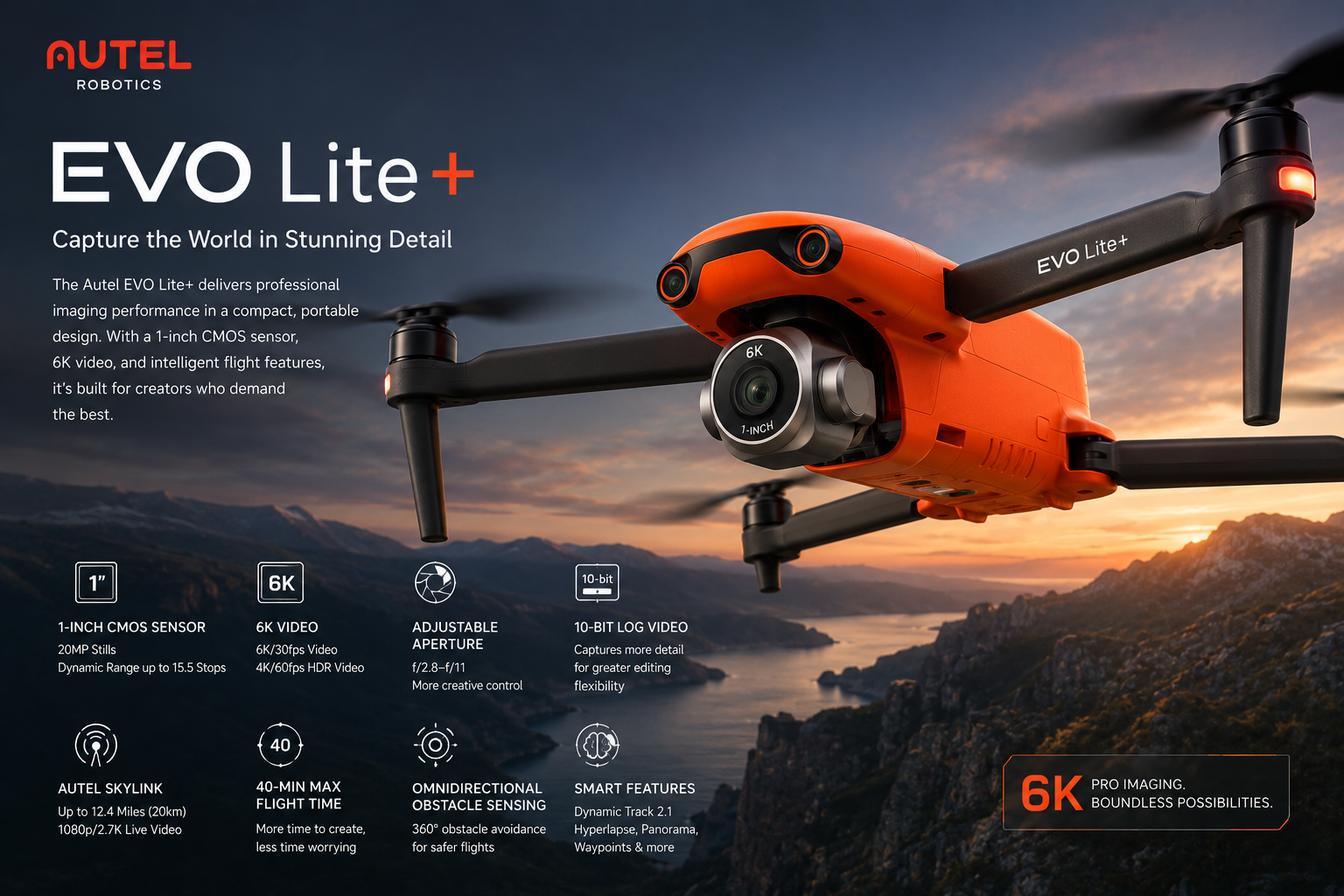
The Autel EVO Lite+ is one of the best value options for full-frame photography. Not only can you capture stunning landscapes and time-of-day shots, but you can also capture stunning night shots.
Key Features
- 50 MP
- Adjustable Aperture
- 6K Video
- 12 km transmission
- AI Tracking
- 40-minute flight time
Benefits
- Great image quality
- Great value
- Strong low-light performance
- Stabilization
Also Read- Ultimate FPV Drone Buying Guide: Avoid Costly Mistakes
The Best Mobile Apps for Long Range Drones
When paired with the right mobile application, a powerful drone becomes even more capable. These applications increase the flying experience, improve safety, enhance flying and mapping, and even improve flight planning and camera control.
| Drone | Maximum Range | Camera | Flight Time | Best For |
|---|---|---|---|---|
| DJI Mavic 3 Pro | 28 km | Triple Camera (Hasselblad) | 43 Minutes | Professional Photography |
| DJI Air 3S | 20 km | Dual Camera | 45 Minutes | Travel & Content Creation |
| Autel EVO II Pro V3 | 15 km | 6K Camera | 40 Minutes | Commercial Projects |
| DJI Mini 4 Pro | 20 km | 4K HDR Camera | 45 Minutes | Beginners & Travelers |
| Autel EVO Lite+ | 12 km | 50MP Camera | 40 Minutes | Landscape Photography |
Modern drones have made mobile companion apps a given. With these applications, users can control flights, update firmware, edit videos, monitor battery health, and access intelligent flight modes.
1. DJI Fly
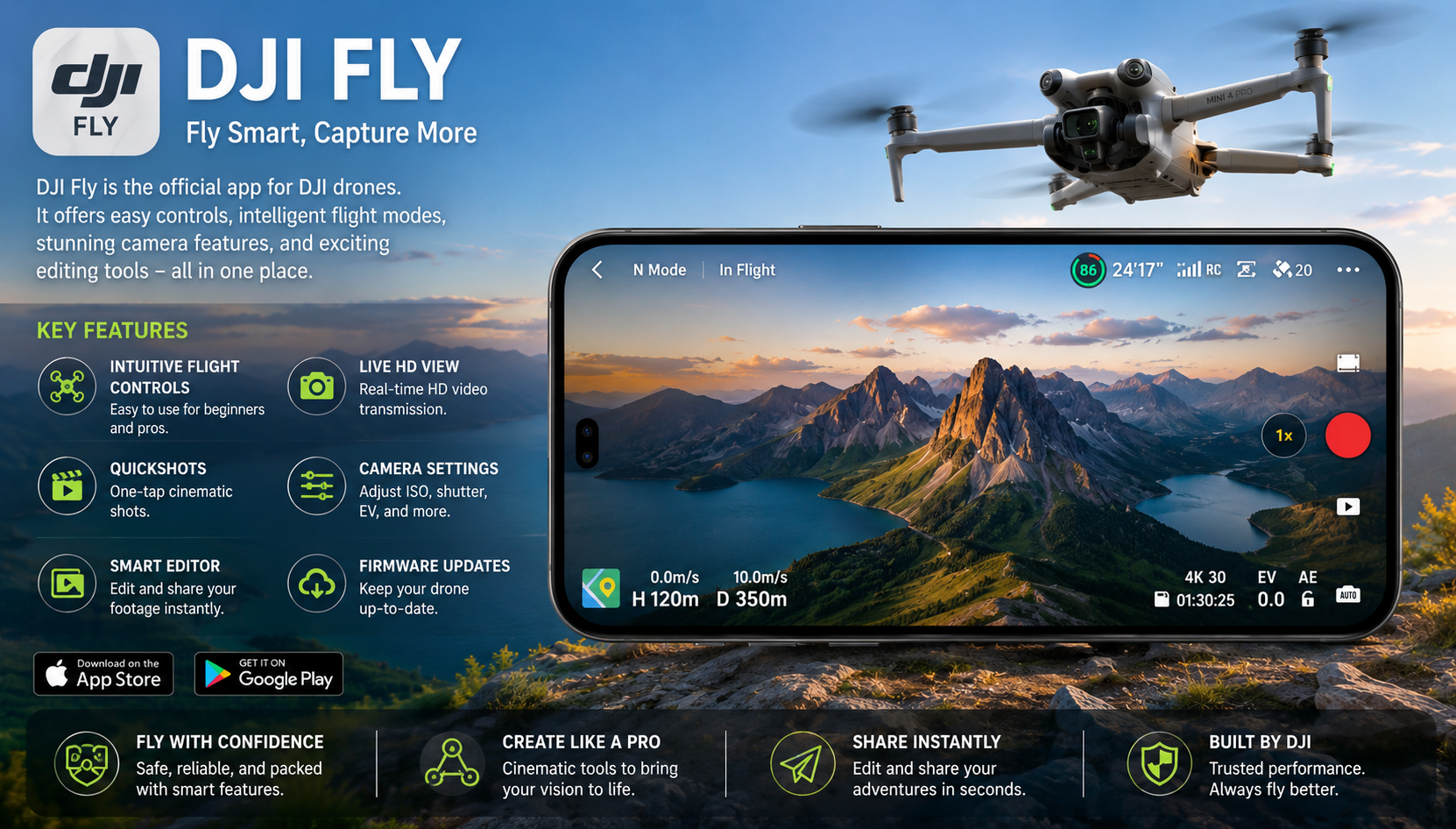
DJI Fly is the main app for most of the DJI consumer drones. It is intuitive, offers a live feed and multiple intelligent flight modes and firmware, and provides quick edits for your videos. Beginners love the easy controls, and experienced pilots appreciate the advanced camera controls.
Features
- Live HD video
- One-tap QuickShots
- Waypoint missions
- Automatic firmware updates
- Return-to-Home
- Intelligent flight modes
- Flight logs
- Video editing in-app
Benefits
- Great for beginners
- Smooth flight experience
- Regular updates
- Safety features are reliable
- Camera controls are robust
This Amazing Long-Range Drone Guide suggests users with the Mini, Air, or Mavic series drones stick with DJI Fly.
2. DJI Pilot 2
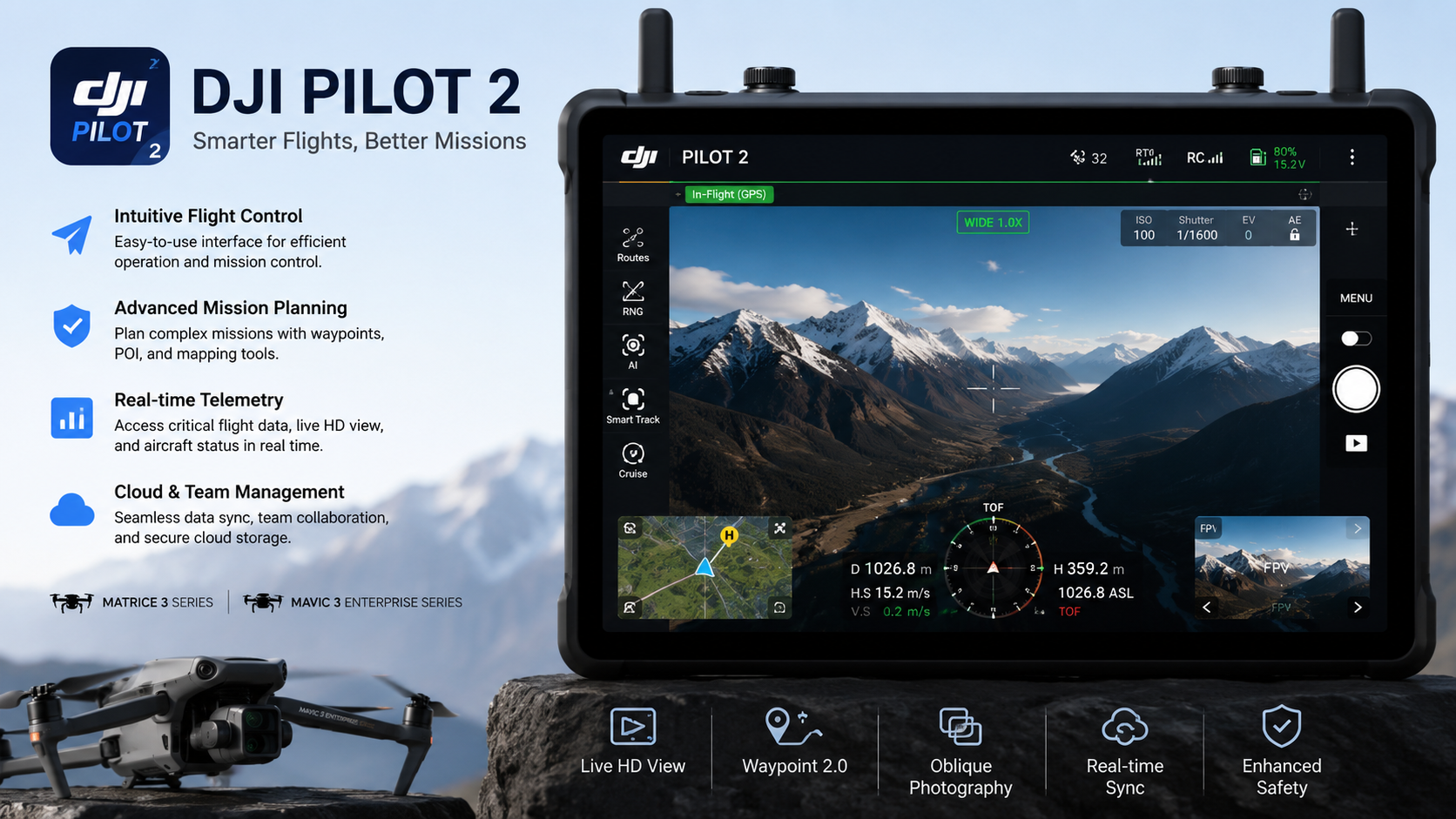
DJI Pilot 2 is built for enterprise operations. It is great for professional users, especially industrial surveyors, as it supports waypoint missions, flight in detail, and task planning for inspections as well as the use of thermal imaging.
Features
- Waypoint missions to plan and automatically carry out flights are supported.
- Thermal imaging is built in for enterprise drones.
- Planning flights in detail with real-time management of the tasks is supported.
- Flight and task operations for industrial inspections are supported.
Benefits
- Flight tasks that are repetitive are made much more efficient.
- Professional users are able to carry out inspections and surveys with much more accurate and timely data.
- The automation of tasks makes flight operations more efficient.
- Safety of the missions is made much better through planning and monitoring features.
3. Autel Sky
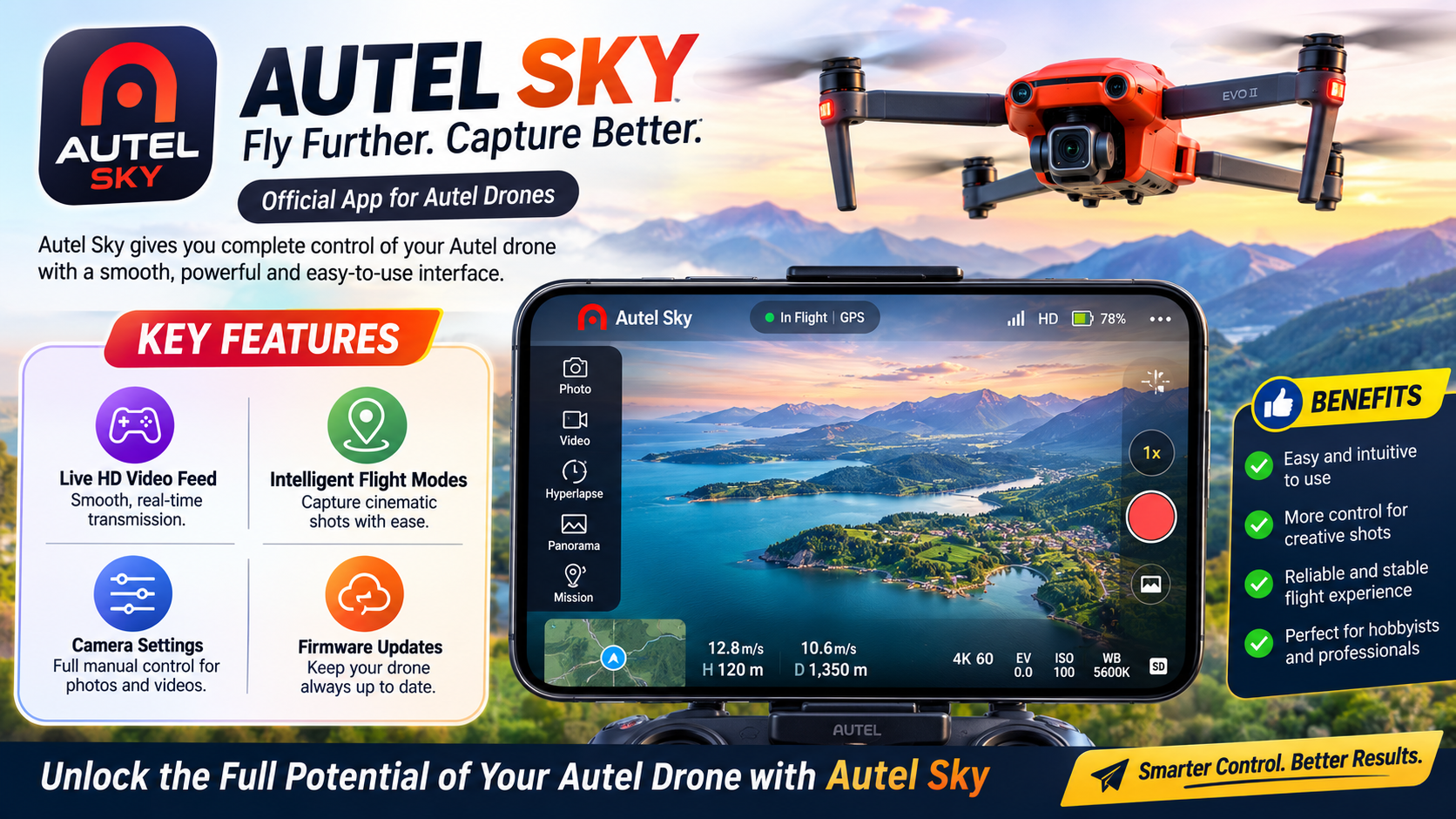
Autel Sky offers intelligent flight modes and camera settings with a user-friendly interface, live telemetry, and firmware updates for all Autel drones.
Features
- Live camera preview
- Dynamic tracking
- Adjustable camera settings
- Mission planning
- Offline maps
- Flight logging
- Firmware management
Benefits
- Professional controls
- Stable video transmission
- Easy navigation
- Customizable features
4. Litchi
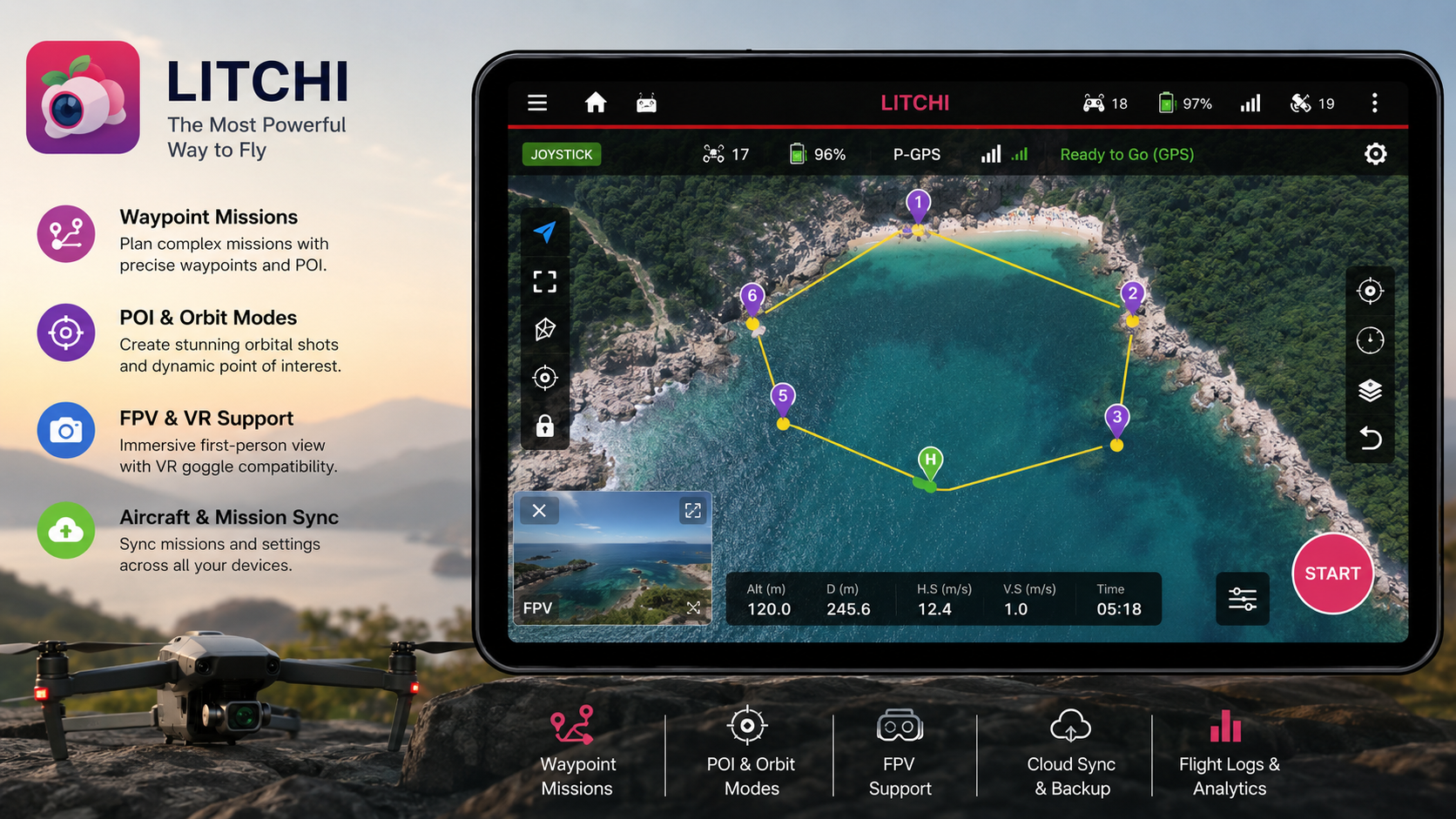
Litchi is one of the most widely used third-party drone applications. It offers waypoint missions, orbit flights, focus tracking, panoramas, and VR flights. It is advantageous for those who require the same flight path for cinematic shots.
features
- Waypoint missions
- Orbit mode
- Panorama capture
- Follow mode
- VR Support
- Automated flights
Benefits
- Filmmaker friendly
- Advanced mission planning
- Automation
- Camera creativity
The Amazing Long Range Drone Guide claims that Litchi is optimal for pilots who require advanced flight controls.
5. DroneDeploy
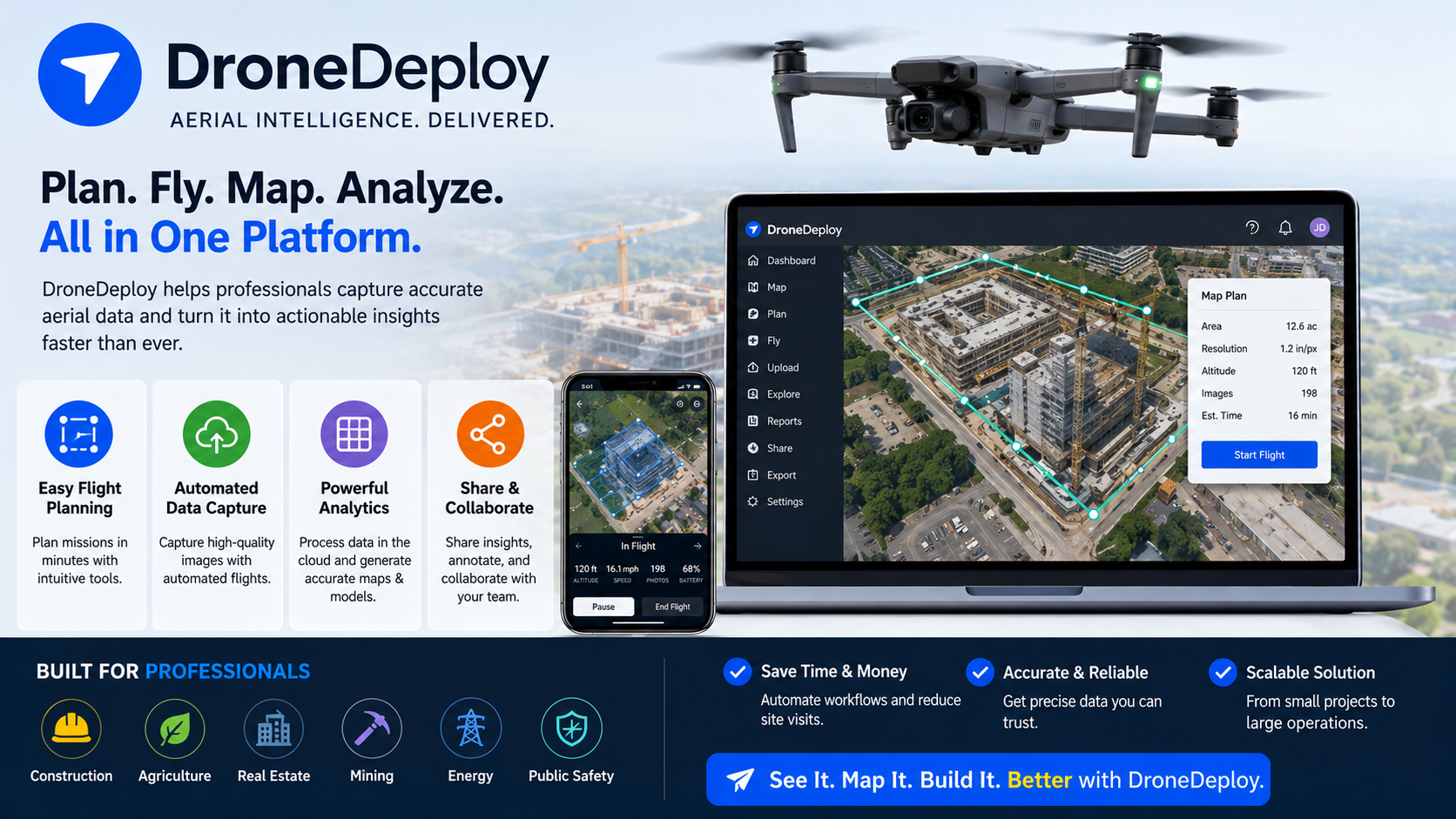
Construction companies, farmers, miners, and surveyors rely on DroneDeploy. It facilitates the automation of air mapping, 3D models, and detailed inspection reports. Each of these functions saves substantial time for the user.
Features
- Automated mapping
- 3D modeling
- Construction monitoring
- Crop analysis
- Cloud processing
- Inspection reports
Benefits
- Saves time
- Accurate mapping
- Business friendly
- Good for collaboration
Key Features of Long-Range Drone
Choosing the optimal long-range drone requires more than simply comparing the range of the flight. Here are the critical elements to consider.
1. Battery Performance
Battery performance impacts available time to capture photos, conduct inspections, or explore.
Good options will offer:
- 35-50 minutes of flight time
- Fast charging
- Intelligent battery management
- Battery health monitoring
The longer the battery life, the greater productivity and fewer interruptions.
2. High-Quality Camera
The camera plays an immensely important role in high-end drones.
Here are some particulars on premium drone cameras:
- 4k or 6k recording
- HDR video
- RAW photo
- Mechanical or electronic stabilization
- Frame Rates
- Image Sensors
The Amazing Long-Range Drone Guide recommends drones with at least 1-inch sensors if you are looking to take high-quality photos or videos.
3. Dependable Video Transmission
A reliable communication link is extremely important for long-distance flying. Newer transmission technologies bring:
- Low latency
- HD live video
- Less interference
- Stronger signals
- Automatic frequency switching
All these improvements will make long-distance flights much safer.
4. Obstacle Avoidance
Advanced sensors allow the detection of obstacles in the path of drones. Most probably sense in the following directions:
- Forward
- Backward
- Left
- Right
- Up
- Down
Obstacle avoidance makes the potential for crashes much lower and flying much simpler for novices.
5. GPS Navigation
This is very important for long-distance flying.
Some of the advantages include:
- Precise location
- Automatic Return-to-Home
- Precise hovering
- Safer flying
- Improved route planning
The Amazing Long Range Drone Guide recommends multi-satellite drones, not just GPS but also Galileo or BeiDou, for better accuracy.
Also Read- Top 10 Best PDF Editor Software: Ultimate Tools for Effortless Editing
Benefits of Long-Range Drones
The advantages of long-range drones go far beyond just distance. There are great benefits for businesses and individuals.
Capture Stunning Aerial Shots
High-end photo drones can fly longer distances and take pictures and videos of bird’s-eye views over large geographic areas.
Cinematic Content
Making professional-looking videos is easy and quick with the intelligent flight modes and stabilization of newer drones.
Boost Productivity
Having long-range drones means time spent traveling across large sites in areas like construction, surveying, and agriculture can now be spent gathering more accurate data.
Improve Safety
Drones can now do inspections and gather data in potentially dangerous locations, like on top of roofs or power poles, without putting employees in those locations.
Buying Guide: How to Choose the Best Long-Range Drone
Making sure you choose the right drone for yourself personally is even more important than making sure you buy the drone. Look at where you want to be able to fly, what you want the drone for, and how much you want to spend overall.
1. Explain Your Reason for the Drone
Different reasons mean you want different features in the drone.
For photography and videography, you’d want a drone with a large image sensor and 4K or 6K capability as well as advanced stabilization.
- For travel, you want a lightweight foldable drone with a large battery.
- For commercial work, you’d need a drone with a thermal camera and mapping as well as avoidance capabilities.
- For agriculture, choose a drone with mapping as well as the capability for automated flights.
2. Flight Range Should be Considered
A drone will have a lot of features for making the flight as long as possible, but those are all under the idea that they’ll actually be able to fly that far.
- Take into account as well a signal that can reach real distances, and that can survive interference.
- Choosing the drone with the longest flight range is worse than choosing a drone that can transmit video and has reliable signal strength at a short range.
3. Check Battery Performance
On long flights, you need batteries you can depend on. Beyond considering the maximum flight time, you should also consider:
- Charging speed
- Availability of extra batteries
- Battery life cycle
- Smart battery management
- Temperature protection
4. Camera Quality Matters
For many, the camera is the most important part of the purchase.
Look for:
- 4K or above recording resolution
- HDR support
- RAW image
- Three-axis gimbal stabilization
- Low-light support
- Adjustable aperture (if any)
5. Intelligent Flight Modes
AI-powered flight modes are a favorite addition by many to a drone.
Some of the most popular intelligent modes are:
- ActiveTrack
- Follow Me
- Waypoint Missions
- Orbit Mode
- MasterShots
- Hyperlapse
- QuickShots
- Return-to-Home
These modes make difficult camera movements easy and help in the pursuit of professional footage.
Safety Tips for Long-Range Drone Flying
Being responsible is just as important as choosing the right drone. Safe practices the right drone. Safe practices ensure the safety of people and property as well as your own equipment.
1. Keep Firmware Updated
Regular updates from manufacturers often include battery management as well as stability and safety improvements. Always update before important flights.
2. Monitor Weather Conditions
Wind, rain, and fog can severely impact the performance of your drone. Avoid flying during any potentially poor weather, especially for long-range flights.
3. Maintain Visual Awareness
Even if your drone supports long distance, always follow the local laws regarding your visual line-of-sight when required.
4. Check Battery Levels
Never start a long-distance flight with an undercharged battery. During the flight, monitor your battery levels and always keep battery power for a safe return trip.
5. Use Return-to-Home
Set your Return-to-Home altitude before takeoff. This will allow your drone to avoid obstacles like buildings and trees when it is required to return to home.
6. Respect Local Regulations
Do your research on the local regulations before you fly. Make sure to avoid no-fly zones, and take into account the regulations for near airports, military airspace, and privacy.
Common Mistakes to Avoid
There are many mistakes newly purchased drones are subject to that don’t have to be made, and many of these mistakes shorten the equipment’s lifespan or cause a crash.
Make an effort not to make the following mistakes:
- Fly your drone with a low battery.
- Avoid all necessary firmware updates.
- Buy a drone based solely on the advertised range.
- Fly your drone in strong winds.
- Skip necessary compass or IMU calibrations.
- Fail to inspect your propellers.
- Disregard the local drone regulations or flight laws.
- Fly beyond your own skill.
If you actively avoid the mistakes listed above, it will help you have an overall better flying experience and reduce crash risk and accidents.
Conclusion
Picking a drone can be a simple task. Knowing how to evaluate flight range, camera quality, battery, flight modes, and mobile apps can allow you to confidently pick a drone that matches your needs with no difficulty.
There are a number of different scenarios in which long-range drones work well: breathtaking landscapes, professional video work, infrastructure inspections, and long-distance travel, to name just a few. Looking for a good long-range drone? Choose a balance of performance, reliability, and safety for satisfaction that lasts. Invest in a drone that aligns with your goals, and keep software and yourself up to date. This way, you can enjoy continued use of your drone for many years to come.
FAQs
1. What makes a long-range drone?
Long-range drones have a 10 km + range in ideal conditions. This Amazing Long-Range Drone Guide suggests that more important than distance at advertised maximums is reliable signal quality.
2. What is the best app to fly long-range drones?
Drones from DJI and Autel can use their respective apps, DJI Fly and Autel Sky. Litchi provides even more advanced waypoint planning, and is a favorite among drone pilots, as well.
3. What is the maximum distance for a long-range drone?
There are a number of drones that claim a range of 20 km +. The actual range is affected by a number of things, including the weather, as interference, flight regulations, and the environment.
4. Are long-range drones good for beginners?
They can be. Long-range drones that are beginner friendly can also be found to have GPS Stabilization, Obstacle Averting systems, and intelligent flight modes built in.
5. Do I need internet to fly long-range drones?
Not to fly, but internet may be needed for updates or to gain access to maps or synced flight data. Communication still takes place between a long-range drone and the remote controller.