U.S. AI Statistics 2026: A Massive Market Surge
+
Table of Contents
- 1 AI Statistics 2026 at a Glance
- 2 Popular AI Applications
- 2.1 1. ChatGPT
- 2.1.1 Features:
- 2.2 2. Google Gemini
- 2.2.1 Features:
- 2.3 3. Claude
- 2.3.1 Features:
- 2.4 4. Microsoft Copilot
- 2.5 5. Perplexity
- 2.6 Most Beneficial Aspects of AI for the Market
- 2.6.1 Increased Efficiency
- 2.6.2 Content Generation
- 2.6.3 Superior Learning
- 2.7 Benefits of the Expanding AI Market
- 2.8 AI Infrastructure Investment Is Exploding
- 2.9 AI and Online Shopping
- 2.10 Challenges in AI Statistics
- 2.11 AI Statistics: The Next Wave of Explosive Growth
- 3 Conclusion
- 3.1 Frequently Asked Questions
- 3.1.1 1. What do AI Market Statistics 2026 show?
- 3.1.2 2. Which AI applications are used the most in 2026?
- 3.1.3 3. How much are companies spending on AI?
- 3.1.4 4. Is there consumer spending on AI applications?
- 3.1.5 5. What are the most important advantages of AI applications?
- 3.1.6 6. What are some issues facing the AI market?
Artificial intelligence has evolved from an academic discipline to the largest commercial ecosystem within the digital economy. AI now includes everything from voice assistants to large language models, cloud and ML services, automation tools, and enterprise software. The latest AI Statistics in 2026 showcase the rapid pace of this transformation.
All industries are now AI infrastructure clients while all users are now fans and, in many cases, creators of applications powered by AI. The market is unsurprisingly competitive and draws new industry- and task-specific models and applications.
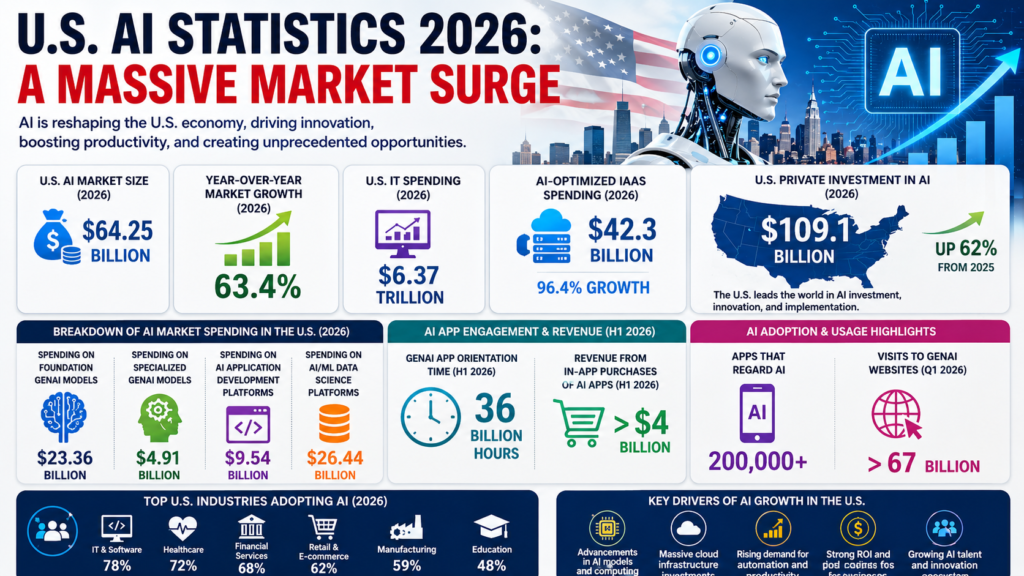
Gartner predicts that global spending on AI models and platforms will be $64.25 billion in 2026 and $39.31 billion in 2025, a growth of almost 63.4%. Spending on generative models will more than double, while use cases will see an even more rapid growth.
AI Statistics 2026 at a Glance
The following data illustrate some key indicators of market growth:
| AI Market Metric | 2026 Data |
|---|---|
| Spending on AI Models and Platforms | $64.25 billion |
| Year-over-Year Market Growth | 63.4% |
| Spending on Foundation GenAI Models | $23.36 billion |
| Spending on Specialized GenAI Models | $4.91 billion |
| Spending on AI Application Development Platforms | $9.54 billion |
| Spending on AI/ML Data Science Platforms | $26.44 billion |
| GenAI App Orientation Time, H1 202 |
The data show the growth of AI across numerous segments of the tech stack, as opposed to being confined to a single product segment.
Why Is the AI Market Growing So Rapidly?
According to the provisional data published by AI Market Statistics 2026, the most important factor is, undoubtedly, the increase in accessibility. No longer are sophisticated AI tools the domain of researchers and/or companies with a background in technology, as consumers can interact with these tools on their smartphones, via web browsers, desktop applications, and business productivity software.
A second important factor is the rapid increase in use cases. AI tools and platforms are deployed to write email drafts, summarize text, build images, transact information, learn about new subjects, code software, plan activities, and answer questions.
Companies have now moved beyond piloting AI for their customer interaction, marketing and sales, IT, security, finance, people and work, and analytics.
The supporting infrastructure for these applications is growing rapidly too. More companies are purchasing higher-end processors, data centers, cloud computing services, networking tools, and specific types of computing equipment in order to manage the increased workload imposed by AI.
Also Read- Best AI Voice Generator Software That Delivers Stunning Results
Popular AI Applications
AI applications are the obvious example of growing market demand. Several companies have developed applications that have garnered significant user bases.
1. ChatGPT
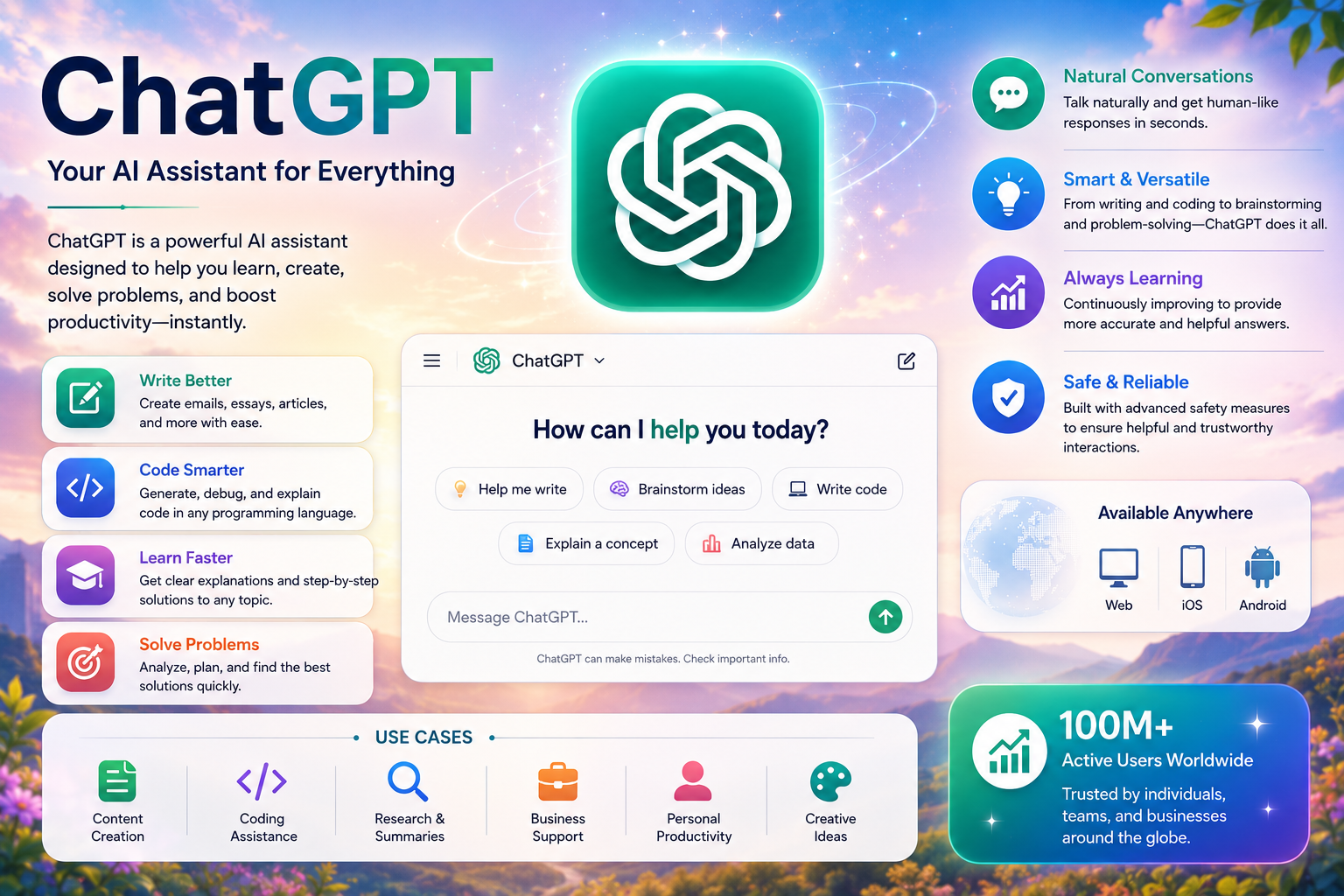
ChatGPT is probably one of the most popular AI applications worldwide. ChatGPT has tools for assistance in writing, brainstorming, coding, analysis and research, helping in everyday tasks, and more.
Features:
- Conversational interface for assistance
- Content generation
- Coding assistance
- Document analysis and information assistance
- Brainstorming
- Translation
- Multimodal tools
One of the AI Market Statistics for 2026 reports that ChatGPT reached over 1 billion active users in May 2026, according to Sensor Tower.
2. Google Gemini
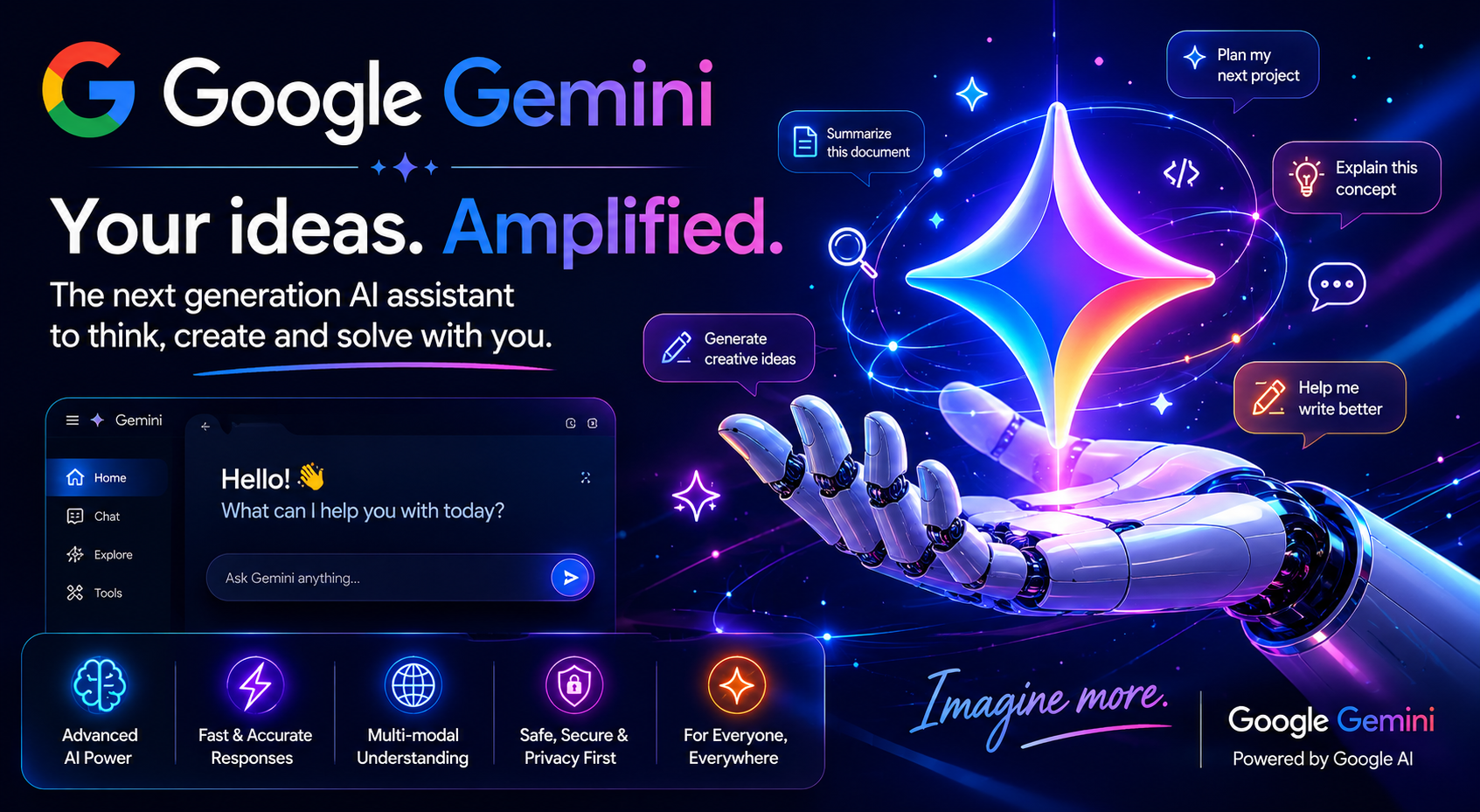
Google Gemini, a combination of Google’s conversational AI and other technologies, allows users to create content, understand content, process media, and assist users in completing various productivity tasks.
Features:
- Multimodal interface
- Writing assistance
- Research tools
- Image understanding
- Productivity assistant
Google’s robust ecosystem has also helped Gemini, especially through Android and other general-use services.
3. Claude
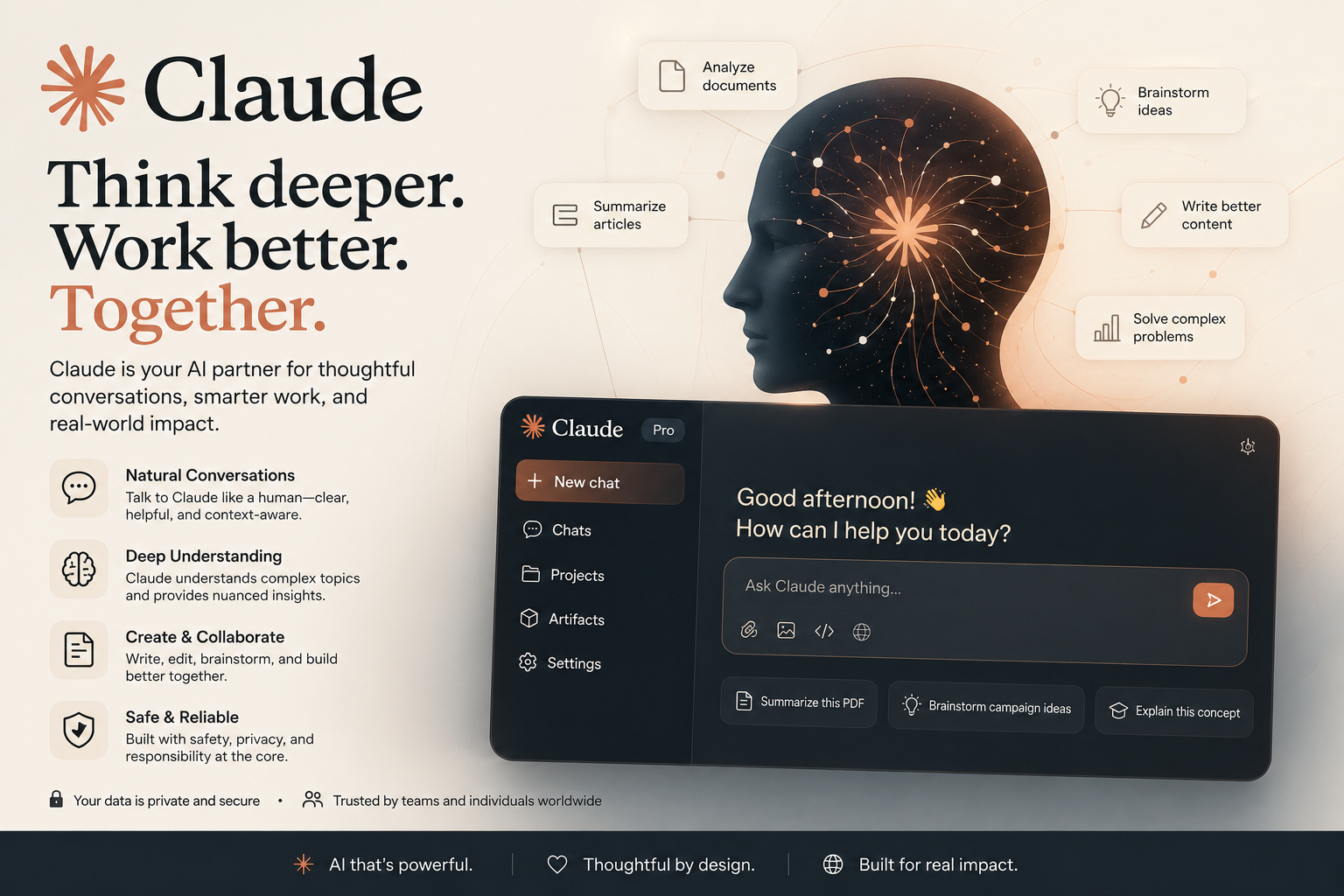
Anthropic has introduced Claude for general AI assistance in writing and reasoning tasks, as well as analysis and logic for professional workflows.
Features:
- Writing assistance
- Coding assistance
- Reasoning
- Document analysis
- Business assistance
Claude has seen rapid user base growth in 2026; this shows the increased competitiveness in the AI assistant market.
4. Microsoft Copilot
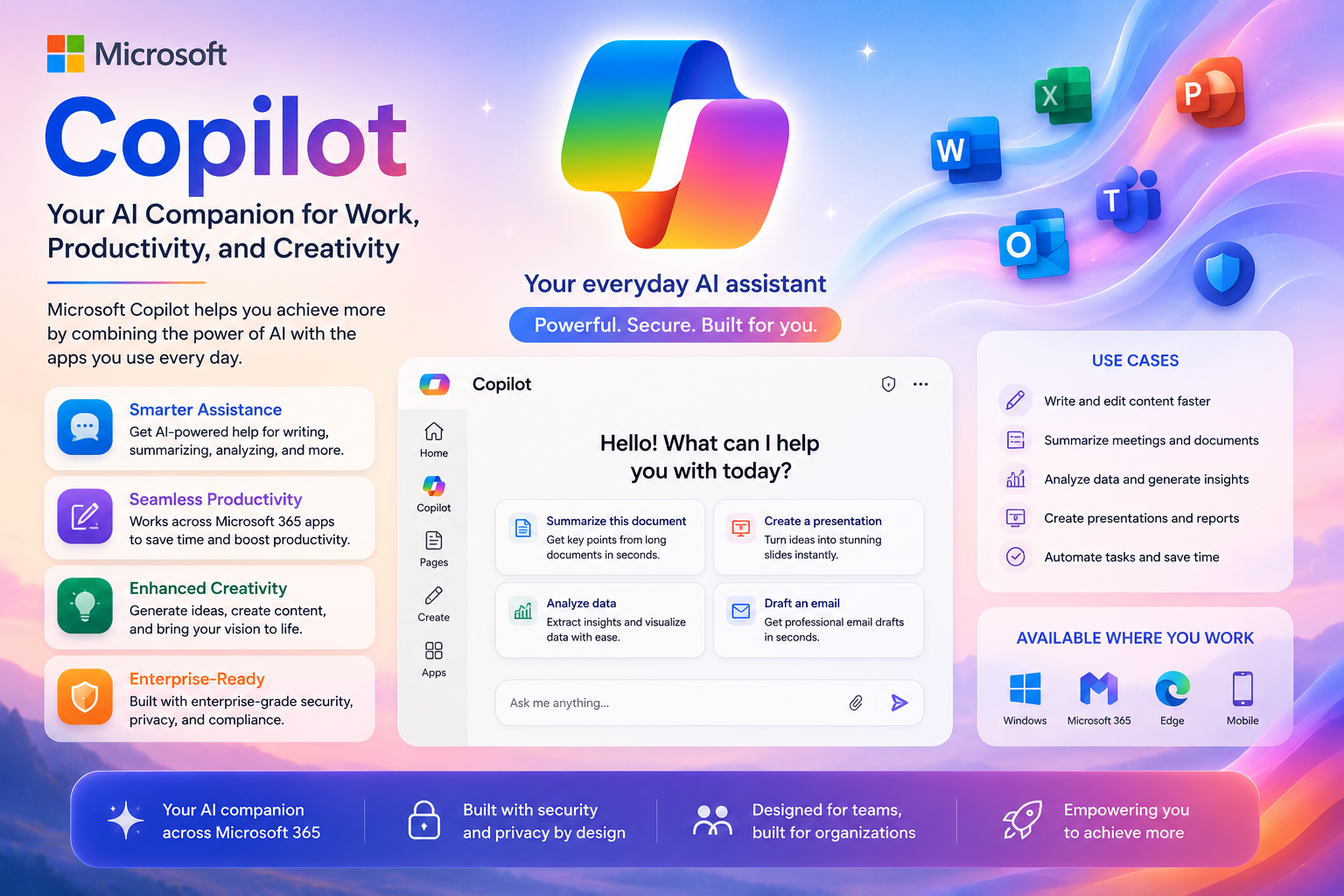
Focused on productivity. Developed for integration with company-based functions and tasks. Works across the MS Office Suite with features for writing, document summarization, finding information, coding, and lots more.
5. Perplexity
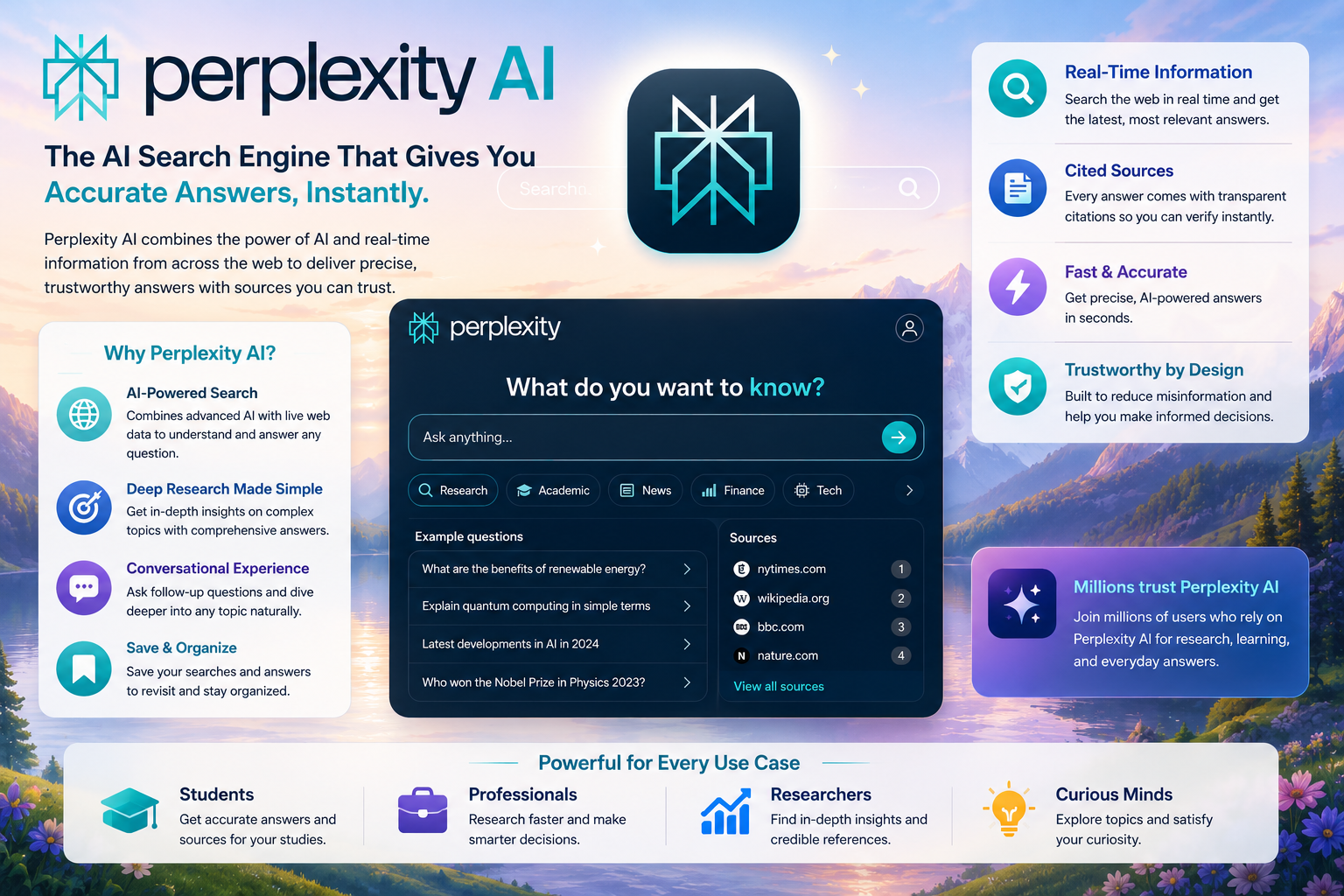
Focused on using AI for information research and discovery. Built for tools that allow for research inclusion as well as answering questions with supporting information. Some of the core features include: AI-based searching and research, conversation assist for information discovery, and document summarization.
The trend is moving from the AI TeC or AI as a standalone technology to AI being integrated into technologies used daily.
Most Beneficial Aspects of AI for the Market
The AI Market statistics for 2026 show significant growth and are directly linked to the benefits of AI at an individual and company level.
Increased Efficiency
Simplification of the complex and mundane. AI can now complete tasks with even greater speed. Additionally, AI can now carry out tasks that were previously impossible. Examples of these tasks include indexing, organizing, and drafting reports and analyzing data.
Content Generation
AI technology can generate content at unprecedented speeds. AI can be easily integrated to generate advertising text, product descriptions, and publishing content across various online platforms.
Superior Learning
AI systems can be used as teaching assistants. AI systems can explain complex concepts to learners, offer custom learning in the classroom, and provide assistance to learners.
Benefits of the Expanding AI Market
Automation in Business
AI can automate tedious tasks such as customer, employee, and business communication, data processing, and document management. It can manage sales and even sell goods.
Automation improves the efficiency of businesses.
Better Customer Communication
Through the use of AI, businesses are able to instantly respond to customer requests. AI can be used to provide personalized recommendations and improve customer shopping experiences. Many businesses are using AI to assist customers in navigating their websites and to enhance the overall customer experience.
AI Infrastructure Investment Is Exploding
The use cases of AI continue to grow. The AI Statistics 2026 report states that consumer payments will be the fastest-growing segment.
Sensor Tower predicts that in the first half of 2026, in-app purchases of AI-based software will reach $4 billion. This is a massive increase compared to previous purchasing data.
This shows that consumers will organize and automate their business with the support of AI.
The increase in paid AI applications shows a shift from curiosity-driven AI service usage to more goal-oriented AI application and service integration.
AI and Online Shopping
AI Statistics 2026 shows another interesting finding in the number of applications built on AI. There are over 200,000 AI-related applications available on the App Store. More than 4 billion AI-related applications are expected to be downloaded worldwide in the first half of 2026.
AI is found in the following categories:
- Business and productivity
- Photography
- Video editing
- Education
- Writing
- Design
- Shopping
- Finance
- Customer service
- Entertainment
- Healthcare technology
- Software development
Users do not have to visit a particular AI assistant. AI has been built into other programs.
Challenges in AI Statistics
Growing markets bring more challenges.
AI systems misunderstanding instructions and producing incorrect results is a challenge that requires human oversight and verification.
Privacy and security are issues that need to be addressed. Accommodating sensitive information flows in business processes requires careful consideration.
It is also a challenge that the high levels of investment in AI described in AI Market Statistics 2026 require justification from technology companies.
Also Read- Powerful Graphic Design Software: Create Stunning Designs
AI Statistics: The Next Wave of Explosive Growth
These numbers should not be considered as technology fads. They outline the evolving production and consumption of digital services.
Businesses should identify segments in their processes where AI provides a solution. AI can manage your customer support, write supporting code, and breeze through software development. AI can help with automating cognitive load reduction.
Businesses should create policies on the security and accuracy of data and AI, as well as define boundary conditions of use for AI.
AI assistants will become part and parcel of more and more applications and software. This includes search engines and mobile devices.
Competition among businesses will increase as they try to develop AI that has better reasoning with lower costs, better multimodal support and industry-specific solutions, and more reliability.
Conclusion
The statistics on AI market projections for 2026 show that the industry will continue to experience high levels of growth due to financial investments and user participation. AI models and platforms continue to experience rapid growth as thousands of applications integrate more complex AI solutions.
AI has drastically changed consumer perceptions of AI. Advanced enterprise infrastructure and applications are continuing to be developed and backed as consumer perception of AI changes.
Big businesses aren’t only thinking about potential market size. The true opportunity within AI lies in the creative solutions for problems that AI acts as a useful tool for. AI is fundamentally changing how businesses interact and engage with the digital economy, spanning from marketing to automation in customer services, development of productivity tools, and research related to software development, to name just a few areas.
Of course, AI adoption cannot happen in a vacuum. Continuous efforts toward accuracy and lessening the costs of AI technologies while addressing privacy and security concerns should remain the goals of AI research and development.
It can also be assumed that the development of consumer and enterprise technology will continue to integrate AI within the next four years, as the 2026 Edition of AI Market Statistics forecasts.
Frequently Asked Questions
1. What do AI Market Statistics 2026 show?
They show how AI models, AI platforms, AI applications, and AI infrastructure are growing, as well as how consumers are engaging with and spending money on AI. The market is growing both for AI for businesses and for AI for consumers.
2. Which AI applications are used the most in 2026?
ChatGPT, Google Gemini, Claude, Microsoft Copilot, and Perplexity are some of the most well known applications. Each has its strengths and its audience.
3. How much are companies spending on AI?
AI Cloud, data centers, processors, software, and other infrastructure are all spending areas. Gartner projects market spending on AI models and platforms will surpass $64 billion in 2026.
4. Is there consumer spending on AI applications?
Yes. Spending on premium AI applications is increasing as users are more interested in superior applications that provide benefits of greater utility.
5. What are the most important advantages of AI applications?
AI applications bring a variety of benefits including improved productivity, personalization, automated data analysis, coding aids, content creation, assistance with research, augmented data analysis, and improved customer experience.
6. What are some issues facing the AI market?
Some of the most important issues are accuracy, privacy, security, cyber and infrastructure costs and regulation, intellectual capital, and demonstrating value.