AI Prompt Engineering: Unlock Powerful AI Results
+
Table of Contents
- 1 What Is AI Prompt Engineering?
- 1.0.1 For example, instead of asking:
- 1.0.2 You could write:
- 1.1 Why Is Prompt Engineering Important?
- 1.1.1 It can help users:
- 2 Popular AI Apps for Prompt Engineering
- 2.1 1. ChatGPT
- 2.1.1 Key Features
- 2.2 2. Claude
- 2.2.1 Key Features
- 2.3 3. Google Gemini
- 2.3.1 Key Features
- 2.4 4. Perplexity
- 2.4.1 Key Features
- 3 AI App Comparison
- 4 How to Write a Powerful AI Prompt
- 4.1 1. Define the Objective
- 4.1.1 Instead of:
- 4.1.2 Try:
- 4.2 2. Assign a Role
- 4.2.1 For example:
- 4.3 3. Add Context
- 4.3.1 You might provide:
- 4.4 4. Add Clear Constraints
- 4.4.1 For example:
- 4.5 5. Specify the Output Format
- 4.5.1 You can request:
- 4.5.2 For example:
- 5 Advanced Prompt Engineering Techniques
- 5.1 Few-Shot Prompting
- 5.2 Prompt Chaining
- 5.3 Iterative Prompting
- 5.3.1 For example:
- 5.3.2 Then:
- 5.4 Self-Critique Prompts
- 5.4.1 You could ask:
- 5.5 Benefits of AI Prompt Engineering
- 5.5.1 Increased Productivity
- 5.5.2 Better Content
- 5.5.3 Improved Research
- 5.5.4 Faster Coding
- 5.5.5 Consistent Workflows
- 5.5.6 More Creative Possibilities
- 5.6 Common Prompt Engineering Mistakes
- 5.7 Best Practices for Better Prompts
- 6 Conclusion
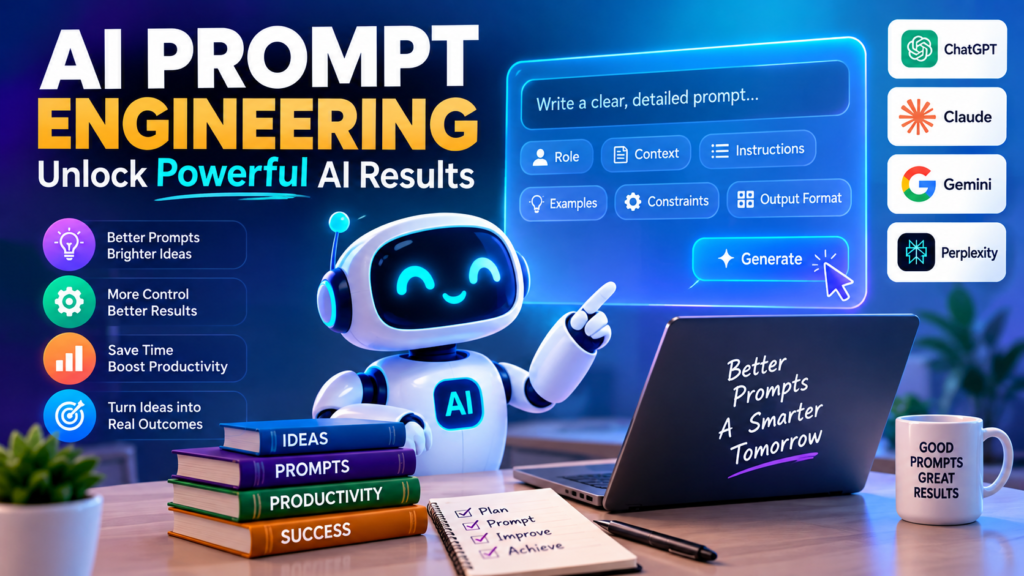
Artificial intelligence has quickly become one of the most useful technologies for work, research, content creation, coding, marketing, and everyday productivity. However, simply using an AI tool does not always guarantee a great answer. The quality of the instruction you provide can have a major impact on the quality of the result.
This is where AI prompt engineering becomes important. It is the process of creating clear, specific, and structured instructions that help AI understand what you want and deliver a more relevant response.
Whether you are a content creator, SEO professional, student, developer, marketer, or business owner, learning how to write better prompts can help you save time and get more value from modern AI applications.
What Is AI Prompt Engineering?
AI prompt engineering is the practice of designing and improving prompts to guide an artificial intelligence model toward a desired outcome.
A prompt can be as simple as a question or as detailed as a complete set of instructions containing a role, objective, context, limitations, examples, and output format.
For example, instead of asking:
“Write an article about SEO.”
You could write:
“Act as an experienced SEO strategist and create a beginner-friendly article about technical SEO. Use clear headings, practical examples, simple language, and include a conclusion and FAQs.”
The second instruction gives the AI considerably more direction. It explains the role, subject, audience, writing style, structure, and expected result.
Why Is Prompt Engineering Important?
AI models are powerful, but they cannot automatically understand every user’s expectations. A short or vague instruction may produce a generic answer, while a well-structured prompt can produce a much more targeted response.
One of the biggest advantages of AI prompt engineering is improved communication between the user and the AI system.
It can help users:
- Generate more relevant responses
- Reduce unnecessary revisions
- Create consistent content
- Improve research workflows
- Develop ideas faster
- Analyze information more effectively
- Generate and troubleshoot code
- Automate repetitive tasks
For businesses, effective prompting can also improve productivity across marketing, customer support, sales, documentation, and internal operations.
Popular AI Apps for Prompt Engineering
There are many AI applications available today, but several have become especially useful for experimenting with prompts and AI workflows.
1. ChatGPT
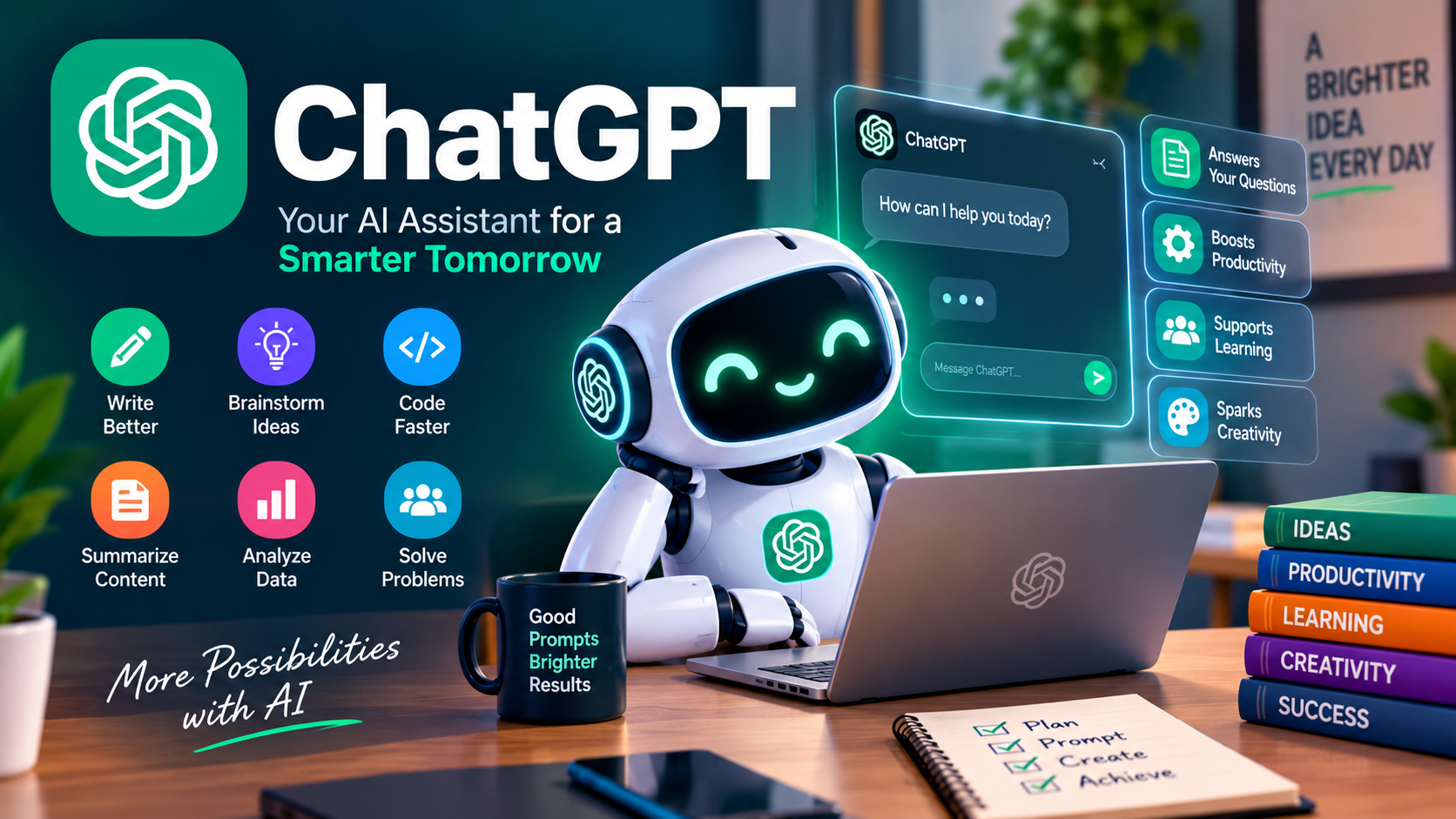
ChatGPT is a general-purpose AI assistant that can handle a wide variety of tasks. It can help with writing, brainstorming, research, coding, data analysis, summarization, and creative projects.
Its conversational nature makes it particularly useful for prompt experimentation. Users can start with an initial instruction, review the response, and then refine the prompt through follow-up instructions.
Key Features
- AI conversations
- Content generation
- Writing and rewriting
- Coding assistance
- Data analysis
- Brainstorming
- Research support
- Multimodal capabilities
For example, an SEO professional could ask ChatGPT to analyze a content brief, identify missing topics, suggest headings, and create an optimized outline.
2. Claude
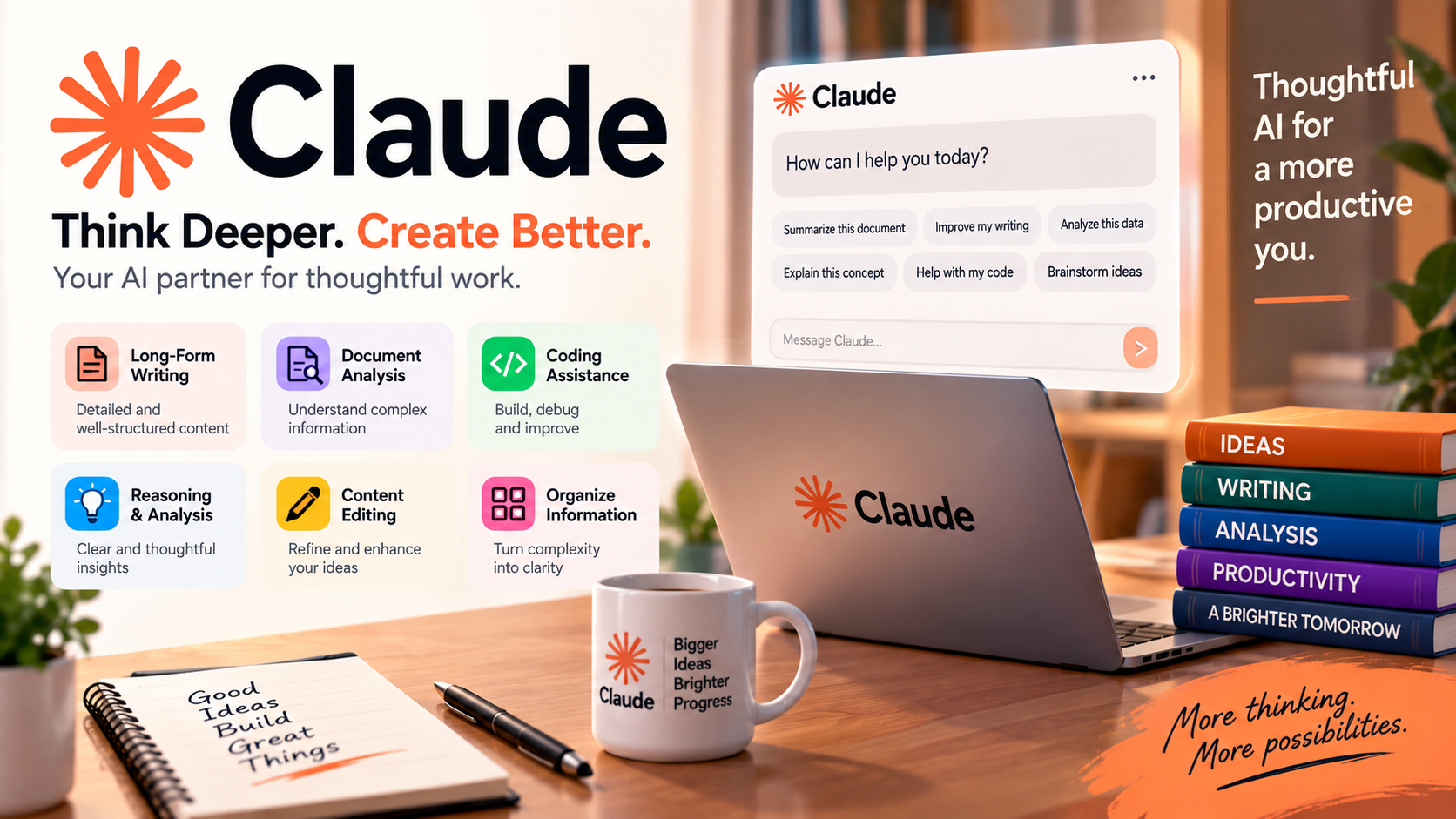
Claude is another powerful AI assistant that can be used for writing, analysis, coding, document-related tasks, and complex reasoning.
It can be useful when a prompt involves substantial context or requires careful analysis of lengthy information.
Key Features
- Long-form writing
- Document analysis
- Coding assistance
- Summarization
- Reasoning
- Content editing
- Information organization
A useful approach is to provide Claude with the relevant material first and then clearly explain what you want it to analyze or transform.
3. Google Gemini
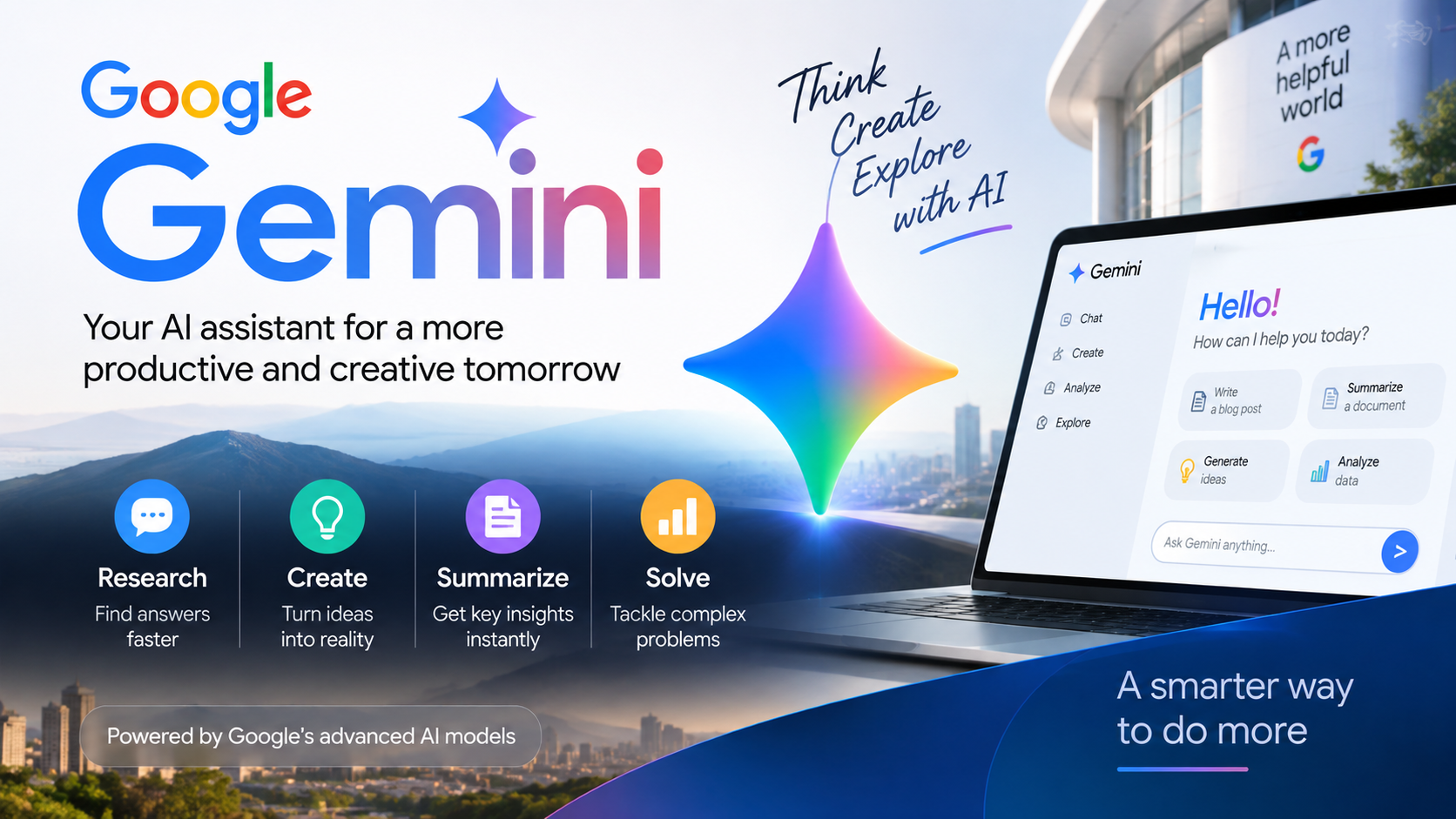
Gemini is Google’s AI platform and is designed to support productivity, research, writing, reasoning, and multimodal tasks.
Its connection with Google’s broader ecosystem can make it useful for people who already rely heavily on Google products.
Key Features
- AI conversations
- Research assistance
- Content creation
- Multimodal capabilities
- Productivity support
- Image understanding
- Brainstorming
Users can create prompts that combine business information, documents, creative requirements, and specific output instructions.
4. Perplexity
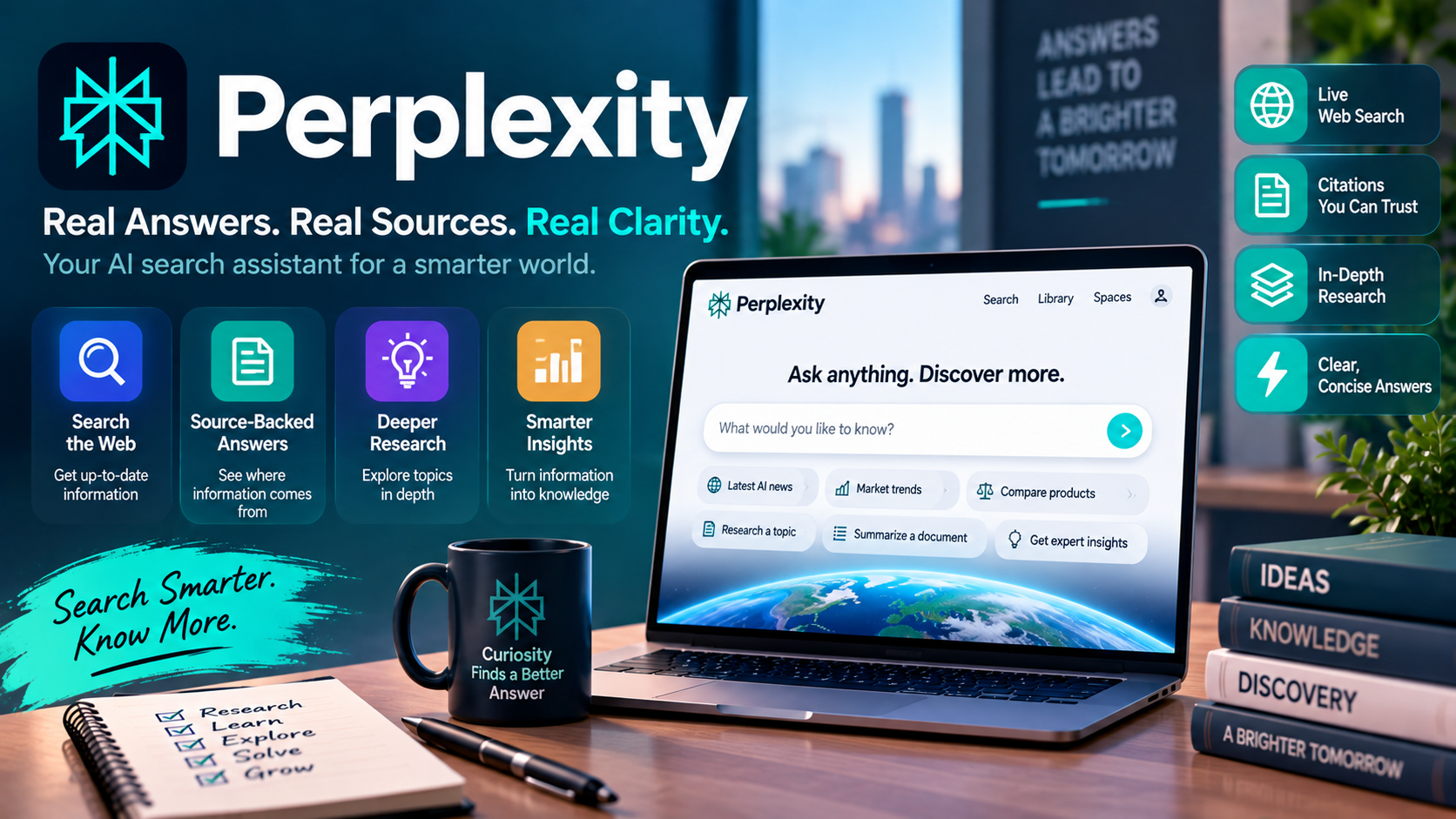
Perplexity is designed around AI-powered search and research. It can be particularly useful when users want information gathered from multiple sources and presented in an organized way.
Instead of simply asking a broad question, users can create research prompts that specify the subject, target audience, depth, and information they need.
Key Features
- AI search
- Research
- Follow-up questions
- Source-backed responses
- Information summarization
- Research reports
For research-focused workflows, detailed prompts can help narrow the subject and make the results more useful.
Also Read- Microsoft Copilot Review: A Powerful AI Assistant
AI App Comparison
| AI App | Best For | Major Strength | Example Use |
| ChatGPT | General productivity | Versatility | Writing, coding, brainstorming |
| Claude | Long-form work | Context and analysis | Documents and content |
| Gemini | Productivity | Google ecosystem | Research and creative work |
| Perplexity | Research | Search-focused answers | Market and topic research |
Each application has different strengths. The best choice depends on the task, the amount of context involved, the desired output, and the type of workflow you are building.
How to Write a Powerful AI Prompt
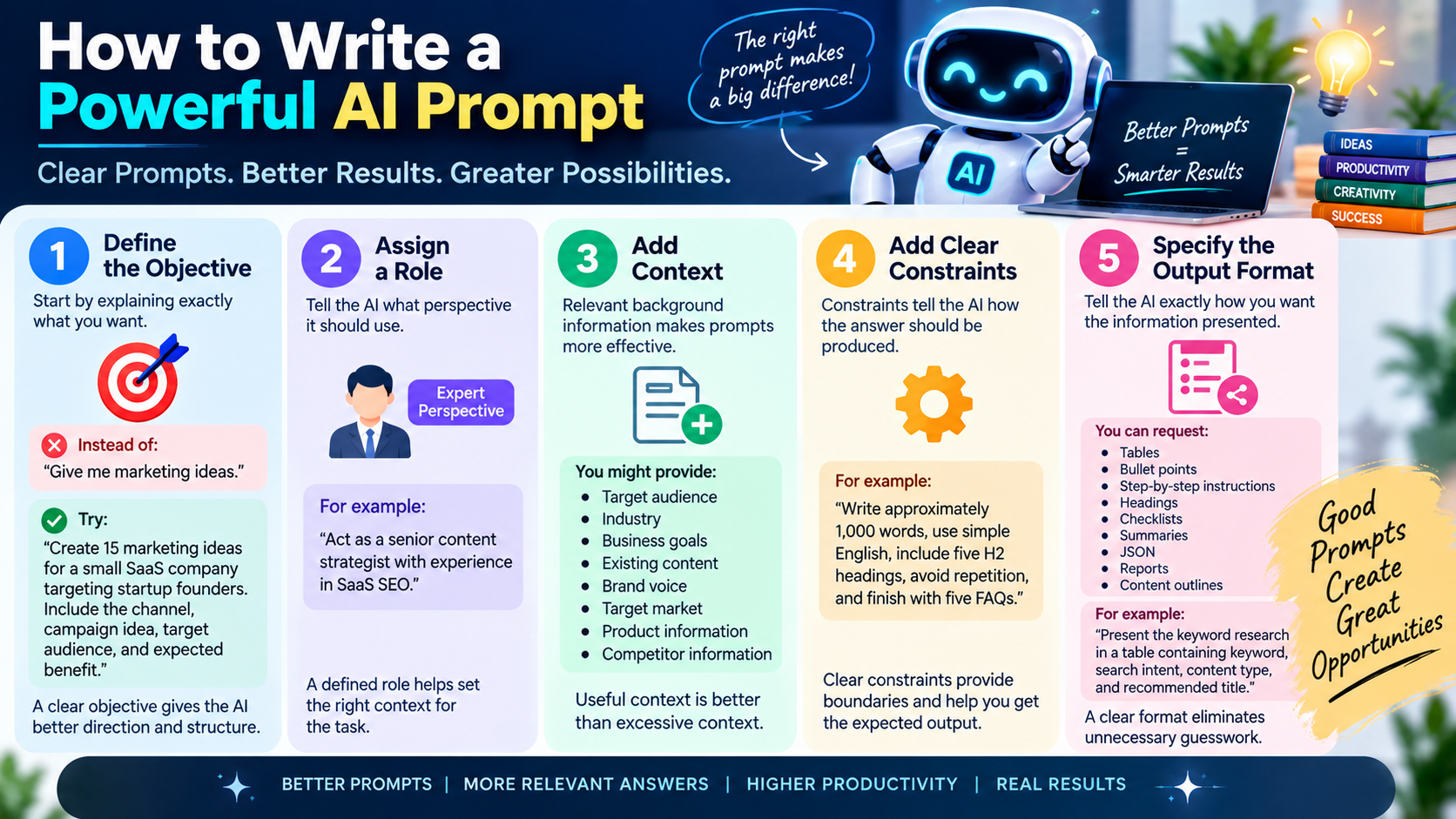
Creating effective prompts does not require complicated language. The most important principle is clarity.
1. Define the Objective
Start by explaining exactly what you want.
Instead of:
“Give me marketing ideas.”
Try:
“Create 15 marketing ideas for a small SaaS company targeting startup founders. Include the channel, campaign idea, target audience, and expected benefit.”
The second prompt gives the AI a specific objective and expected structure.
2. Assign a Role
You can tell the AI what perspective it should use.
For example:
“Act as a senior content strategist with experience in SaaS SEO.”
This can help establish the context for the task.
3. Add Context
Relevant background information makes prompts more effective.
You might provide:
- Target audience
- Industry
- Business goals
- Existing content
- Brand voice
- Target market
- Product information
- Competitor information
Avoid adding irrelevant information simply to make the prompt longer. Useful context is better than excessive context.
4. Add Clear Constraints
Constraints tell the AI how the answer should be produced.
For example:
“Write approximately 1,000 words, use simple English, include five H2 headings, avoid repetition, and finish with five FAQs.”
This provides clear boundaries for the response.
5. Specify the Output Format
Tell the AI exactly how you want the information presented.
You can request:
- Tables
- Bullet points
- Step-by-step instructions
- Headings
- Checklists
- Summaries
- JSON
- Reports
- Content outlines
For example:
“Present the keyword research in a table containing keyword, search intent, content type, and recommended title.”
This eliminates unnecessary guesswork.
Advanced Prompt Engineering Techniques
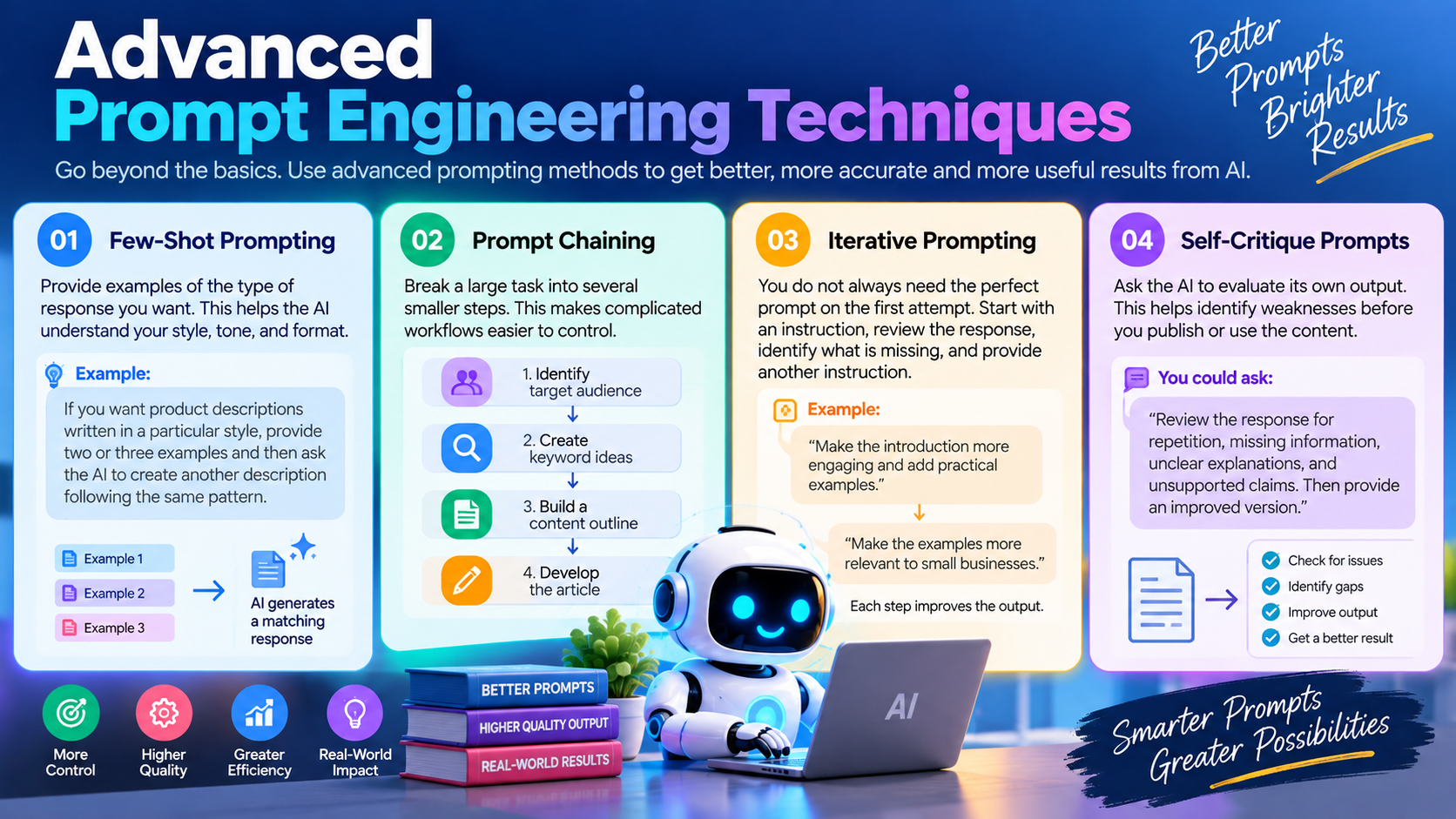
Once you understand the basics, you can experiment with more advanced approaches.
Few-Shot Prompting
Few-shot prompting means providing examples of the type of response you want.
For example, if you want product descriptions written in a particular style, provide two or three examples and then ask the AI to create another description following the same pattern.
Prompt Chaining
Prompt chaining breaks a large task into several smaller steps.
For content marketing, you could first ask AI to identify a target audience, then create keyword ideas, then build a content outline, and finally develop the article.
This approach can make complicated workflows easier to control.
Iterative Prompting
You do not always need to create the perfect prompt on the first attempt.
Start with an instruction, examine the response, identify what is missing, and provide another instruction.
For example:
“Make the introduction more engaging and add practical examples.”
Then:
“Make the examples more relevant to small businesses.”
This creates an iterative workflow where the output improves with each step.
Self-Critique Prompts
Another useful method is asking AI to evaluate its own output.
You could ask:
“Review the response for repetition, missing information, unclear explanations, and unsupported claims. Then provide an improved version.”
This can help identify weaknesses before you publish or use the content.
Benefits of AI Prompt Engineering
The practical benefits of AI prompt engineering extend across many industries.
Increased Productivity
Well-designed prompts can help users complete repetitive tasks faster. Instead of repeatedly explaining the same requirements, you can create reusable prompt templates.
Better Content
Writers and marketers can use detailed prompts to create content that follows specific structures, audiences, and brand requirements.
Improved Research
Researchers can use AI to organize large amounts of information, generate questions, summarize material, and identify important themes.
Faster Coding
Developers can use prompts to explain programming problems, generate code examples, identify bugs, and improve documentation.
Consistent Workflows
Businesses can create standardized prompts for recurring tasks. This can help teams maintain consistent formats and processes.
More Creative Possibilities
AI can also be used for brainstorming. A good prompt can ask for multiple concepts, alternative approaches, unusual ideas, or different perspectives.
Common Prompt Engineering Mistakes
Even experienced users can make mistakes when working with AI.
The first common mistake is being too vague. A prompt such as “Make this better” does not explain what should be improved.
Another mistake is giving conflicting instructions. If one part of a prompt asks for a short answer while another asks for an extremely detailed report, the AI may struggle to determine the priority.
Users may also provide too little context. If the AI does not know the intended audience or purpose, the resulting answer may be generic.
Finally, users should avoid blindly trusting AI-generated information. AI can make mistakes, misunderstand instructions, or generate inaccurate information. Important facts should always be reviewed before publication or professional use.
Best Practices for Better Prompts
A few simple habits can dramatically improve your results.
First, start with the desired outcome. Then provide the context the AI needs to accomplish the task.
Use direct language and avoid unnecessary complexity. Specify the audience, tone, length, and format whenever those details matter.
For recurring tasks, create reusable prompt templates. You can then replace variables such as topic, audience, industry, or target keyword without rebuilding the entire instruction.
Most importantly, experiment. Prompt engineering is not about memorizing one perfect formula. It is about understanding how different instructions influence AI output.
Conclusion
AI prompt engineering is becoming an essential skill for anyone who wants to use artificial intelligence effectively. A powerful AI model is only part of the equation; the quality of the instructions determines how effectively that capability can be directed.
Applications such as ChatGPT, Claude, Gemini, and Perplexity provide different approaches to writing, research, coding, productivity, and information discovery. Learning how to communicate with these tools can help users achieve better results while spending less time correcting generic responses.
The most effective prompts are usually clear rather than complicated. Define the objective, provide useful context, establish constraints, and specify the desired output.
As AI continues to become part of everyday professional workflows, mastering AI prompt engineering can give users a practical advantage. Whether you are creating content, conducting research, developing software, or managing a business, better prompts can unlock more powerful AI results.
FAQs
-
What is AI prompt engineering?
AI prompt engineering is the process of creating and refining instructions that guide an AI model toward a specific outcome.
-
Why is prompt engineering important?
It helps users communicate their requirements more clearly, potentially producing more relevant, consistent, and useful AI responses.
-
Which AI app is best for prompt engineering?
There is no single best application for every task. ChatGPT is versatile, Claude is useful for long-form analysis and coding, Gemini offers strong productivity capabilities, and Perplexity is focused heavily on AI-powered research.
-
Can prompt engineering help with SEO?
Yes. SEO professionals can use structured prompts for keyword research, content briefs, search-intent analysis, content optimization, title ideas, meta descriptions, competitor analysis, and brainstorming.
-
Does a longer prompt always produce better results?
No. A longer prompt is not automatically better. Relevant context and clear instructions are more important than unnecessary details.
-
How can beginners learn prompt engineering?
Start with everyday tasks. Define your objective, provide context, specify the output format, review the response, and refine the prompt. Regular experimentation is one of the best ways to improve.