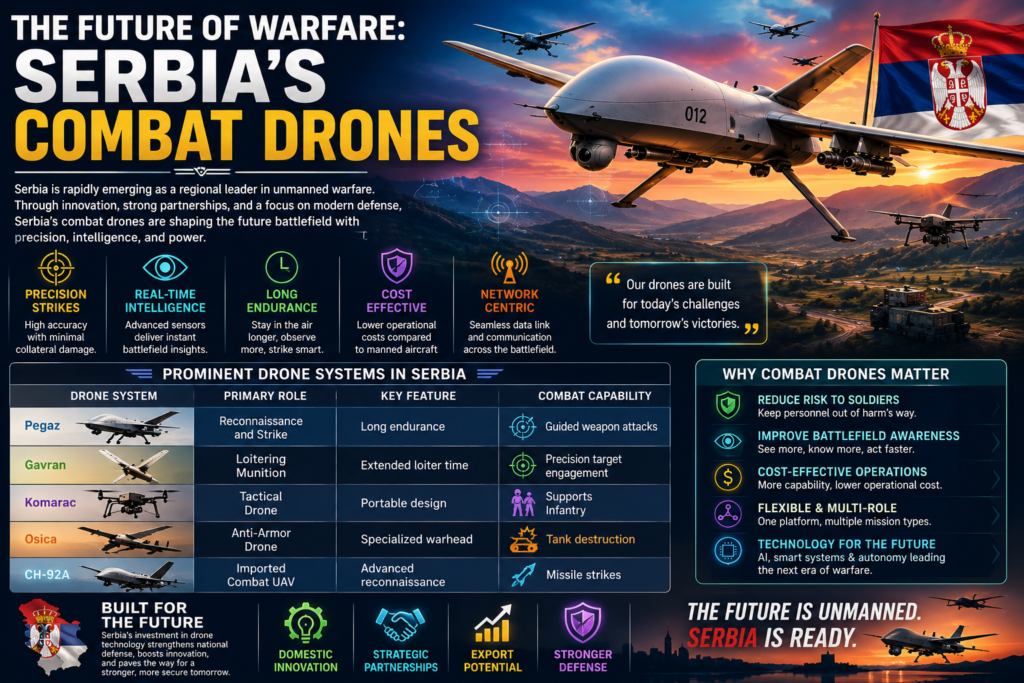
The Future of Warfare: Serbia’s Combat Drones
+
Table of Contents
- 1 Serbia’s Growing Drone Program
- 1.1 Serbia’s Combat Drones: Key Characteristics
- 1.1.1 1. Prolonged Air Time
- 1.1.2 2. Precision Striking
- 1.1.3 3. Batteries Not Included
- 1.1.4 4. Kamikaze Drones
- 1.1.5 5. Cheap
- 1.1.6 6. Better Information
- 1.1.7 7. Lightweight
- 2 Major Serbian Combat Drone Systems
- 2.1 1. Pegaz
- 2.2 2. Gavran
- 2.3 3. Komarac
- 2.4 4. Osica Anti-Armor Drone
- 2.5 5. CH-92A Combat UAV
- 2.6 Comparison of Serbian Combat Drones
- 2.7 Why Combat Drones Are the Future of Warfare
- 2.7.1 Reduced Risk to Personnel
- 2.7.2 Enhanced Operational Agility
- 2.7.3 Quicker Decisions
- 2.7.4 Reduced Costs
- 2.7.5 Increased Technology
- 2.8 Serbia’s Strategic Advantages
- 2.8.1 Barriers and Future Growth
- 2.8.2 Tech Race
- 2.8.3 Data Safety
- 2.8.4 Concerns in Defense of Ethics
- 2.8.5 Research and Development Expenditure
- 3 Conclusion
Modern warfare evolves with technology, and at the center of this evolution are unmanned aerial vehicles. Countries are beginning to see the potential that drones offer. They are significantly cheaper than traditional military aircraft and offer advanced reconnaissance, surveillance, and even support for troop movements.
For the past few years, Serbia has integrated drone technology with international partnerships and military modernization efforts, including domestically created technology. Serbia’s growing drone fleet indicates its commitment to understanding and employing the latest technologies related to warfare. Additionally, with the growing importance of drone technology in combat, Serbia is positioning itself as a regional authority in this technology.
Serbia’s Combat Drones have become a symbol of the country’s rapid advancement in drone technology, showcasing its growing capabilities in modern surveillance, reconnaissance, and precision-strike warfare.
Serbia’s Growing Drone Program
Serbia has been cognizant of the prime role that drones now play in combat, and the Serbian Armed Forces have made a conscious decision to invest in various systems of UAVs, not just used for reconnaissance and intelligence, but also for attack. As opposed to just focusing on the development of military aviation, the Serbian Armed Forces have made a commitment to embrace the multi-dimensional nature of UAVs and develop an integrated system of UAVs. Thus, as a part of this system, the Armed Forces have made a commitment to purchase UAVs and other systems from friendly countries of the region. The defense strategy of Serbia aims to establish a stronger defense position for Serbia with the use of purchased systems and, at the same time, facilitate the development of the defense industry of Serbia.
In recent military and defense exercises, Several advanced military drone projects have demonstrated the ambition of Serbia to place itself as one of the important countries in the domain of warfare.
Serbia’s Combat Drones: Key Characteristics
There are several systems that make Serbia’s drone programs unique. Here are a few.
1. Prolonged Air Time
Serbia engineered several surveillance and reconnaissance drones that can remain on target for long periods of time.
2. Precision Striking
Serbia’s latest drones incorporate targeting technology that improves accuracy against military targets and assists in minimizing collateral damage.
3. Batteries Not Included
Serbian drones, like most modern drones, can relay information and intelligence in real time. They fly with reconnaissance and surveillance equipment such as high-definition cameras and thermal imaging.
4. Kamikaze Drones
Some of Serbia’s drones can be considered loitering munitions or kamikaze drones. These systems circle over a battlefield, waiting for a target to strike.
5. Cheap
One of the biggest benefits of Serbia’s modernization programs is that armed drones are far less expensive and easier to maintain than manned aircraft.
6. Better Information
Continuous aerial observation improves and maintains information and surveillance and helps military units with quicker decision-making.
7. Lightweight
Many of Serbia’s drones can be easily transported and set up by the military in a quick period of time.
Major Serbian Combat Drone Systems
Serbia’s advancement in developing more sophisticated tools for combat and defense, such as UAVs, has helped them strengthen military power. These systems are used for reconnaissance, target spotting, and even offensive operations. Serbia’s UAVs help them gain a tactical advantage at the lowest cost possible. Serbia has developed a number of UAVs like the Pegaz, Gavran, Komarac, and Osica, all of which fulfill their own purpose.
1. Pegaz
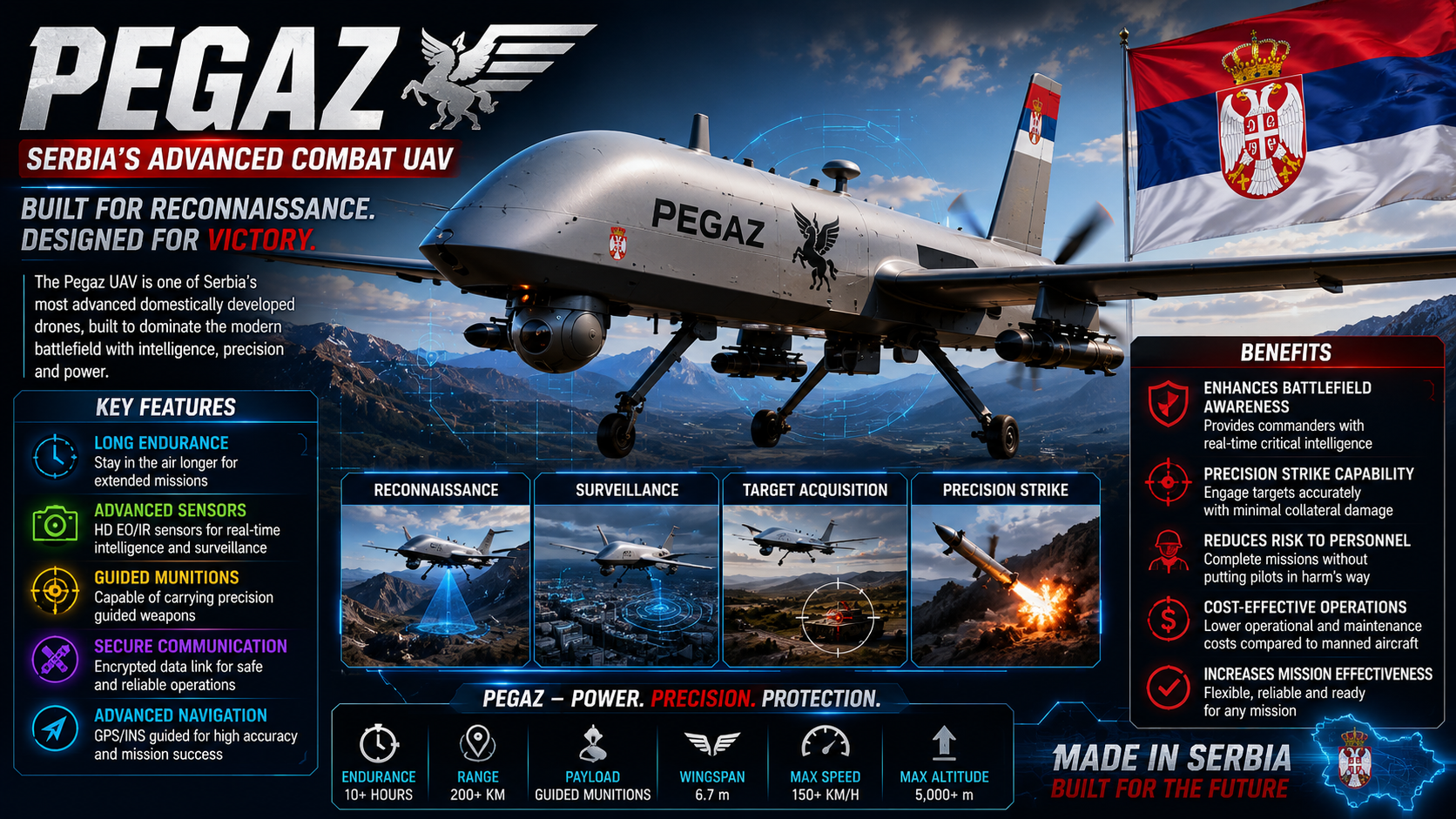
The Pegaz is one of the most sophisticated and advanced UAVs in Serbia. Pegaz is a reconnaissance UAV that can also be used in combat.
Features
- Pegaz can fly for long hours
- Pegaz can perform reconnaissance
- Pegaz can carry and drop bombs
- Pegaz has advanced navigation systems
Benefits
- Pegaz can provide intelligence for combat and reconnaissance missions
- Pegaz can assist and perform airstrikes
- Pegaz can help protect military personnel
- Pegaz can help provide a better outcome to missions
2. Gavran
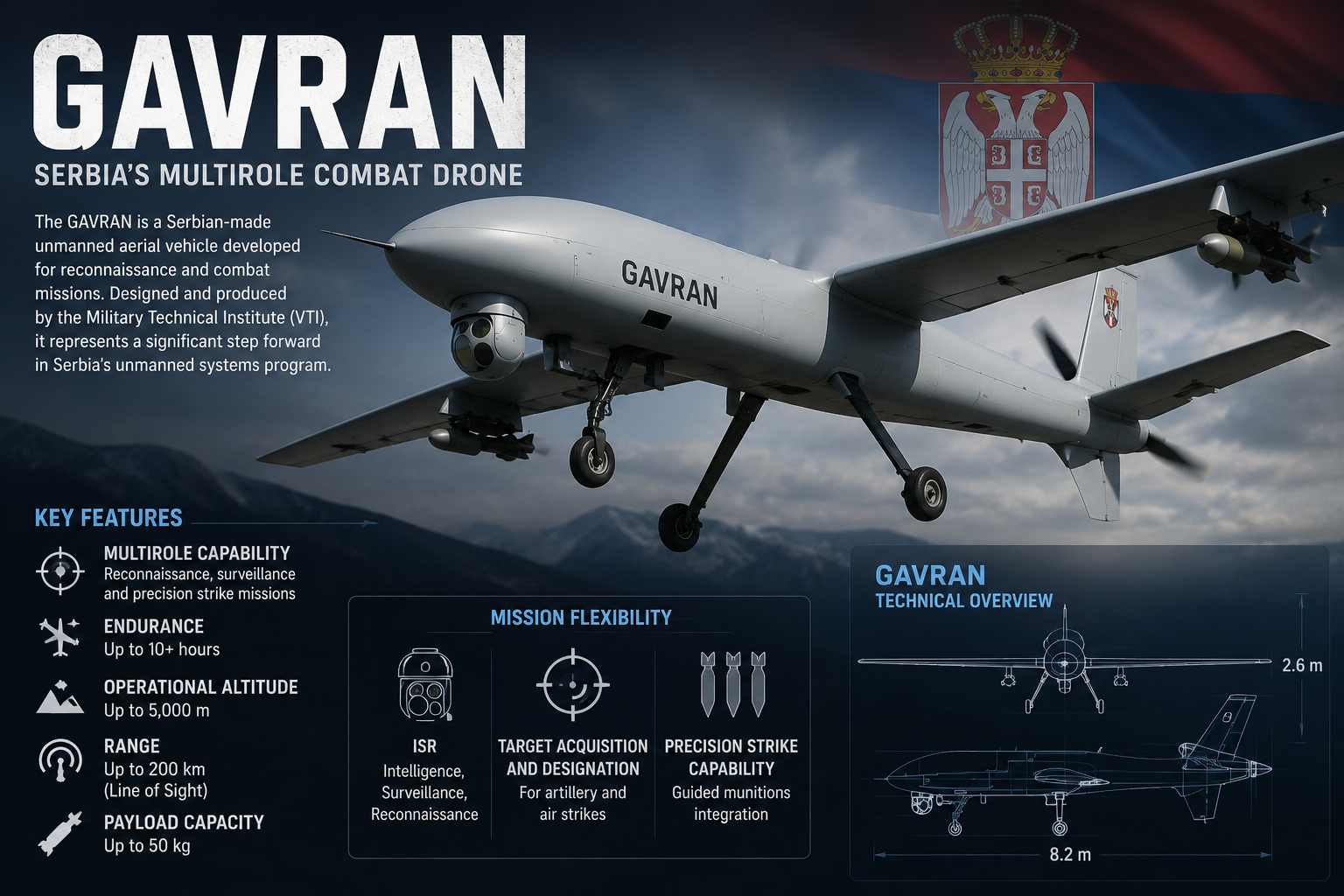
Gavran is a loitering munition UAV, meaning that Gavran can stay in the air and search for targets, and when a target is found, Gavran can attack.
Features
- Gavran can stay in the air for long periods of time
- Gavran can perform strikes
- Gavran can provide reconnaissance
- Gavran has an accuracy when it comes to hitting targets
Benefits
- Gavran can be used to give more options on the battlefield
- Gavran can help find targets and track them
- Gavran can help provide a faster strike to a target
- Gavran can help provide less damage to a target by striking it with precision
3. Komarac
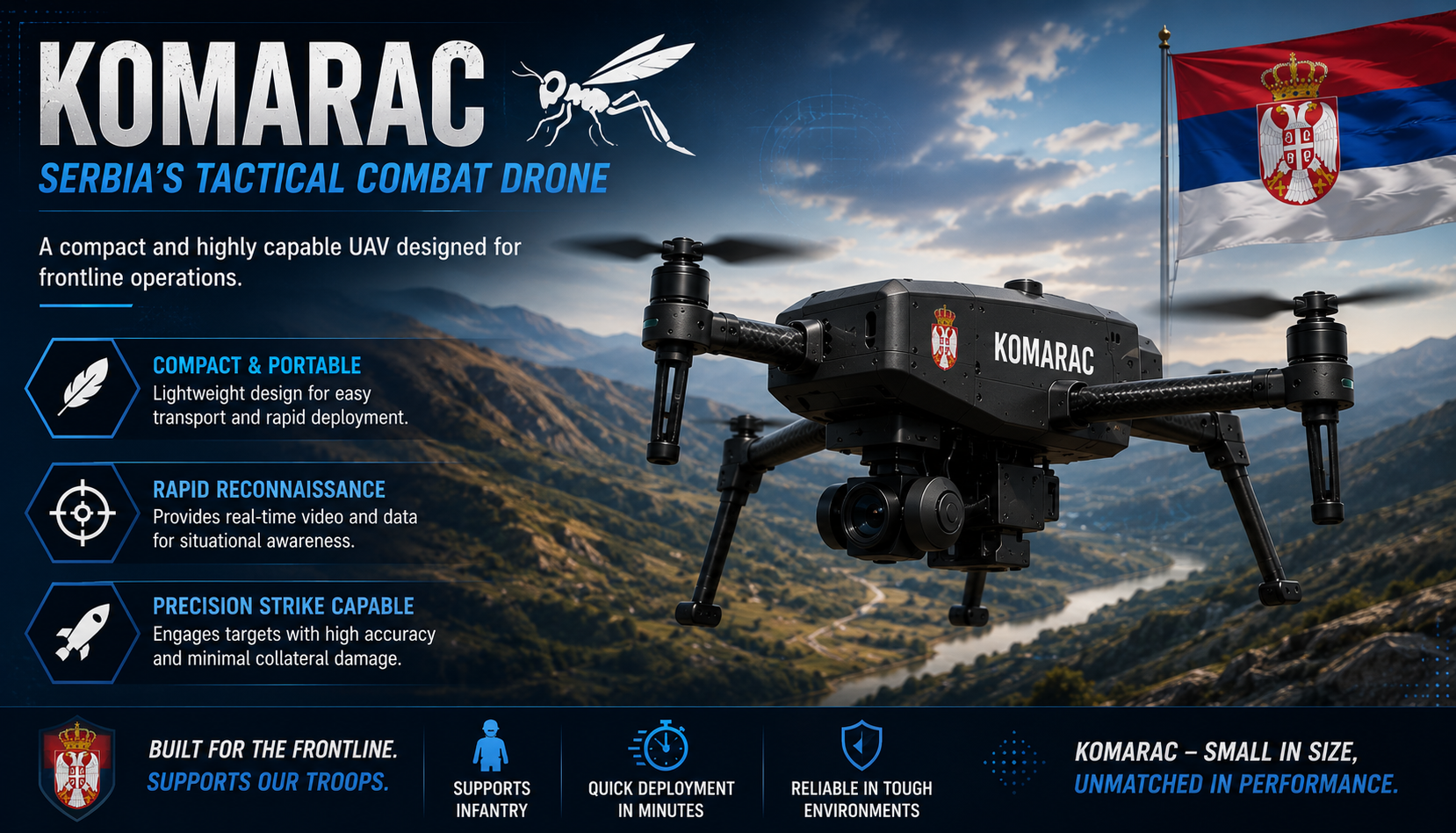
Komarac is a small, portable UAV that was designed to be used and carried by military personnel who are on the front lines. Komarac was designed to be easier to carry and transport so that it can be quickly set up and used in a dynamic and rapid combat environment.
Features:
- compact and light structure
- quickly deployable
- real-time scouting capabilities
- support for precise strikes
Benefits:
- heightens situational awareness
- aids in strategic decision-making
- easily transportable and operable
- delivers real-time intel in the combat area
4. Osica Anti-Armor Drone
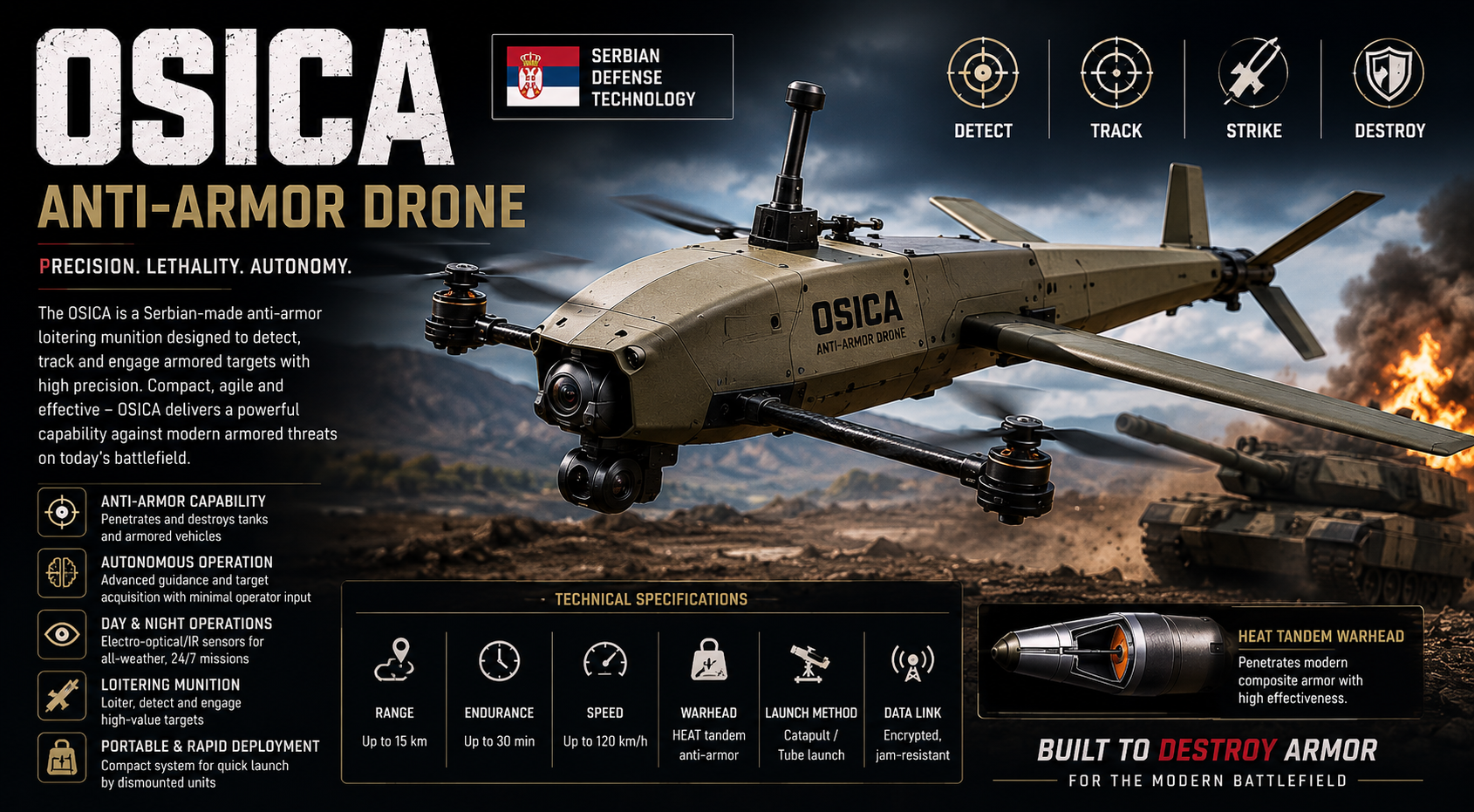
The Osica Drone is built for targeting armored vehicles and fortified structures. It functions as a modern anti-tank weapon.
Features:
- anti-armor warhead
- precision targeting
- capable of defeating tanks and bunkers
- guided technology
Benefits:
- eliminates armored threats
- enhances anti-tank systems
- increases effectiveness on the battlefield
- cheaper option for anti-armor systems
5. CH-92A Combat UAV
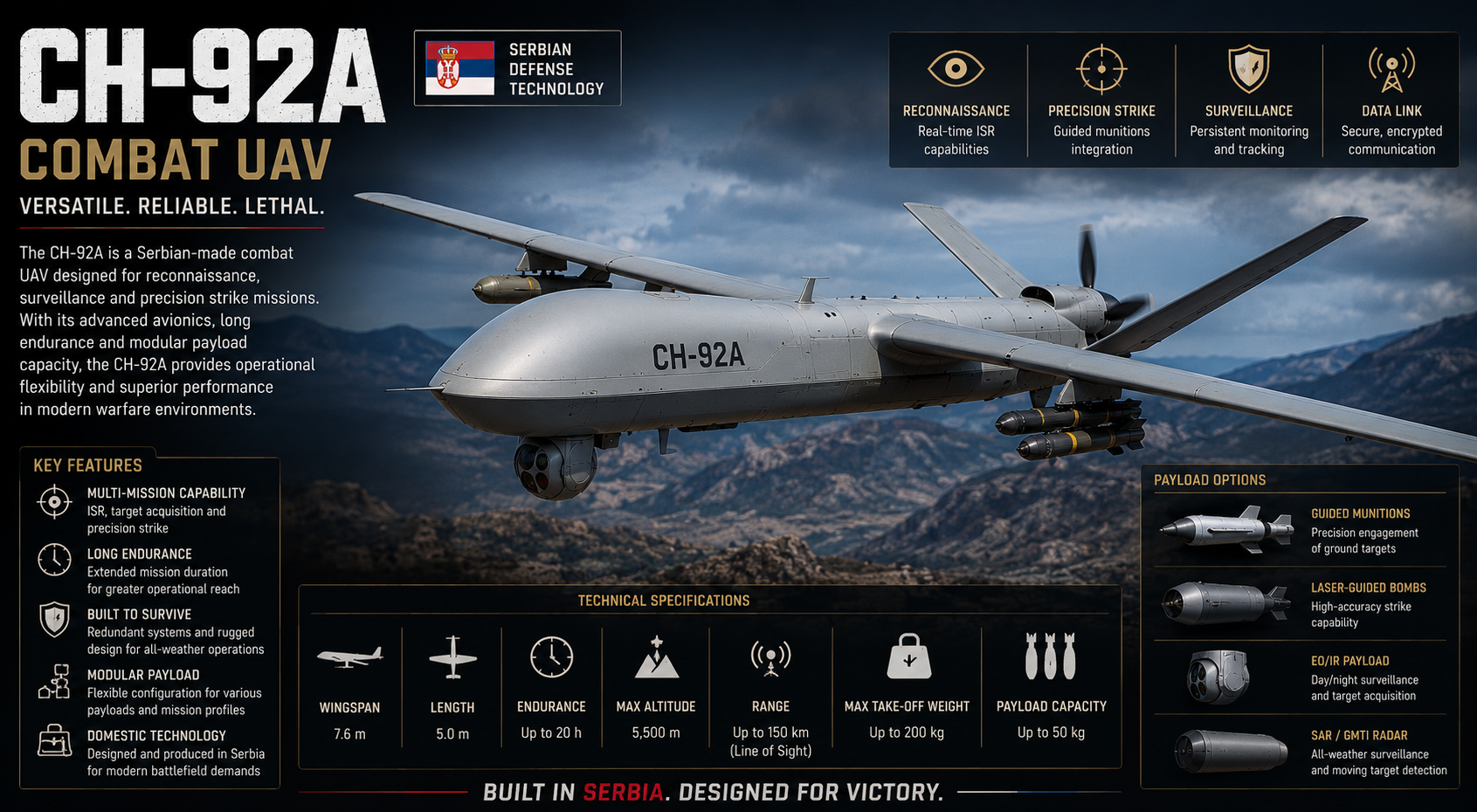
The CH-92A was purchased by Serbia to help expand its reconnaissance and strike capabilities. This military drone was designed for the modern battlefield. This plays out with the CH-92A’s ability to do ISR missions and carry out attacks with missiles.
Features:
- Reconnaissance and surveillance systems of a higher order
- Information collection in real-time
- Missiles that are precision-guided
- Can operate over long distances
- Sensors that provide images in both the visible and infrared spectrums
Benefits:
- Provides a clear view of the battlefield on a 24-hour basis
- Target detection and tracking are improved
- Takes away the risk of danger to military personnel
- Tactical and economical efficiency are improved
- Provides an upgraded and high-tech air defense system for Serbia
Individually and collectively, these drone systems show the dedication Serbia has to balancing its steadfastness on the battlefield with its progressive posture regarding drone systems and the technology of the future.
Also Read- TUNGA-X: The Drone Hunter of the Future
Comparison of Serbian Combat Drones
| Drone System | Primary Role | Key Feature | Combat Capability |
|---|---|---|---|
| Pegaz | Reconnaissance and Strike | Long endurance | Guided weapon attacks |
| Gavran | Loitering Munition | Extended loiter time | Precision target engagement |
| Komarac | Tactical Drone | Portable design | Supports infantry operations and rapid reconnaissance |
| Osica | Anti-Armor Drone | Specialized anti-tank warhead | Tank destruction and attacks on fortified positions |
| CH-92A | Imported Combat UAV | Advanced reconnaissance systems | Missile strikes and surveillance missions |
Why Combat Drones Are the Future of Warfare
The recent history of warfare shows a clear trend of the successful employment of drones. There is a multitude of reasons for the development of warfare that incorporates combat drones.
Reduced Risk to Personnel
Dangerous missions that would place personnel in immediate danger can be conducted through the use of drones. UAVs can be operated from a safe location.
Enhanced Operational Agility
Drones can perform numerous tasks. These include surveillance, reconnaissance, target acquisition, electronic warfare, and all-weather strikes.
Quicker Decisions
The ability to transmit data in real time provides the command the ability to assess battlefield situations and take appropriate action.
Reduced Costs
It is significantly cheaper to sustain a fleet of combat drones than it is to sustain a fleet of combat aircraft.
Increased Technology
The precision of combat drones is becoming more advanced with the introduction of artificial intelligence, machine learning, and autonomous navigation systems.
Serbia’s Strategic Advantages
The investment Serbia has made in drones offers several benefits. First, improved surveillance and reconnaissance capabilities strengthen national defense. This provides the ability to monitor borders and threats and assist in military operations.
Second, independent drone manufacturing lessens reliance on foreign suppliers, increases Serbia’s defense independence, and boosts local technology.
Third, drones may provide a valuable export future. With increased global demand in the field, Serbia could place itself as a competitive supplier in the global defense market.
Last, continued advancements promote collaboration between technology companies, universities, and military institutions that provide long-lasting improvements to Serbia’s defense technology.
Barriers and Future Growth
Despite the progress that has been made, Serbia’s ability to expand its drone technology faces several challenges.
Tech Race
Many countries are investing in drone technology. Serbia needs to innovate to not fall behind.
Data Safety
As combat drones rely on communication and data systems, these systems must be protected from cyber-attacks.
Concerns in Defense of Ethics
With advanced autonomous systems, governments must look at accountability and the use of rules of engagement in adherence to international law.
Research and Development Expenditure
To advance drone systems, R&D and Manufacturing Investments must be sustained.
However, as Serbia’s Military Modernization efforts intensify, so too will investments in the Research and Development of Military Drones.
Conclusion
Combat Drones are the new technology shaping the future of warfare, and Serbia is not standing idly. Serbia has developed a wide-ranging array of Reconnaissance Drones, Combat UAVs, and Loitering Munitions as a result of domestic creativity and foreign partnerships.
Serbia has developed systems such as the Pegaz, Gavran, Komarac, and Osica, which are representative of the growing Serbian proficiency in Military Drones. These systems provide modern militaries with the ability to conduct efficient reconnaissance and precision engagements, while also providing a significantly lower cost to the military.
As technology in the world advances, the investments Serbia is currently making will provide it with the ability to secure a far greater defense posture in the region. The future of warfare will revolve around Automated and Advanced Warfare, and Serbia is committed to ensuring they are part of that future.
Frequently Asked Questions
1. What is the purpose of Serbia’s investments in combat drones?
Serbia is investing in combat drones to modernize their military.
2. What is the Pegaz Drone?
Pegaz is a Serbian developed Combat UAV.
3. What are Loitering Munitions?
Loitering Munitions are a form of drone which have the ability to search for a target prior to striking.
4. Why are combat drones considered critical for modern warfare?
Combat drones are proven very useful in many aspects. They indeed save lives, help get the target right, and even reduce the overall cost of the operation.
5. Is it possible for Serbia to become a big player in the drone trade?
Yes. If the development is on the right track, Serbia can successfully enter the international defense and UAV industry.