Generative AI Statistics: Powerful Trends Shaping 2026
+
Table of Contents
- 1 Generative AI Adoption Is Growing
- 2 Popular Generative AI Apps in 2026
- 2.1 1. ChatGPT
- 2.1.1 Features include:
- 2.2 2. Google Gemini
- 2.2.1 Features include:
- 2.3 3. Microsoft Copilot
- 2.3.1 Features include:
- 2.4 4. Claude
- 2.4.1 Features include:
- 2.5 5. Meta AI
- 2.6 The Rise of Generative AI
- 2.7 Major Benefits of Generative AI
- 2.7.1 Content creation
- 2.7.2 Customer service
- 2.7.3 Data Analysis
- 2.7.4 Creativity
- 2.7.5 AI in the Workplace
- 2.7.6 Content creation and editing
- 3 Generative AI Statistics: Key Trends at a Glance
- 4 Conclusion
Generative AI is among the most ground Coverage technology of the last few years. The methods and applications of this type of AI seems boundless. Workers at all levels of the market and across every industry in the US are integrating generative AI into their everyday work.
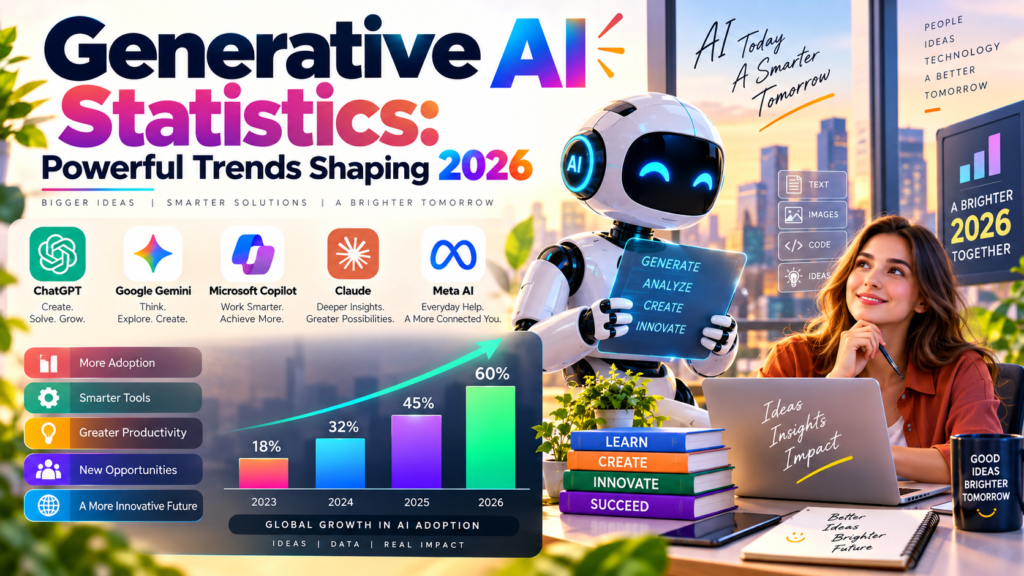
The recent stats on AI demonstrate the technology’s rapid momentum. Both the consumer and business markets are integrating generative AI. Businesses are investing in AI in order to enhance their competitiveness and gain an edge with their customers.
Generative AI Adoption Is Growing
It is expected that during the next several years, the use of AI assistants will continue to increase. Present AI assistants can execute and understand numerous tasks and instructions. They are even capable of various forms of content creation, including writing, drawing and code generation.
A more recent development is generative AI’s capacity to create and enhance digital experiences based on a users’s needs and requests in normal, conversational language.
Along with major shifts in consumer and business interfaces, recent years have seen transformative changes in development processes for virtually every area of business, from marketing to sales and everything in between.
Popular Generative AI Apps in 2026
There are a handful of generative AI apps that have changed and improved countless industries.
1. ChatGPT
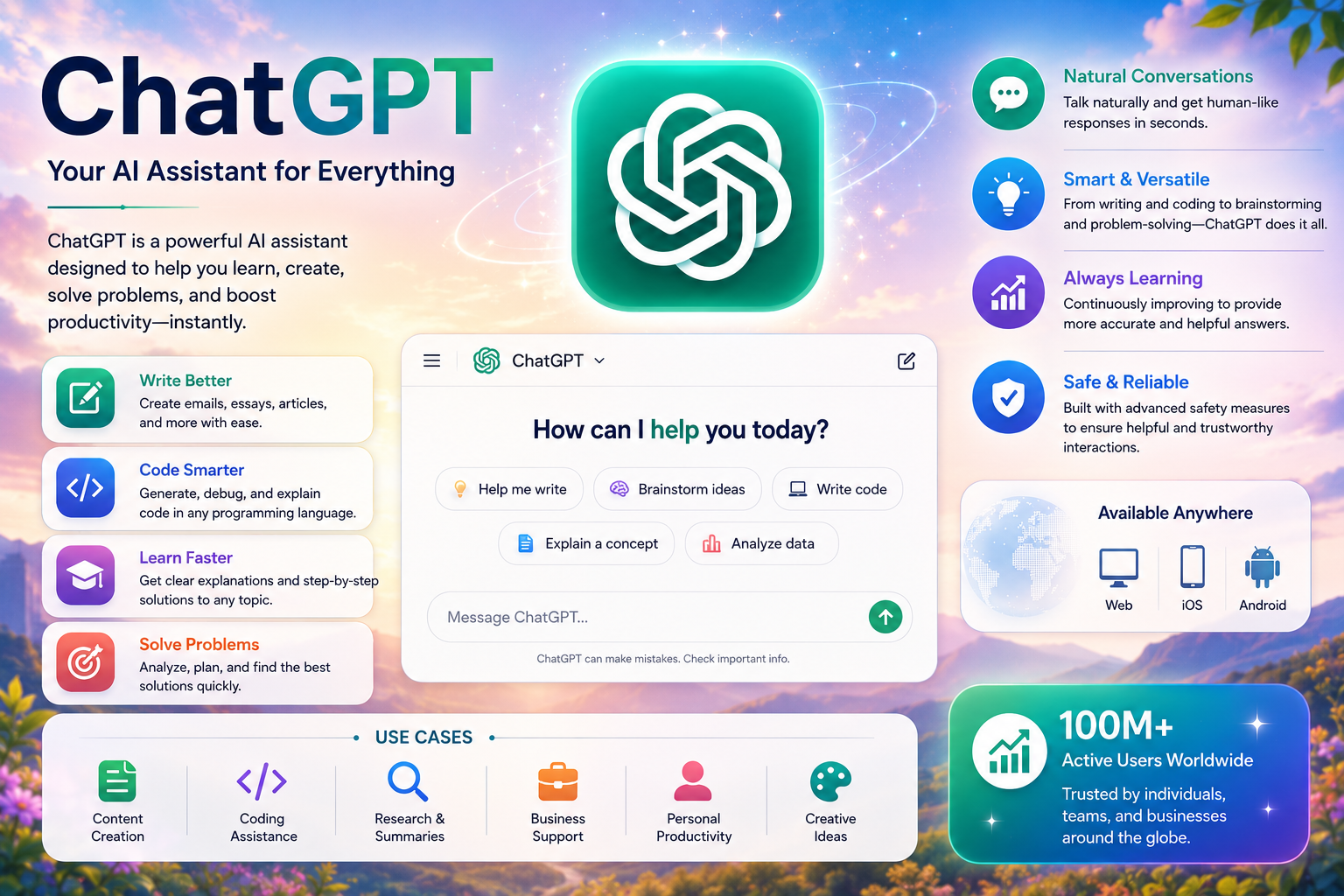
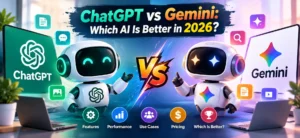
ChatGPT is one of the most famous examples of technology powered by generative artificial intelligence (AI). It uses different features and functions to help create text, answer questions, and provide summaries.
Features include:
- Interactive prompts and conversations
- Generating text
- Coding
- Analyzing documents and data
- Brainstorming
- Generating pictures
- Assisting in different tasks
The application can help workers complete general office tasks faster and assist in creating first drafts of official documents and emails.
2. Google Gemini
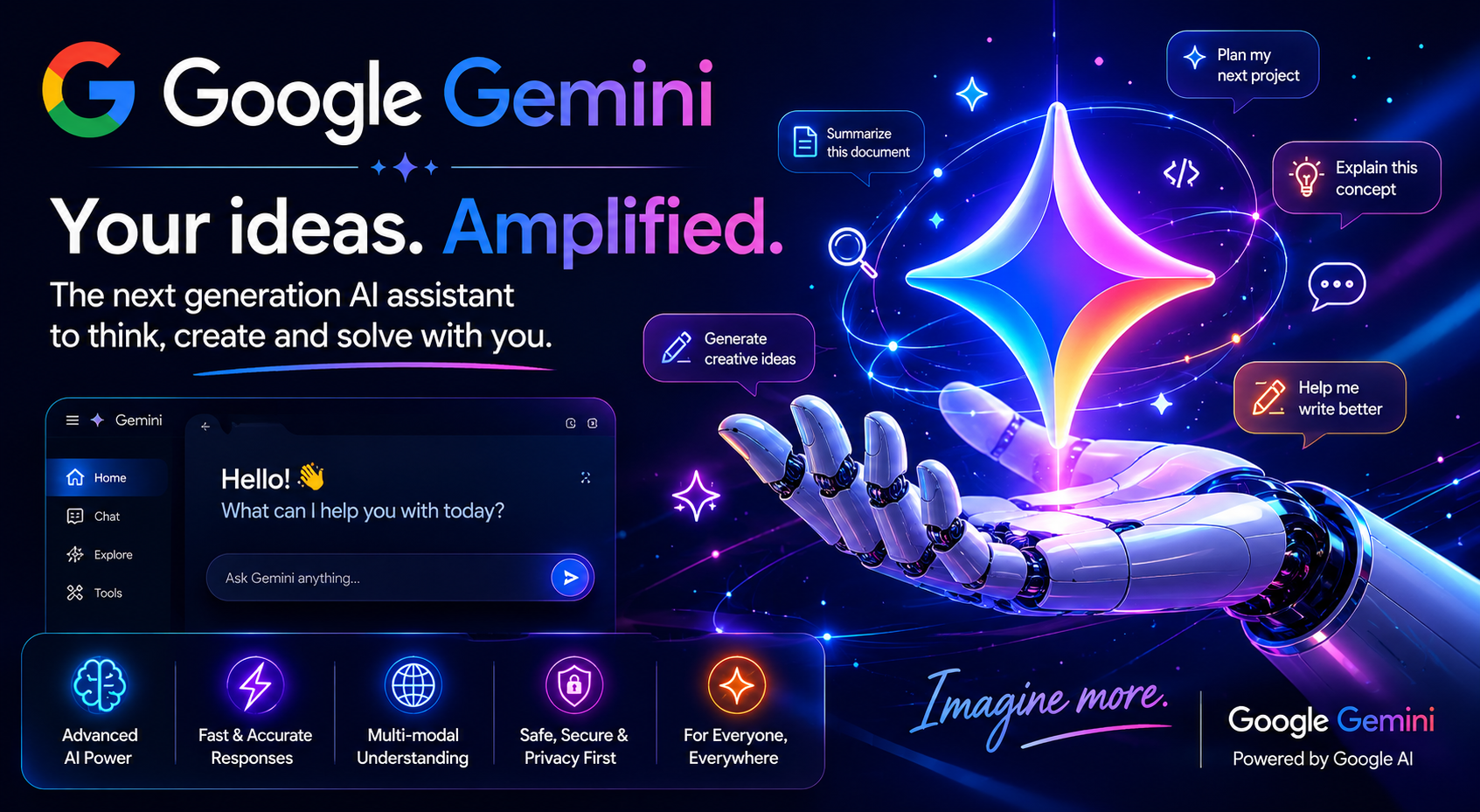
Google released its first official AI application, Google Gemini. Like other AI applications, it allows users to interact with different forms of data, including pictures and documents.
Features include:
- Understanding different types of data
- Generating different kinds of content
- Assisting with different kinds of research
- Coding
- Generating pictures
- Planning
- Using different services available on the Internet
Some users have praised Gemini for simplifying and improving the overall Google experience.
3. Microsoft Copilot
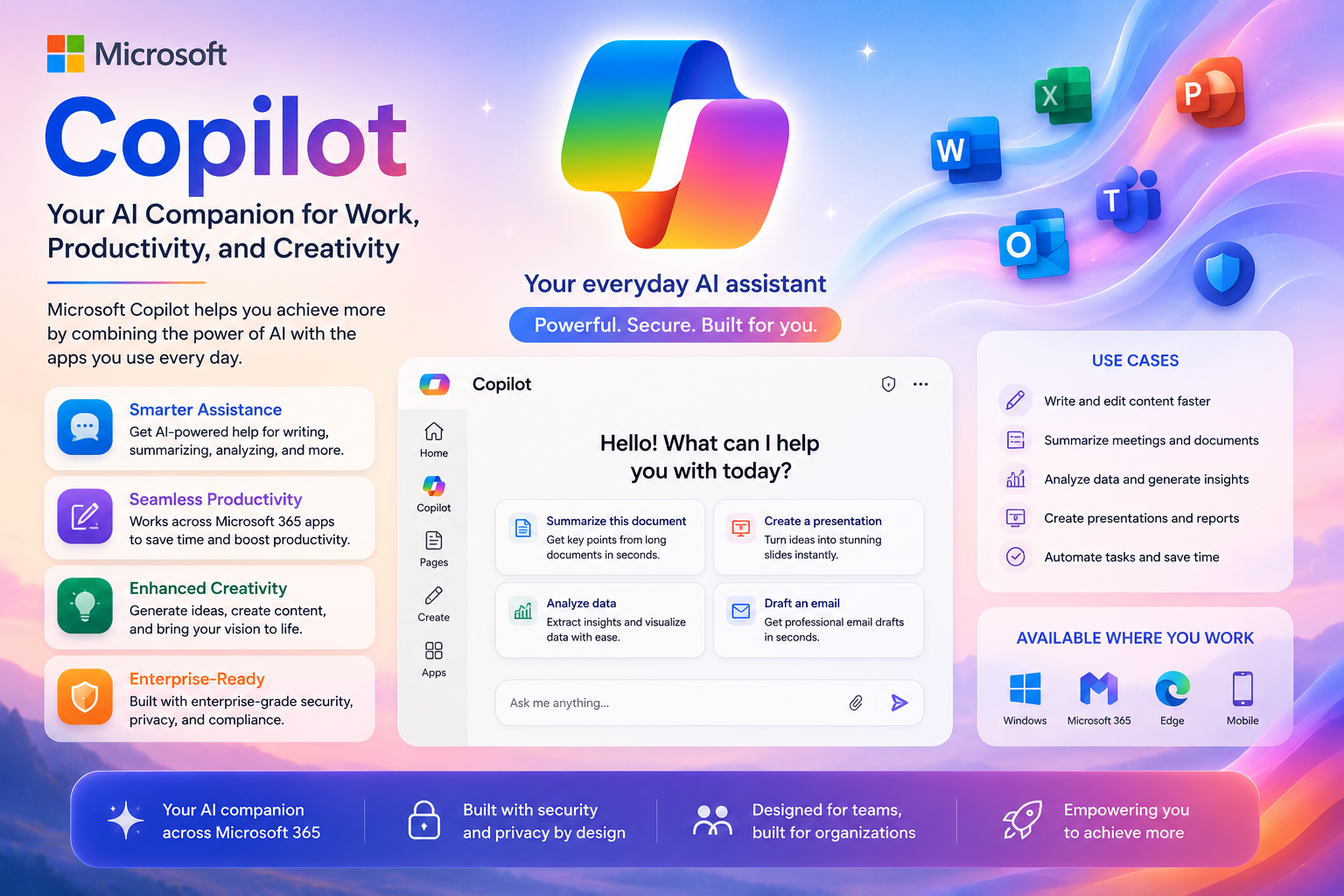
Microsoft released its first official AI application, Microsoft Copilot, focused on helping users complete work and office-related tasks. Like other AI applications, Copilot uses different features and functions to help and assist in a range of activities.
Features include:
- Creating and editing different office documents
- Writing and sending emails
- Preparing and delivering presentations
- Analyzing and interpreting data in spreadsheets
- Summarizing and interpreting business-related data
- Assisting and completing a range of business activities
Users can use Copilot to help in work and office-related tasks with tools and environments they are already comfortable using.
Also Read- AI Marketing: Supercharge Your Success
4. Claude
Because of the nature of its features and functions, Claude is best suited to help complete tasks related to creating and processing large, complex documents and other resources. These include helping users do research and analysis and create computer programs.
Long-form writing document analysis coding research summarization reasoning conversations A Hall of Fame member, Claude has amassed a plethora of examples detailing how users incorporate the tech in various aspects of their professional lives.
Features include:
- Long-form writing
- Document analysis
- Coding assistance
- Research support
- Summarization
- Reasoning-focused conversations
5. Meta AI
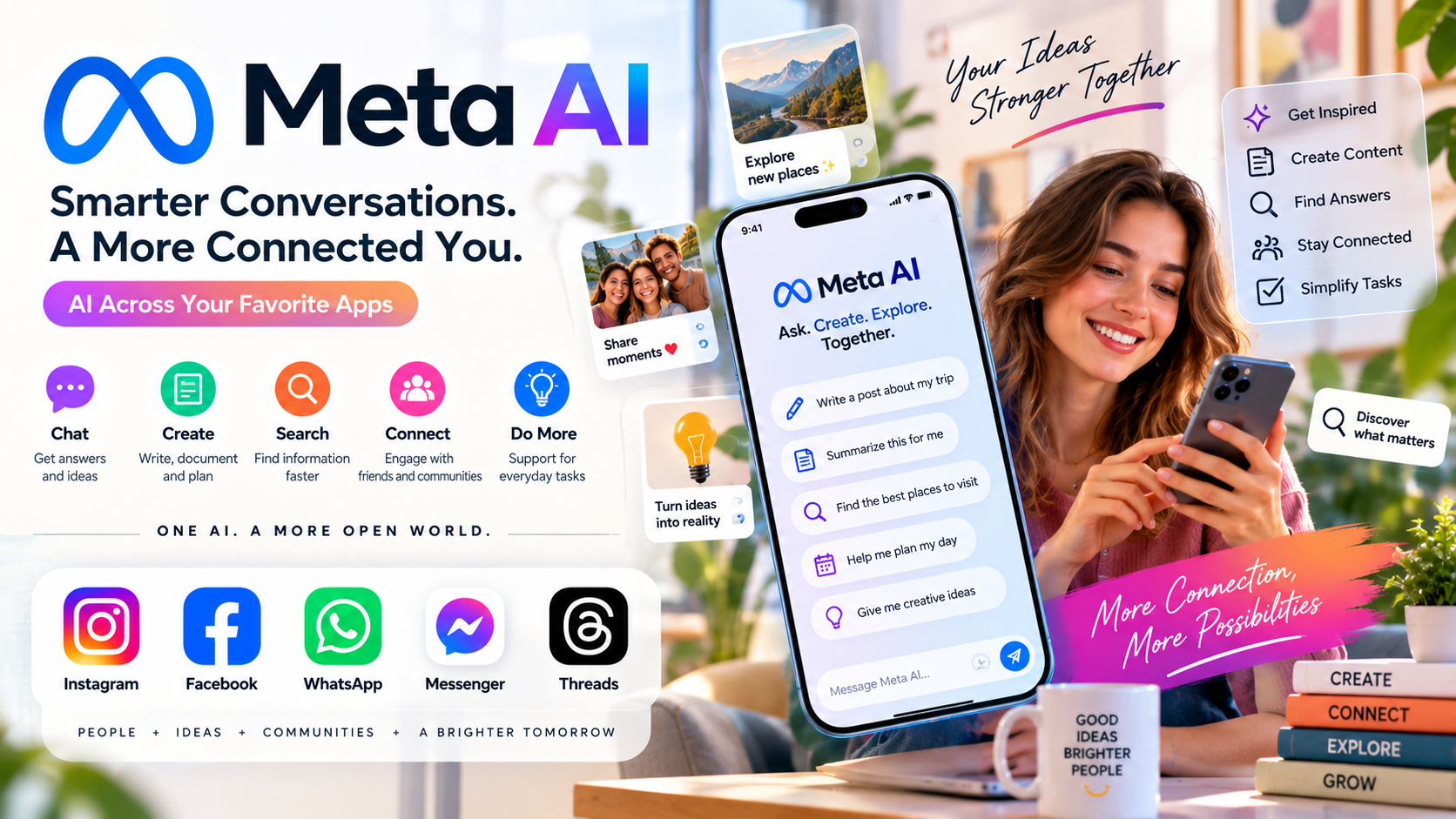
Focusing on AI-powered social interaction, Meta’s efforts span various products and regions. Users are able to interact with AI throughout the Meta family of apps.
Helpful for prompting, documenting, and searching, as well as other actions, Meta’s AI technology integrates into numerous tasks.
The Rise of Generative AI
The desire for improving business productivity and gaining a competitive edge drives many organizations to integrate generative AI.
Generative AI has several downstream effects, allowing software teams to spend more time on high-level duties by using the tech for lower-level tasks such as documentation and coding.
Along with these indirect benefits, Generative AI statistics paint a clear picture of improved business productivity and lower employee burnout.
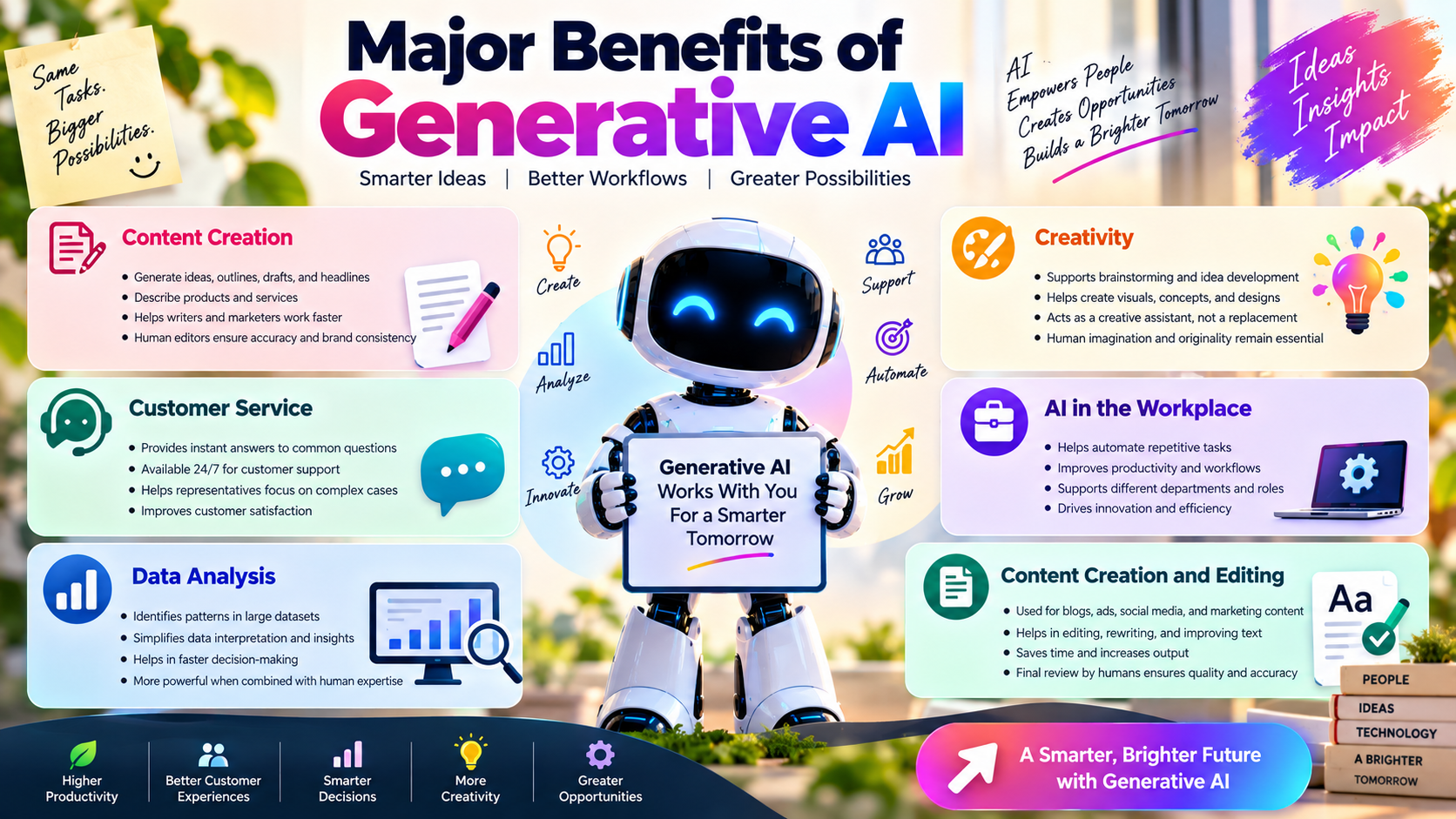
Major Benefits of Generative AI
Content creation
There have been several benefits for both writers and marketers. These include, but are not limited to generating ideas, outlines, drafts, headlines, and describing various products and services. While the edited versions of this content are published, other versions of the content may vary, human editors play an important role in ensuring accuracy, creativity, and style of an organization are consistent.
Customer service
An important aspect of customer service is providing answers to the most commonly asked questions. AI can help make this information available to customers at all times. This helps Customer Service representatives focus on more complex cases.
Data Analysis
Large sets of data often contain patterns. Through joint efforts of humans and Generative AI, interpreting data and summarizing findings can be simplified.
Creativity
There are numerous ways in which Generative AI helps in creative processes. The main advantage is that AI serves more of an assistance role and does not fully substitute human creativity.
AI in the Workplace
An increasing number of organizations are using various types of AI. Through joint efforts of humans and Generative AI, workflows can be improved and automated.
Content creation and editing
A variety of organizations use Generative AI for content creation and editing. This includes drafting ads and other types of content marketing.
Generative AI Statistics: Key Trends at a Glance
| Trend | What It Shows | Business Impact |
| AI chatbot adoption | More consumers are experimenting with AI assistants | Greater demand for AI-powered services |
| Workplace AI use | Companies are incorporating AI into daily workflows | Potential productivity improvements |
| Multimodal AI | Systems can work with multiple content formats | More flexible applications |
| AI coding tools | Developers increasingly use AI assistance | Faster development workflows |
| AI content creation | Marketers use AI for ideation and drafting | Faster campaign production |
| AI personalization | Systems can provide more contextual responses | Improved user experiences |
| Agentic AI | AI can increasingly handle multi-step tasks | Greater workflow automation |
Challenges and Risks
The trends in the use of Generative AI come with challenges. For example, AI may not fully understand the questions it is asked to answer. As such, the content it creates may be largely incorrect.
Privacy impacts need to be assessed. AI systems may capture and process personal information. Who controls the systems will determine the extent to which data protection and other privacy rights apply.
AI systems should not be considered as authoritative sources. Legal, medical, and financial counseling and other similar services should not be outsourced to AI.
Also Read- FAA Drone Registration: Avoid Costly Mistakes & Fly Legally
What the Future Holds
AI will become better at automating and integrating various tasks. We may see AI systems that can perform many of the duties within a given workflow, and that can cooperate with other AI systems and integrate various forms of user input. Users may start to depend on AI systems to perform research and other tasks that traditionally precede the creation of content, and to perform tasks that augment and integrate content and other forms of output.
As Generative AI Statistics show, AI systems are rapidly advancing, and businesses and individuals are adopting them at an ever-increasing rate.
Conclusion
The most significant potential opportunity is using AI to strategically modify business processes. When implemented correctly, AI has the potential to improve the efficiency of various business processes, including automating repetitive tasks. Additionally, businesses should be able to trust AI to process sensitive data without compromising security or accuracy.
Considering the rapid advancement of generative AI, it is reasonable to expect that 2026 and beyond will bring even more transformational changes to the world of work, technology, marketing and sales, education and training, and about any digital or online experience.
FAQs
1. What do you mean by Generative AI?
Generative AI refers to the family of Artificial Intelligence (AI) systems that can generate original content, or assist in creating new content, based on input data and prompts.
2. What are the positive impacts of Generative AI?
It increases productivity, speeds up content creation, provides customer service and assistance with coding and other activities. It can also help with data analysis, brainstorming and other activities.
3. Can generative AI lead to job loss?
Most probably not. While some activities in a job may become automated, most jobs will still require a significant amount of human judgment and other skills. It is expected that companies will more frequently integrate various forms of AI in the work places to assist employees.
4. What do generative AI statistics show?
They can show how, when and where businesses adopt generative AI technologies, what purposes companies focus on when utilizing the technology, how different populations interact with the technology, and what the future of business integration of the technology may look like. Understanding these trends may guide businesses on the best approach to utilizes generative AI technologies.
5. What will be the main feature of generative AI in 2026?
One of the main features will be the incorporation of more AI technologies in chatbots to be able to understand different forms of data, and to handle more complicated tasks.