Best Agricultural Drones: Incredible Solutions for Modern Farming
+
Table of Contents
- 1 Best Agricultural Drones Comparison Table
- 2 Top Best Agricultural Drones
- 2.1 1. DJI Agras T50
- 2.1.1 Key Features
- 2.1.2 Benefits
- 2.2 2. DJI Agras T25
- 2.2.1 Key Features
- 2.2.2 Benefits
- 2.3 3. XAG P100 Pro
- 2.3.1 Key Features
- 2.3.2 Benefits
- 2.4 4. Yamaha FAZER R G2
- 2.4.1 Key Features
- 2.4.2 Benefits
- 2.5 5. SenseFly eBee X
- 2.5.1 Key Features
- 2.5.2 Benefits
- 2.6 Benefits Associated with the Best Agricultural Drone
- 3 Top Apps for Agricultural Drones
- 3.1 1. DJI Terra
- 3.1.1 Key Features
- 3.1.2 Benefits
- 3.2 2. Pix4Dfields
- 3.2.1 Key Features
- 3.2.2 Benefits
- 3.3 3. DroneDeploy
- 3.3.1 Key Features
- 3.3.2 Benefits
- 3.4 4. Agremo
- 3.4.1 Key Features
- 3.4.2 Benefits
- 3.5 5. PrecisionHawk
- 3.5.1 Key Features
- 3.5.2 Benefits
- 3.6 How to Select the Best Agricultural Drones
- 3.6.1 Flight Duration
- 3.6.2 Cargo Weight
- 3.6.3 Camera Quality
- 3.6.4 GPS Precision
- 3.6.5 App Integration
- 3.6.6 Ease of Use
- 3.6.7 Maintenance and Support
- 3.7 Why Farmers Are Investing in Agricultural Drones
- 4 Conclusion
- 4.1 Frequently Asked Questions (FAQs)
- 4.1.1 1. What are agricultural drones used for?
- 4.1.2 2. Which is the best agricultural drone for large farms?
- 4.1.3 3. Can agricultural drones reduce farming costs?
- 4.1.4 4. What software is commonly used with agricultural drones?
- 4.1.5 5. Are agricultural drones appropriate for small farms?
- 4.1.6 6. Are agricultural drones a good investment?
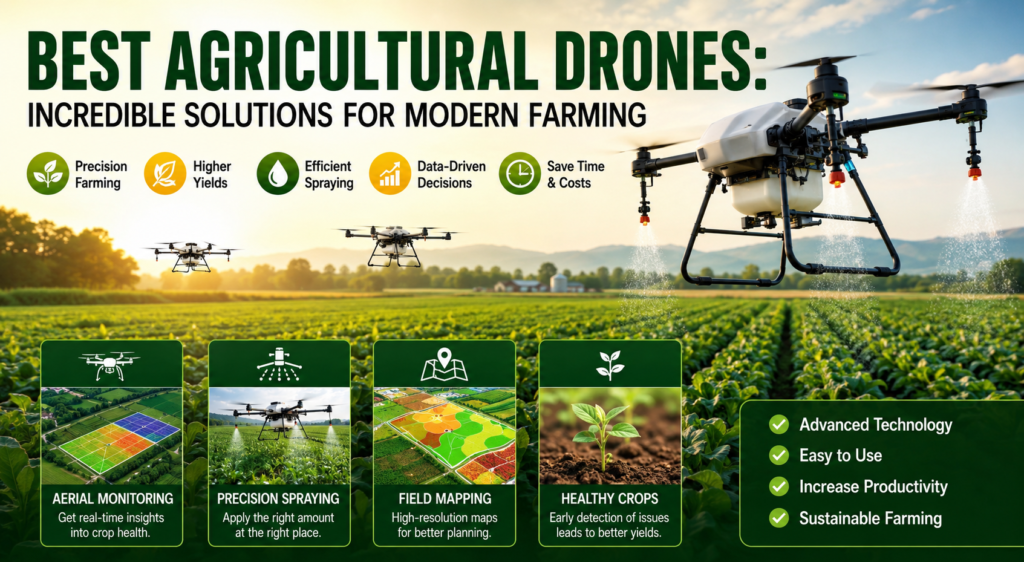
New methods of farming have emerged over the past ten years due to a host of innovations in crop production technology. The farmer of today uses advanced technology to improve crop production, increase efficiency, and reduce costs. Among these innovations, the best agricultural drones are a must-have for a modern farm.
No matter how large or small a farm is, drones help agriculturalists monitor their crops, apply fertilizers, generate field maps, and collect terabytes of valuable data in a short time. Farmers save a tremendous expense of time and money with drones when compared to the traditional methods of field inspections.
The best agricultural drones provide advanced farm ease of use through artificial intelligence, high-resolution cameras, GPS, and flight control systems to create plans. Many of these models will scan a field for pests and make crop health assessments long before such symptoms would be visible to the naked eye.
Our guide will help you learn about the best agricultural drones, tell you what to look for in these amazing devices, tell you what benefits they provide, and help you learn about the software that makes these best agricultural drones head and shoulders above the rest.
Best Agricultural Drones Comparison Table
| Agricultural Drone | Best For | Flight Time | Key Features |
|---|---|---|---|
| DJI Agras T50 | Large Farms | 10–20 minutes | High-capacity spraying, obstacle avoidance, RTK-GPS navigation |
| DJI Agras T25 | Medium Farms | 18 minutes | Compact design, precision spraying, AI-assisted flight |
| XAG P100 Pro | Commercial Farming | 20 minutes | Variable-rate spraying, autonomous operation |
| Yamaha FAZER R G2 | Large Crop Fields | Long endurance | Reliable performance, safe operation, suitable for large-scale farming |
| SenseFly eBee X | Field Mapping | Up to 90 minutes | Fixed-wing design, multispectral mapping, high-efficiency surveying |
| Parrot Anafi USA | Crop Monitoring | 32 minutes | 4K HDR camera, thermal imaging, detailed crop inspection |
| WingtraOne GEN II | Surveying Farms | 59 minutes | VTOL design, high-accuracy mapping, efficient aerial surveying |
Why Agricultural Drones Are Becoming Essential
With the current state of the farming industry, including unpredictable weather, the cost of farm labor increasing, and the expectation of constant supply, farmers need to be smarter about the tools and technologies they are using on the farm. With the best agricultural drones, farmers can get aerial data quickly so that they can manage farming operations more efficiently.
Compared to walking hundreds or even thousands of acres in the fields, farmers can launch a drone to inspect the entire field in just a few minutes. Drones help farmers identify where the crops need help, whether it is irrigation, pests, nutrient deficiency, or distress.
Top Best Agricultural Drones
1. DJI Agras T50
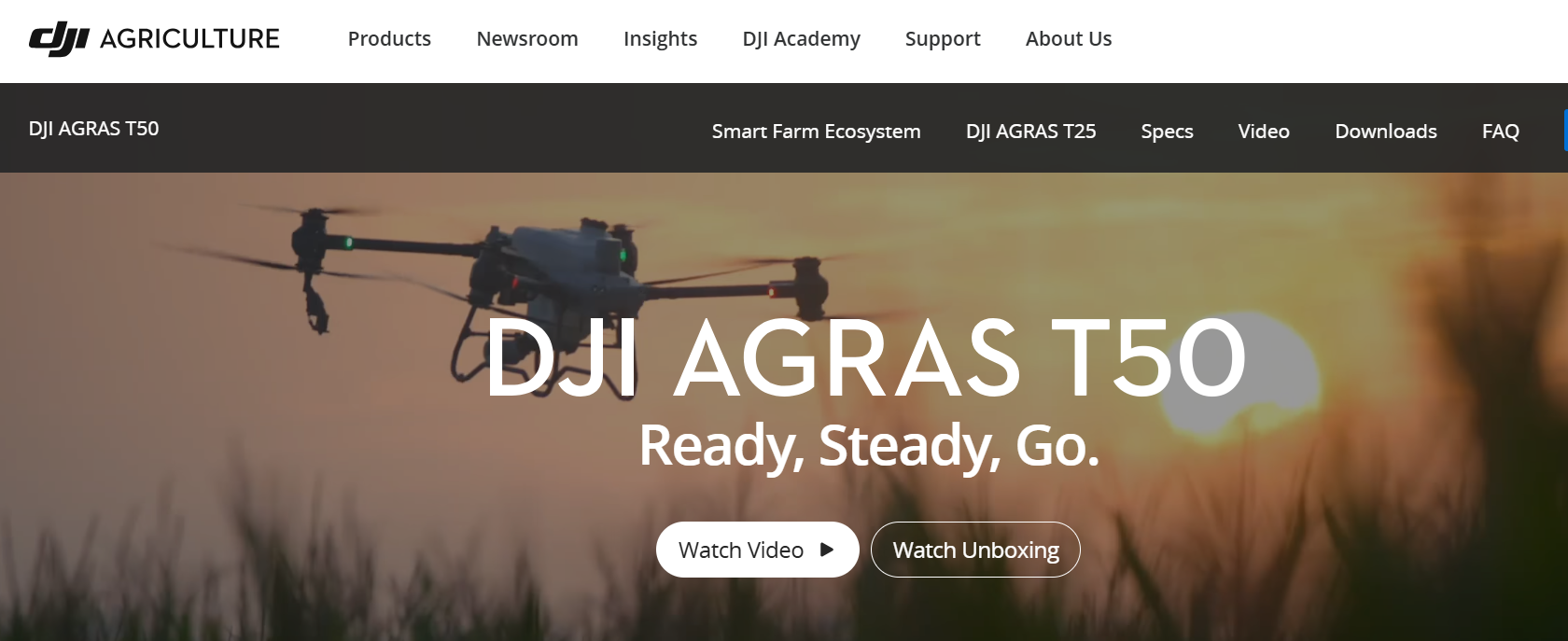
This commercial farming drone may be the best choice for large scale operations on farming. Automation of flight paths, paired with strong spraying ability, helps make this a productive drone.
T50’s high spray tank capacity allows farms to cover more ground. This drone can include Intelligent Terrain Following, Obstacle Avoidance with AI, and RTK GPS systems to help spray and tackle the terrain and obstacles.
Key Features
- Large liquid spraying tank
- Intelligent terrain following
- AI-assisted obstacle avoidance
- RTK GPS positioning
- Automated flight routes
- Fast charging support
Benefits
- Covers more acres in less time
- Reduces chemical waste
- Improves spraying accuracy
- Easy to operate with automated controls
- Suitable for large farms
2. DJI Agras T25
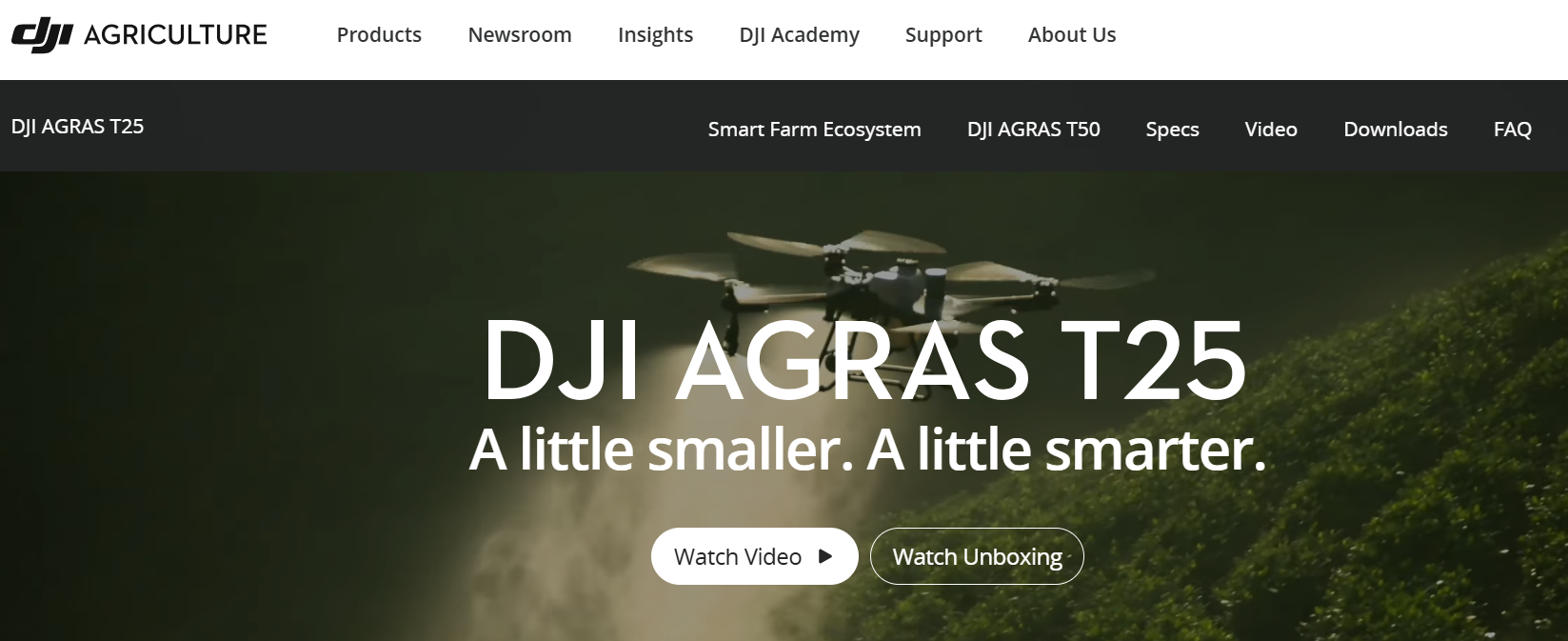
T25’s professional-quality spraying and spreading gives medium-sized farms a great option for crop management, all without breaking the bank on a large industrial drone.
Being a small and compact drone also helps with transportation to and from multiple farm locations.
Key Features
- Compact foldable design
- Precision spraying system
- Smart route planning
- Obstacle sensing technology
- Easy maintenance
Benefits
- Perfect for medium farms
- Saves labor costs
- Accurate pesticide application
- Simple setup and operation
- Reliable flight stability
3. XAG P100 Pro
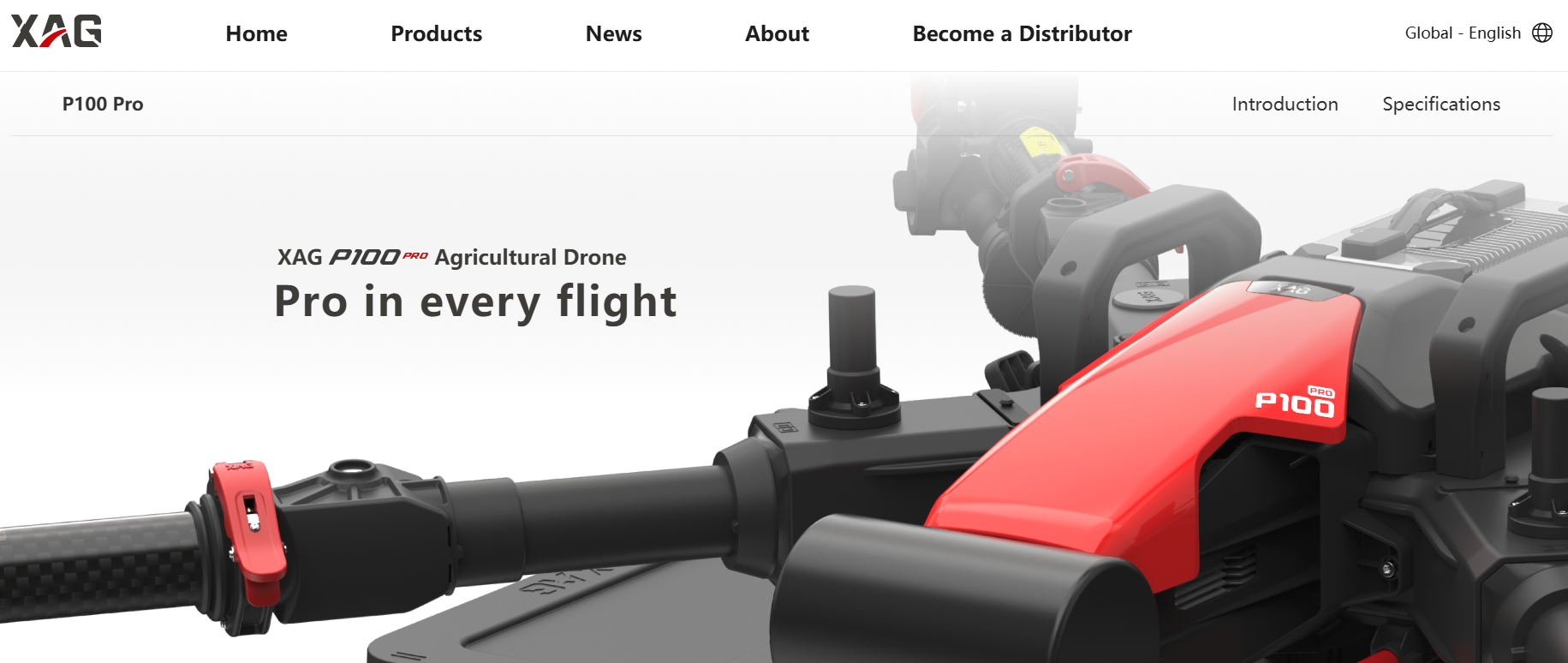
For precise agriculture methods, this drone may be one of the best options, since it is designed to automatically take care of farming tasks. This model automates variable rate spraying technologies, which allows farmers to spray only the needed areas.
Doubling farming productivity has never been easier with this drone.
Key Features
- Autonomous Navigation
- Spraying System with High Capacity
- Variable Application Rates
- AI-Optimized Route Planning
- Built-in Multiple Safety Sensors
Benefits
- Spray application is optimized for crop protection.
- Reduces Operating Costs
- High spraying efficiency minimizes chemical waste
- Excellent spray coverage and accuracy
- Supports active farm management practices
Also Read- Amazing Long-Range Drone Guide: Find Your Perfect Drone
4. Yamaha FAZER R G2
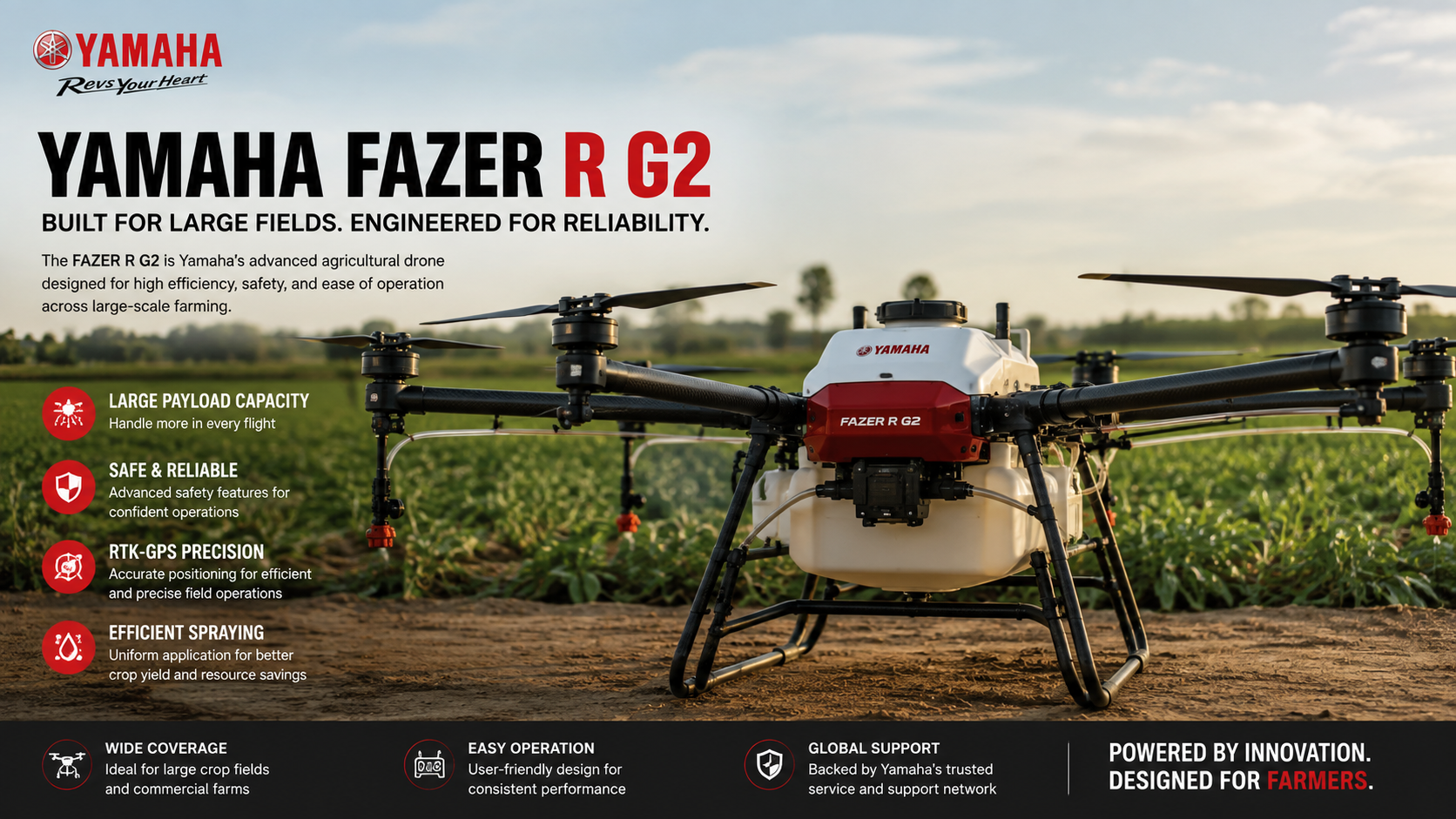
Unlike other quadcopter drones, the FAZER R G2 uses a helicopter design. This gives the drone the ability to efficiently carry heavier loads over long distances, which is what you need to do on larger farm plots.
This drone is actually built for commercial use and is one of the most reliable on the market.
Key Features
- A design based on a helicopter
- Performance engine
- Reliable construction
- Able to carry heavy loads
- Stable long-distance flights
Benefits
- Built for large farm plots
- Can fly over difficult terrain
- Spraying efficiency
- Long-lasting construction
- Commercial-grade reliability
5. SenseFly eBee X
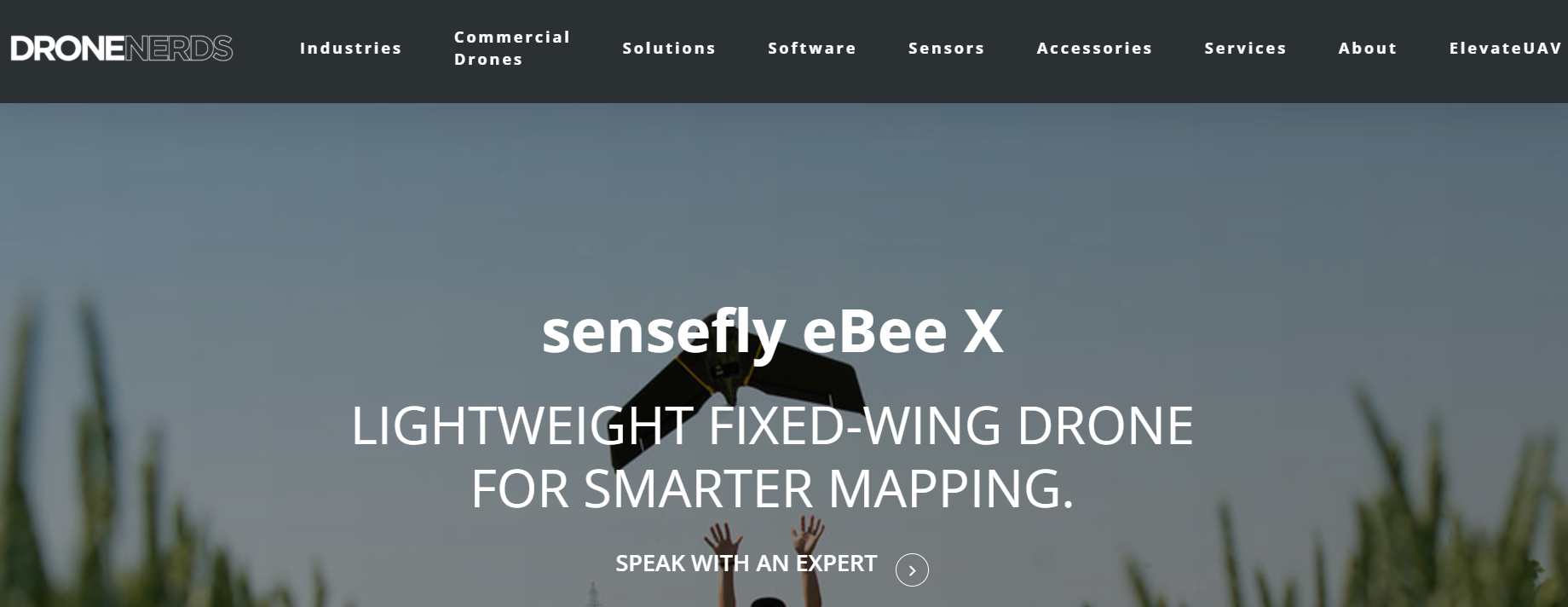
The SenseFly eBee X was designed as an aerial mapping drone and specializes in surveying crops, making it one of the Best Agricultural Drones.
This drone has the added benefit of having a fixed-wing design, meaning it can stay in the air for longer than traditional drones.
Key Features
- Flight duration of 90 minutes
- High-resolution mapping
- Multi-spectral technology
- Plans missions automatically
- Accurate remote field surveys
Benefits
- Does crop mapping quickly
- High-resolution maps of crops
- Reveals over-saturation in soil
- Helps with active management of crops
- Improves farm management decisions
Benefits Associated with the Best Agricultural Drone
Some of the key benefits are:
- Increased efficiency in crop inspection.
- Advanced system to apply pesticide and fertilizer with precision.
- Reduces labor.
- Early detection of diseases.
- Optimizes water management through better irrigation.
- Helps predict yield for crops.
- Uses fewer chemicals.
- Generates accurate field maps.
- Automation of time-consuming tasks.
- Better management of resources.
The benefits of agricultural drones are enormous, regardless of the scale of your farming operation.
Top Apps for Agricultural Drones
Along with the choice of the right agricultural drone, the right software choice is of equal importance. The applications help farmers analyze their aerial data, create very detailed field maps, plan their flights, and make the necessary decisions. These apps assist in the creation of actionable insights to improve and enhance crop health.
1. DJI Terra

DJI Terra is among the most popular mapping tools built for DJI agricultural drones. DJI Terra is one of the few tools that creates high-resolution 2D maps and accurate 3D models. This allows users to monitor crops at the highest level of detail.
Key Features
- Automated flight planning.
- 2D and 3D mapping.
- Terrain Analysis.
- Crop monitoring.
- Data visualization.
Benefits
- Saves time during field surveys
- Improves mapping accuracy
- Helps identify crop issues early
2. Pix4Dfields
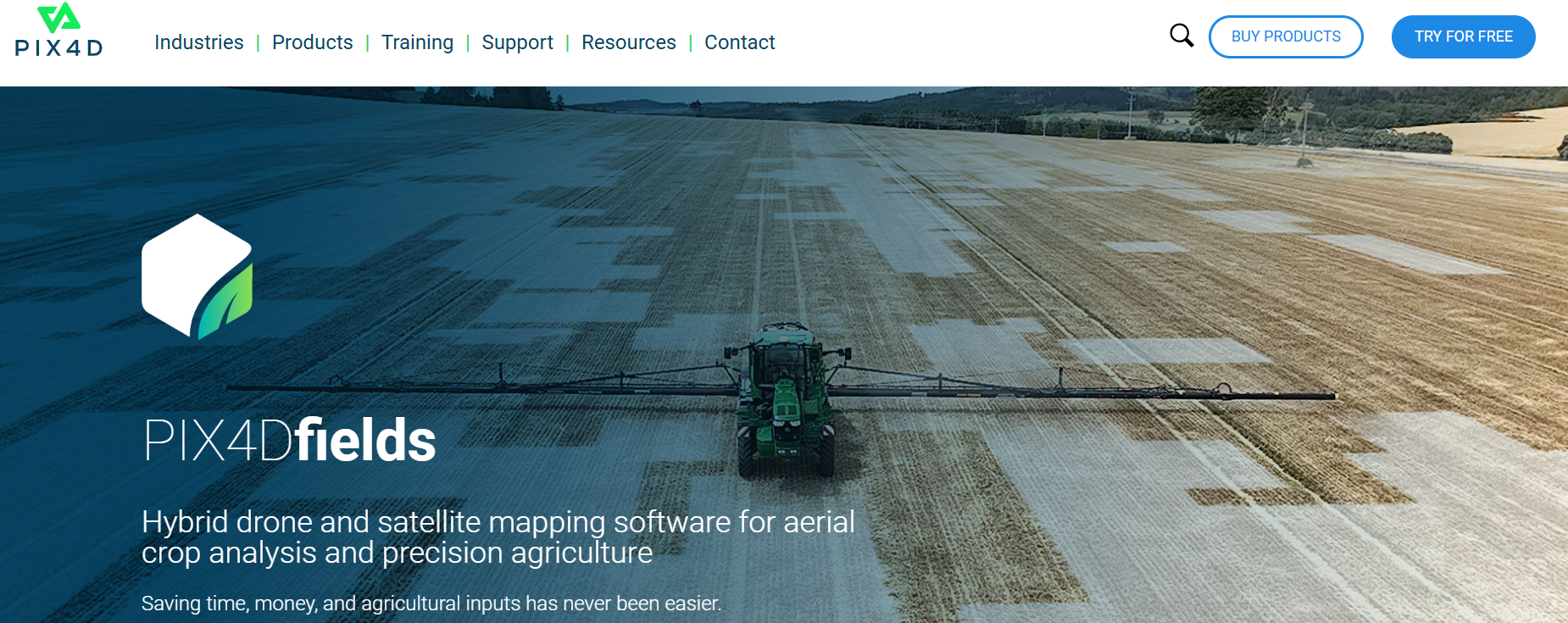
Pix4Dfields is a great tool that is ahead of its time. It has the capability to analyze drone data to create maps and formulate precise data to help improve precision farming.
Key Features
- Process drone images quickly and easily.
- Multispectral maps.
- Stable software.
- Offline Data Processing.
- Health evaluation of crops.
Benefits
- Supports precision farming
- Reduces unnecessary chemical usage
- Helps increase crop yields
3. DroneDeploy
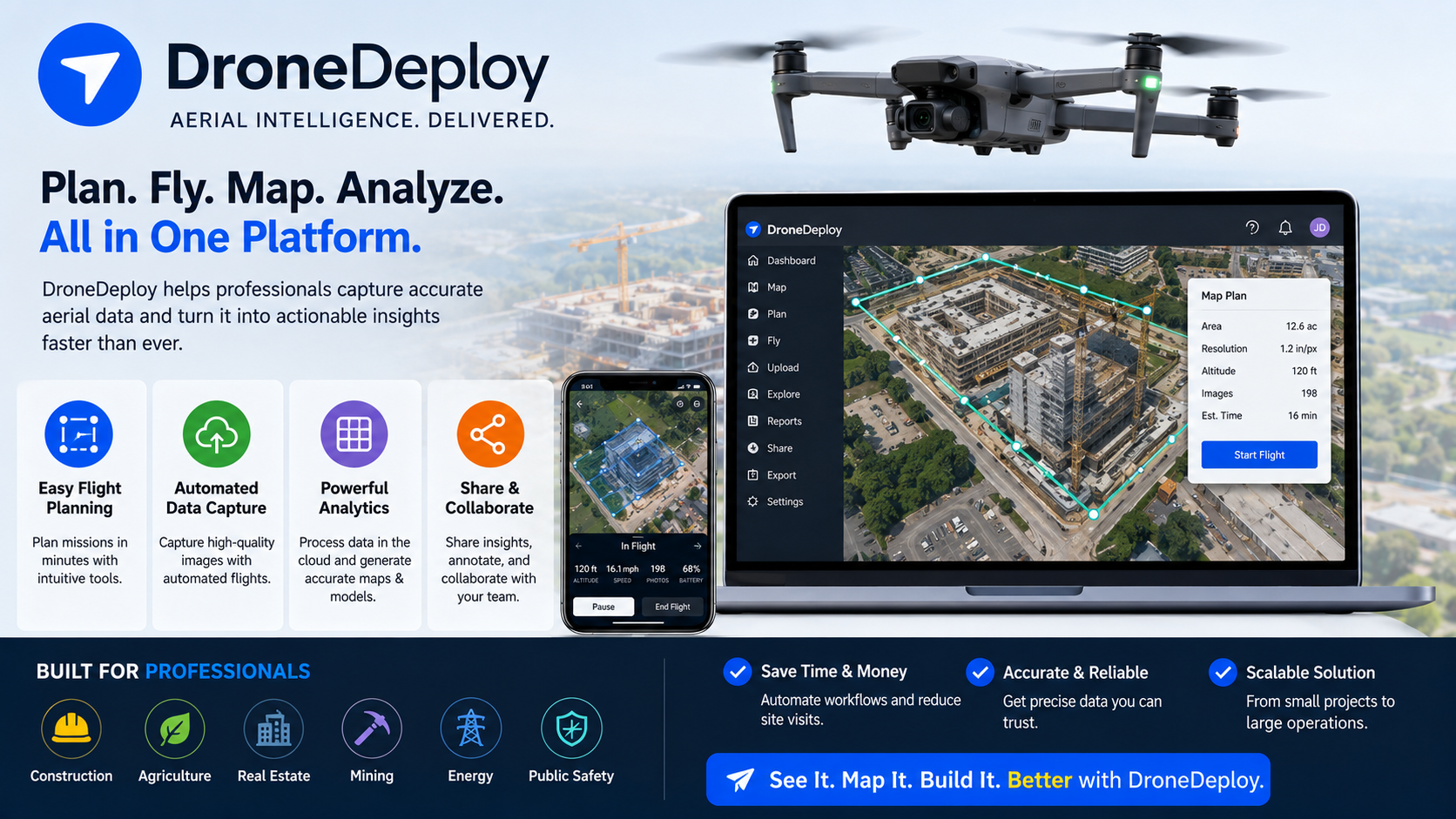
A drone-based data system. Allows users to create maps and reports for field inspections.
Key Features
- Automatically generate flight plans.
- Multiple map types.
- Automated flight planning
- Cloud data storage
- Field measurement tools
- High-resolution aerial mapping
- Team collaboration
Benefits
- Eases farm inspections
- Boosts efficiency
- Enhances data transfer
4. Agremo
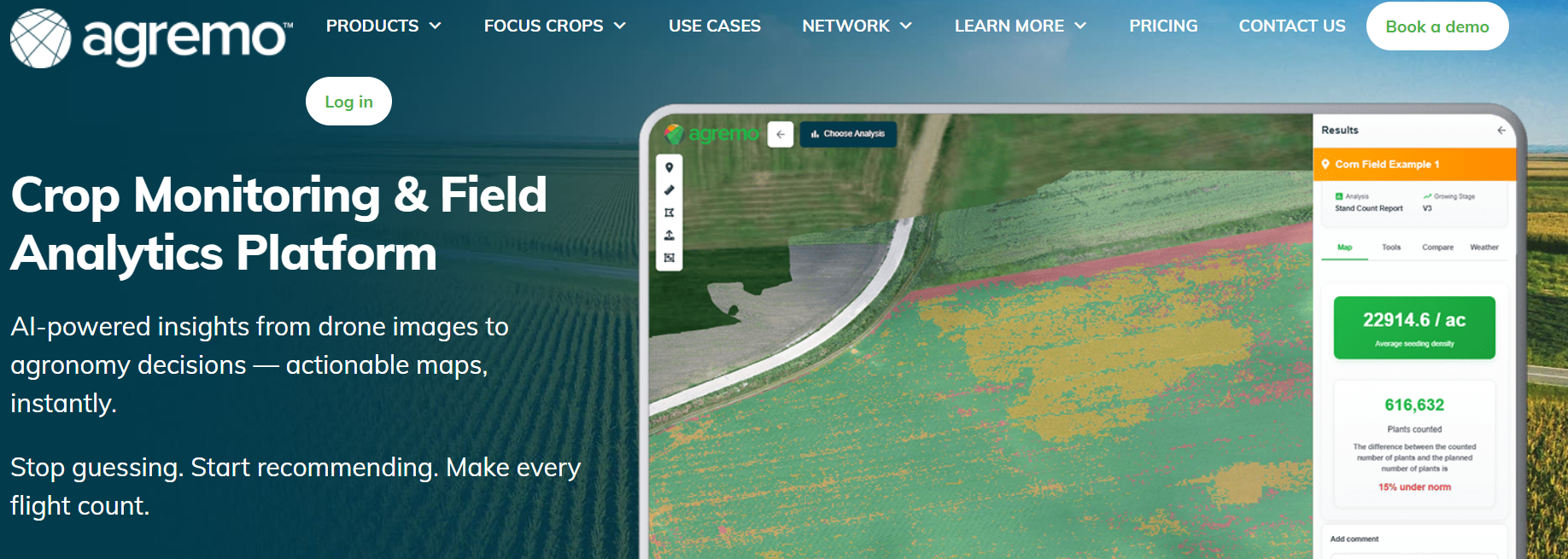
Agremo uses artificial intelligence to simplify agricultural analytics and reporting tailored directly to a farmer’s needs.
Key Features
- Plant identification
- Health monitoring
- Weed detection
- Crop yield prediction
- AI analytics
Benefits
- Saves time through automated inspection
- Convenient field data reporting
- Assists in the optimization of farm activities
5. PrecisionHawk
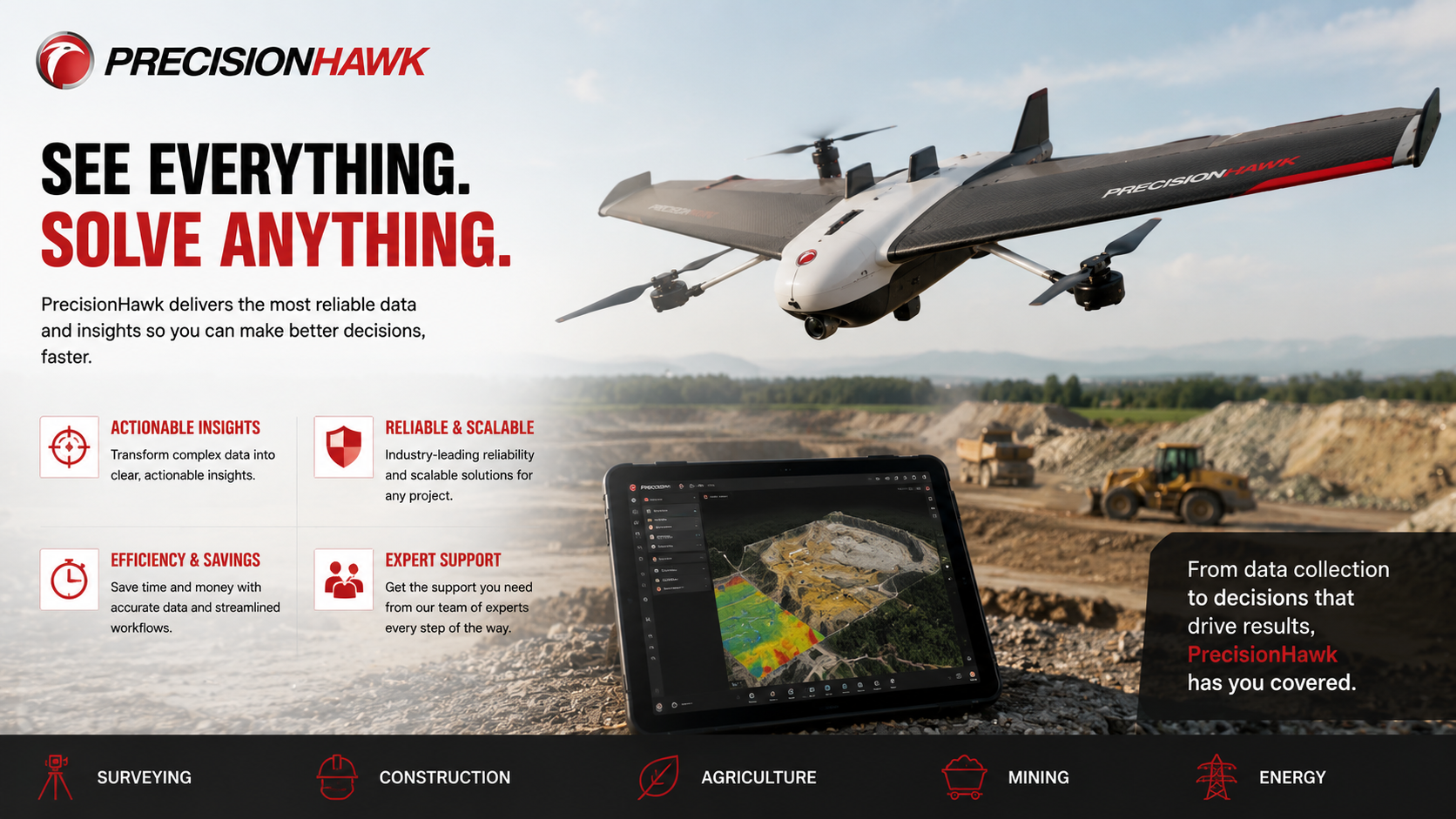
PrecisionHawk combines drone solutions with artificial intelligence to analyze crops and provide insights into farm activities.
Key Features
- AI automation
- Crop scouting
- Customized report generation
- High-fidelity images
- Data integration
Benefits
- Enables rapid initiative undertaking
- Enhanced crop management
- Improved efficiency in crop cultivation
How to Select the Best Agricultural Drones
When shopping for the best agricultural drones, prioritize your farming objectives and consider the following:
Flight Duration
Drones that can fly longer are a better option for those looking to cover expansive land.
Cargo Weight
Drones with a high payload are more ideal for crop spraying activities since they require less frequent refills.
Camera Quality
High-resolution cameras make it easier to monitor crops.
GPS Precision
RTK GPS allows for extremely accurate navigation, which is especially useful for spraying and mapping operations.
App Integration
Some drones come with compatible applications for improved analytics like Pix4Dfields, DJI Terra, or DroneDeploy.
Ease of Use
Beginner-friendly drone features such as one-touch controls, automation of flight planning, and obstacle avoidance techniques make using drones easier.
Maintenance and Support
Long-term operation of drones requires reliable customer support, availability of spare parts, and software updates.
Also Read- Best HR Software: Powerful Solutions for Smarter Hiring
Why Farmers Are Investing in Agricultural Drones
Today’s large data-generating farms have a lot of information to process. The Best Agricultural Drones eliminate the need for time-consuming research and provide farmers with a bird’s-eye view of their fields to determine the best course of action for their fields and to help them manage field activities like irrigation and harvesting.
It also helps to eliminate the guesswork involved in making decisions regarding the application of fertilizers and the control of pests, and reduces operating costs.
Precision agriculture as a farming practice is encouraged both by the government and by agricultural organizations; hence, investing in drone technology for agriculture is a viable business venture.
Conclusion
Today, agricultural drone technologies literally put smarter farming techniques, faster work completion, and improved efficiency at a farmer’s fingertips. The Best Agricultural Drones, combined with advanced agriculture drone software such as DJI Terra, Pix4Dfields, DroneDeploy, and Agremo, help farmers gain actionable intelligence from images once captured.
Whether you need a powerful sprayer like the DJI Agras T50, a compact solution like the DJI Agras T25, or a mapping specialist like the SenseFly eBee X, there is a drone suited to every farming operation.
As the future of farming becomes more sustainable with advances in technology, agricultural drones will become more essential. Farmers will have the opportunity to invest in agricultural drones that save time and create a more efficient system.
Frequently Asked Questions (FAQs)
1. What are agricultural drones used for?
Agricultural drones assist in analyzing and monitoring crops and fields, spraying pesticides and fertilizers, and irrigation and plant health assessments for yield estimations.
2. Which is the best agricultural drone for large farms?
The DJI Agras T50 agricultural drone has an advanced automated system, a spraying system, and a high payload with intelligent head technology. This makes it one of the best drones to spray large farms.
3. Can agricultural drones reduce farming costs?
Yes. Agricultural drones reduce labor costs, chemical costs and waste, and provide early detection of crop issues, therefore decreasing cost in general.
4. What software is commonly used with agricultural drones?
Examples of popular software for agricultural drones include DJI Terra, Pix4Dfields, DroneDeploy, Agremo, and PrecisionHawk. These apps provide services such as crop analysis, flight planning, mapping, and reporting.
5. Are agricultural drones appropriate for small farms?
Yes. Small farmDrone farming systems can be incorporated using compact drones such as the DJI Agras T25. These drones are easily transportable and have professional features that make them user friendly.
6. Are agricultural drones a good investment?
Yes. Agricultural drones have the potential to save farmers money by improving their farming operations with greater efficiency while producing healthier crops.