Top AI Chatbot Apps Transforming Communication in 2026
+
Table of Contents
- 1 The Rise of AI Chatbots in Modern Communication
- 2 Top AI Chatbot Apps in 2026
- 2.1 1. ChatGPT
- 2.1.1 Key Features
- 2.2 2. Google Gemini
- 2.2.1 Key Features
- 2.3 3. Microsoft Copilot
- 2.3.1 Key Features
- 2.4 4. Claude
- 2.4.1 Key Features
- 2.5 5. Perplexity AI
- 2.5.1 Key Features
- 2.6 6. Character AI
- 2.6.1 Key Features
- 2.7 7. Pi AI
- 2.7.1 Key Features
- 3 Comparison Table of Leading AI Chatbot Apps
- 4 Features Driving AI Chatbot Innovation in 2026
- 4.1 Natural Language Understanding
- 4.2 Multimodal Capabilities
- 4.3 Personalized Responses
- 4.4 Real-Time Information Access
- 4.5 Workflow Automation
- 4.6 Language Translation
- 5 Benefits of AI Chatbot Apps for Individuals
- 5.1 Enhanced Productivity
- 5.2 Improved Learning
- 5.3 Creative Assistance
- 5.4 Better Communication
- 5.5 Accessibility
- 6 Benefits of AI Chatbots for Businesses
- 6.1 Customer Support Automation
- 6.2 Reduced Operational Costs
- 6.3 Improved Customer Experience
- 6.4 Data Insights
- 6.5 Scalability
- 6.6 Challenges Facing AI Chatbots
- 6.6.1 Information Accuracy
- 6.6.2 Privacy Concerns
- 6.6.3 Ethical Considerations
- 6.6.4 Dependence on Technology
- 6.7 The Future of AI Chatbots
- 6.7.1 Emerging trends include:
- 7 Conclusion
- 7.1 Frequently Asked Questions (FAQs)
- 7.1.1 1. What is an AI chatbot?
- 7.1.2 2. Which AI chatbot is best in 2026?
- 7.1.3 3. Can AI chatbots replace human customer support?
- 7.1.4 4. Are AI chatbots safe to use?
- 7.1.5 5. How do AI chatbots improve productivity?
- 7.1.6 6. Can AI chatbots understand multiple languages?
- 7.1.7 7. Do AI chatbots require internet access?
- 7.1.8 8. What is the future of AI chatbots?
Artificial Intelligence has rapidly evolved from a futuristic concept into an everyday necessity. In 2026, AI chatbot applications are changing how people communicate, work, learn, and access information. Whether assisting businesses with customer support, helping students with research, or serving as virtual companions, AI chatbots have become powerful digital assistants capable of understanding and responding to human language with remarkable accuracy.
The latest generation of AI chatbot apps goes far beyond answering simple questions. They can generate content, analyze data, translate languages, automate tasks, provide personalized recommendations, and even engage in natural conversations that closely resemble human interactions. As AI technology continues to improve, chatbot apps are becoming essential tools for both personal and professional communication.
This article explores the top AI chatbot apps transforming communication in 2026, their standout features, benefits, and how they are shaping the future of digital interaction.
The Rise of AI Chatbots in Modern Communication
The growing popularity of AI chatbots can be attributed to advances in natural language processing (NLP), machine learning, and generative AI. These technologies enable chatbots to understand context, maintain conversations, and provide highly relevant responses.
Today, AI chatbot apps are used across multiple industries, including:
- Customer service
- Education
- Healthcare
- Marketing
- Content creation
- Software development
- E-commerce
- Personal productivity
As businesses and individuals seek faster and more efficient communication solutions, AI chatbot apps continue to gain widespread adoption.
Top AI Chatbot Apps in 2026
1. ChatGPT
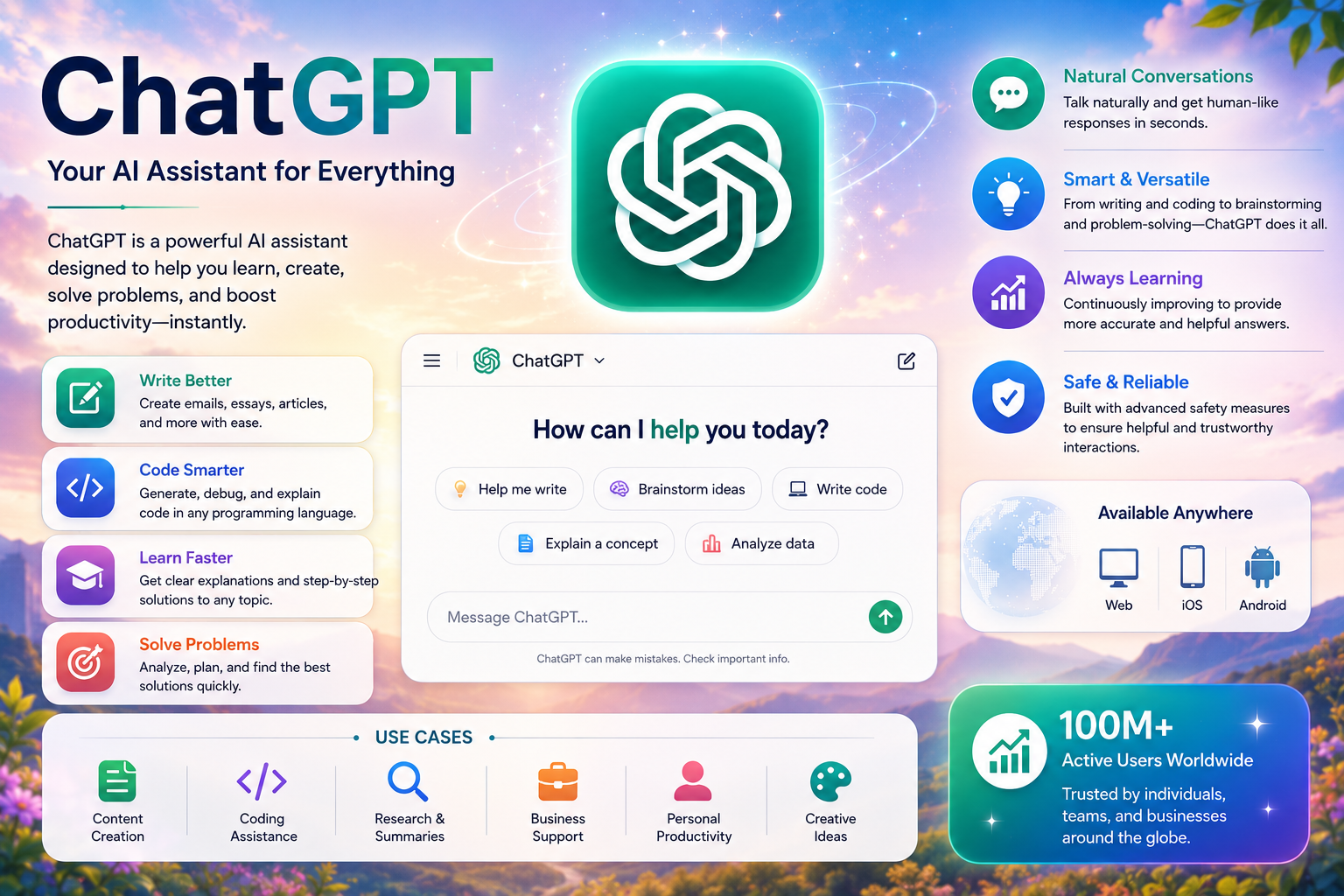
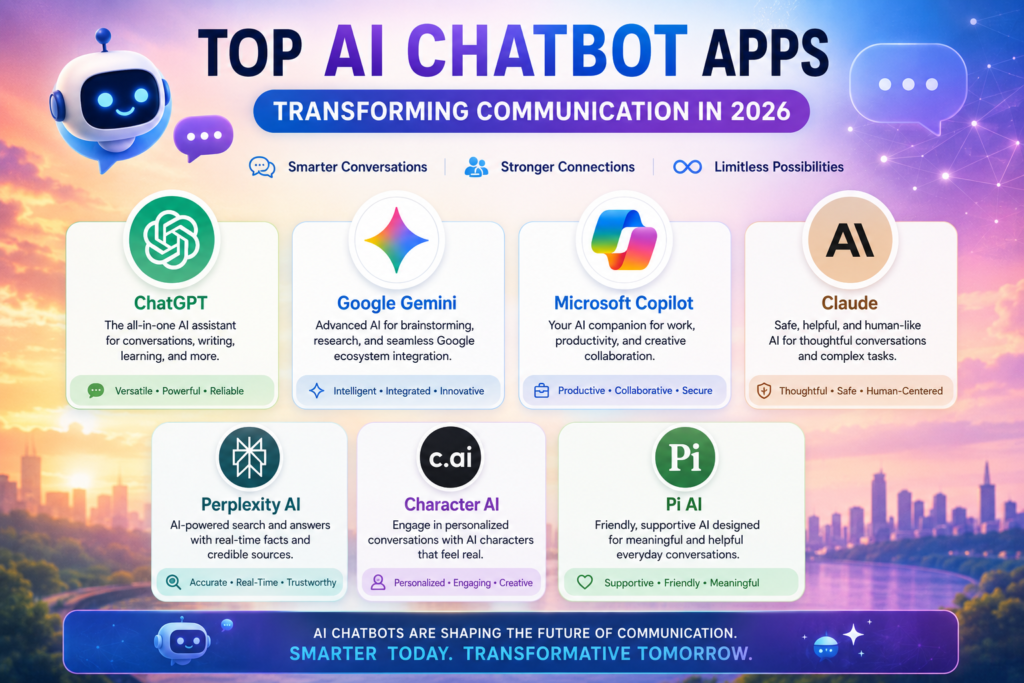
ChatGPT remains one of the most widely used AI chatbot platforms in 2026. Known for its conversational abilities and versatility, it helps users generate content, answer questions, brainstorm ideas, write code, and much more.
Key Features
- Advanced conversational AI
- Content creation assistance
- Coding and debugging support
- Document analysis
- Multilingual communication
- Research and learning assistance
2. Google Gemini
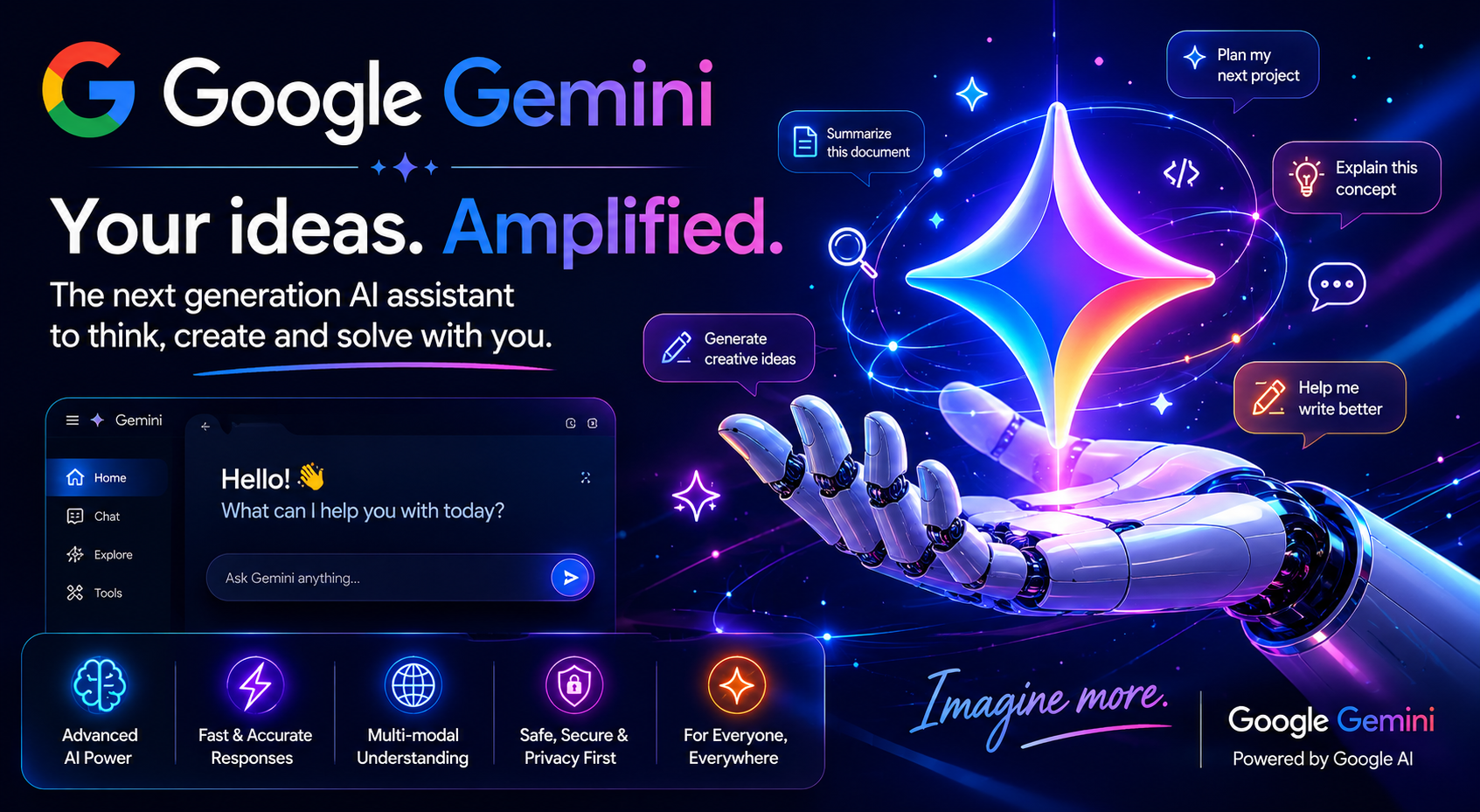
Google Gemini combines powerful AI capabilities with deep integration across Google’s ecosystem. It assists users with research, productivity, and information retrieval while leveraging Google’s extensive data resources.
Key Features
- Real-time information access
- Workspace integration
- Multimodal understanding
- Image and text generation
- Smart task management
- Cross-platform compatibility
3. Microsoft Copilot
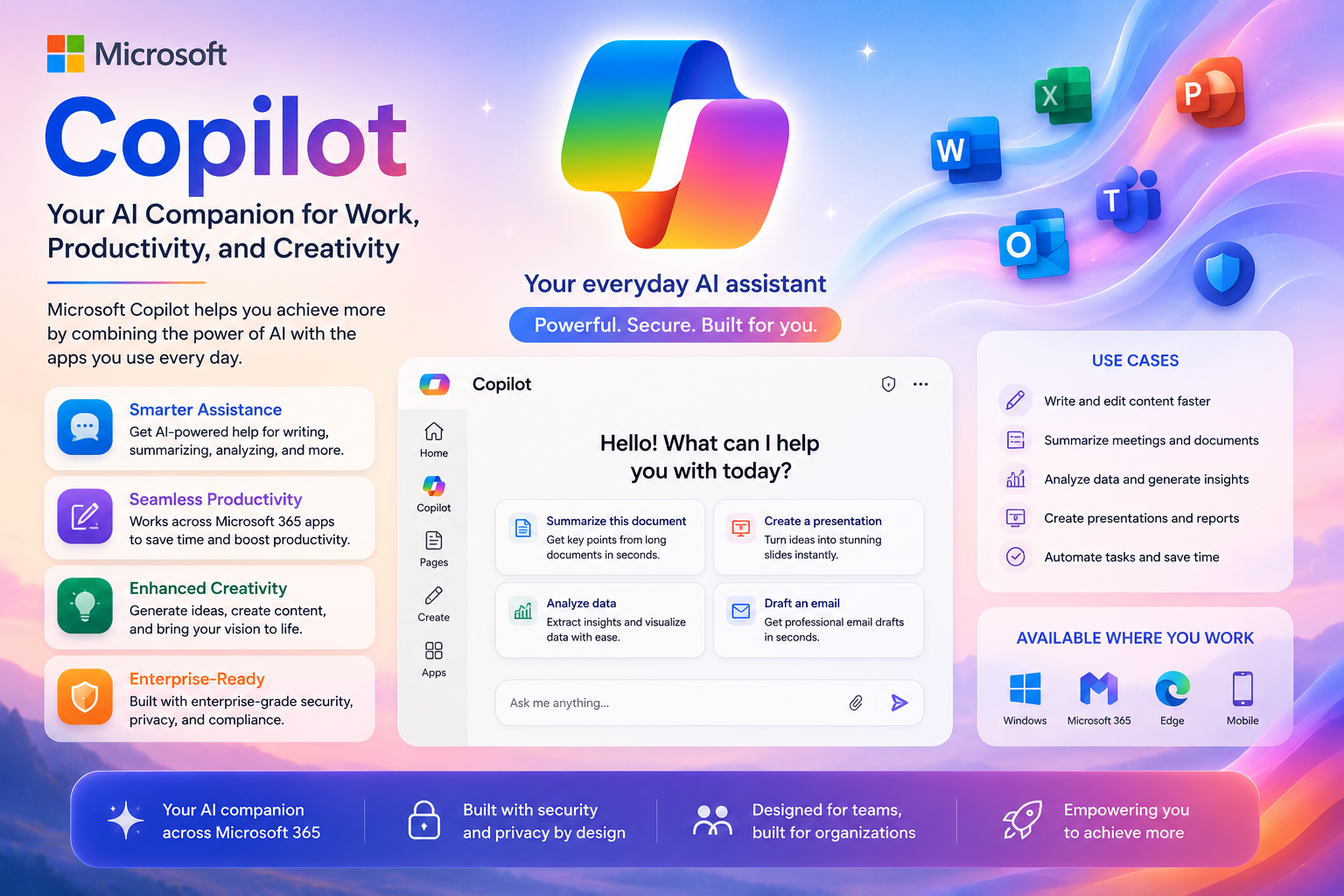
Microsoft Copilot has become a productivity powerhouse by integrating AI assistance directly into business tools and workflows.
Key Features
- Microsoft 365 integration
- Data analysis support
- Automated report generation
- Meeting summaries
- Workflow automation
- Business intelligence assistance
4. Claude
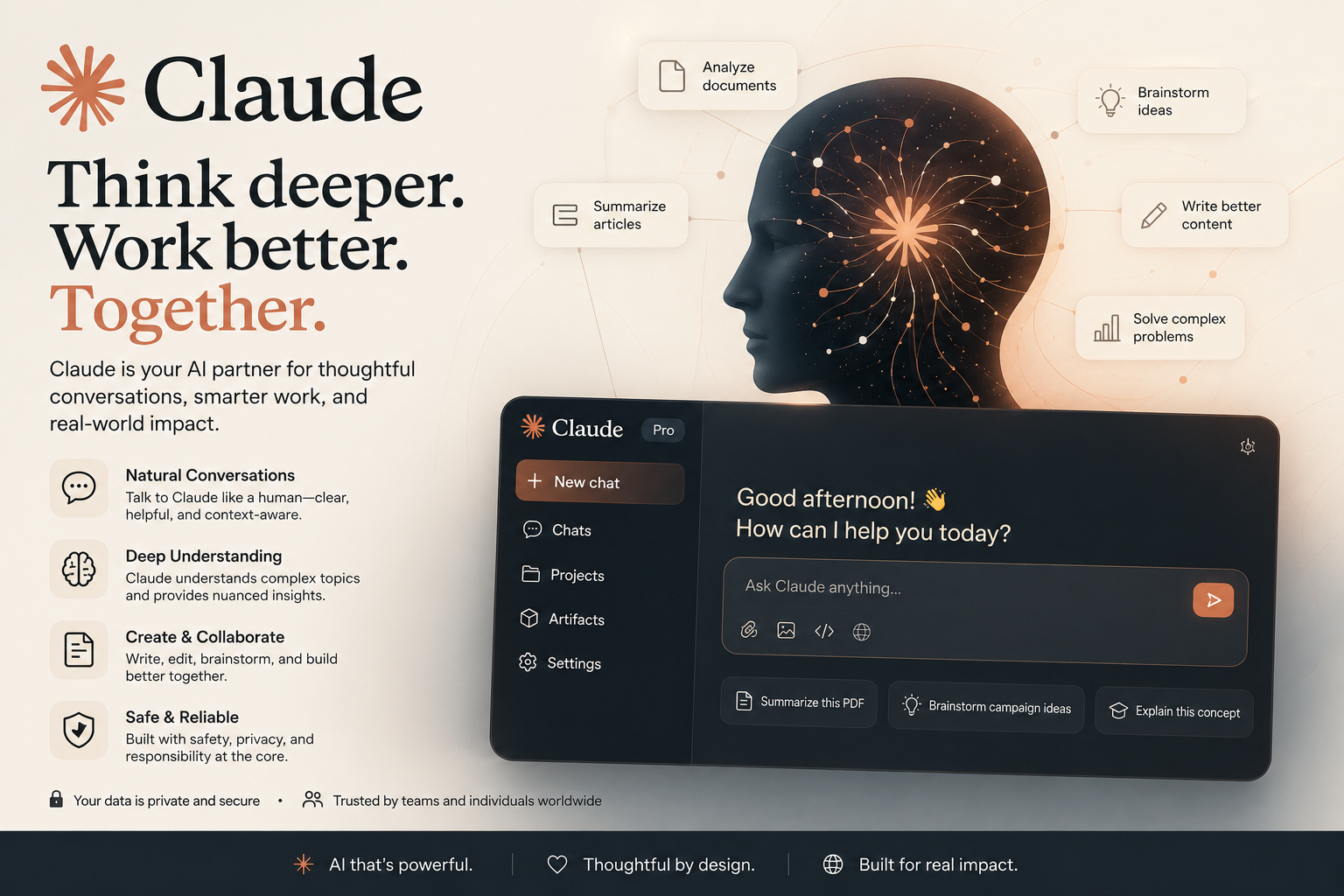
Claude has gained recognition for its emphasis on safe, thoughtful, and detailed responses. It is particularly useful for long-form writing and complex document analysis.
Key Features
- Long-context understanding
- Detailed explanations
- Document summarization
- Ethical AI responses
- Research assistance
- Business communication support
5. Perplexity AI
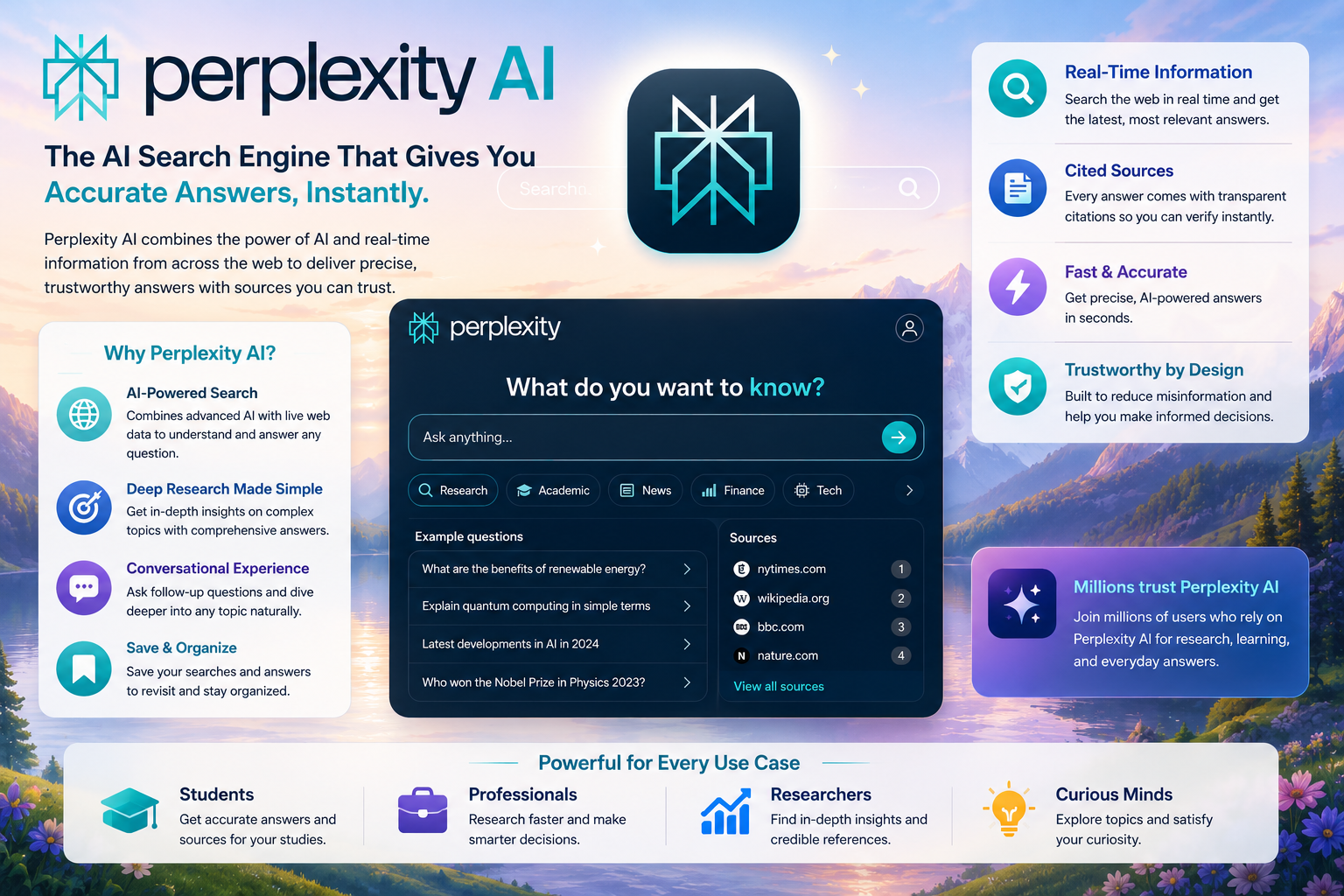
Perplexity AI focuses on providing research-driven answers supported by sources, making it popular among professionals and students.
Key Features
- Source-backed responses
- Fast information retrieval
- Academic research support
- Real-time web integration
- Citation generation
- Knowledge exploration tools
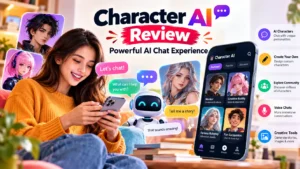
6. Character AI
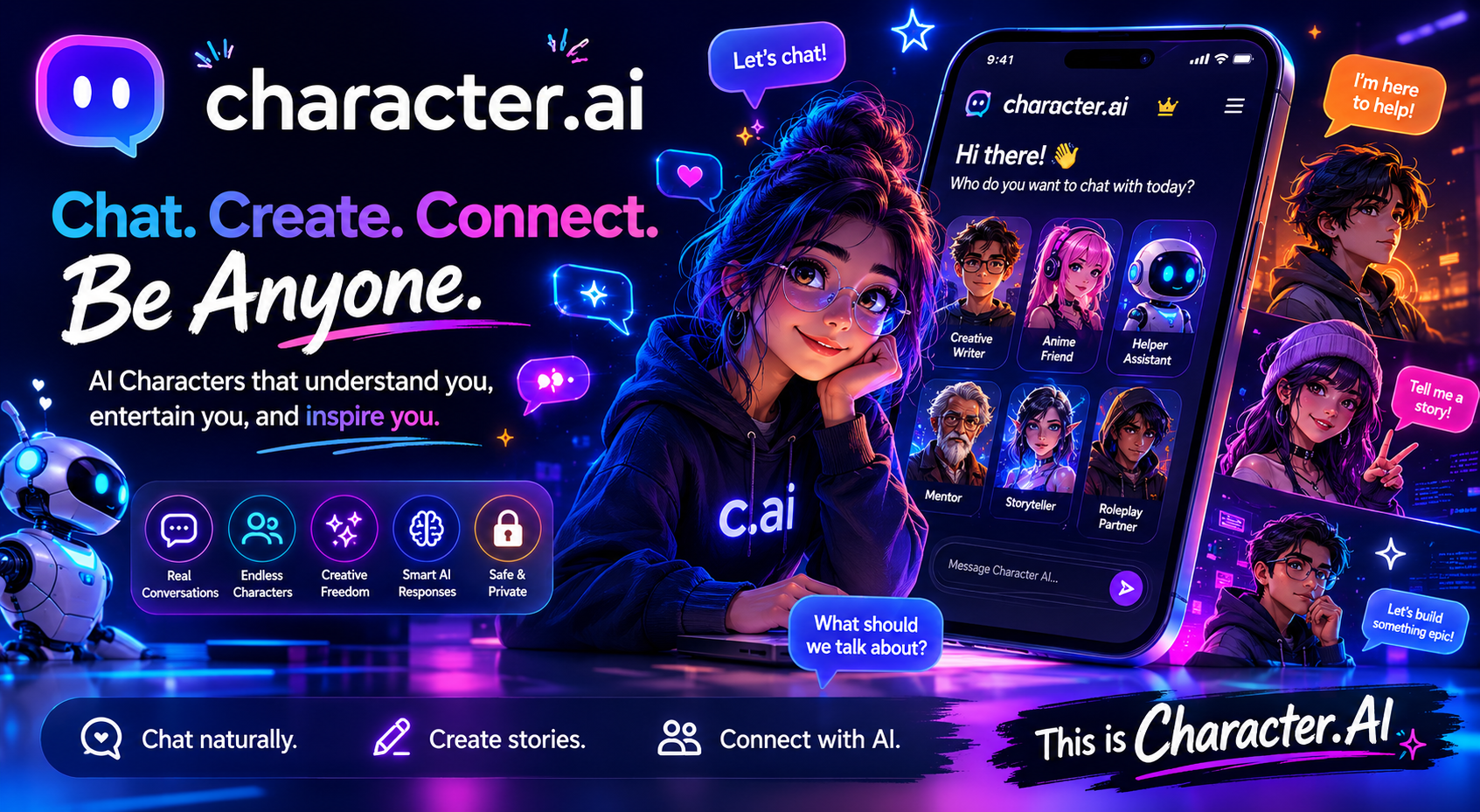
Character AI offers a unique conversational experience by allowing users to interact with AI personalities designed for entertainment, education, and role-playing.
Key Features
- Personality-driven conversations
- Creative storytelling
- Interactive learning experiences
- Entertainment-focused engagement
- Custom AI character creation
- Community-generated bots
7. Pi AI
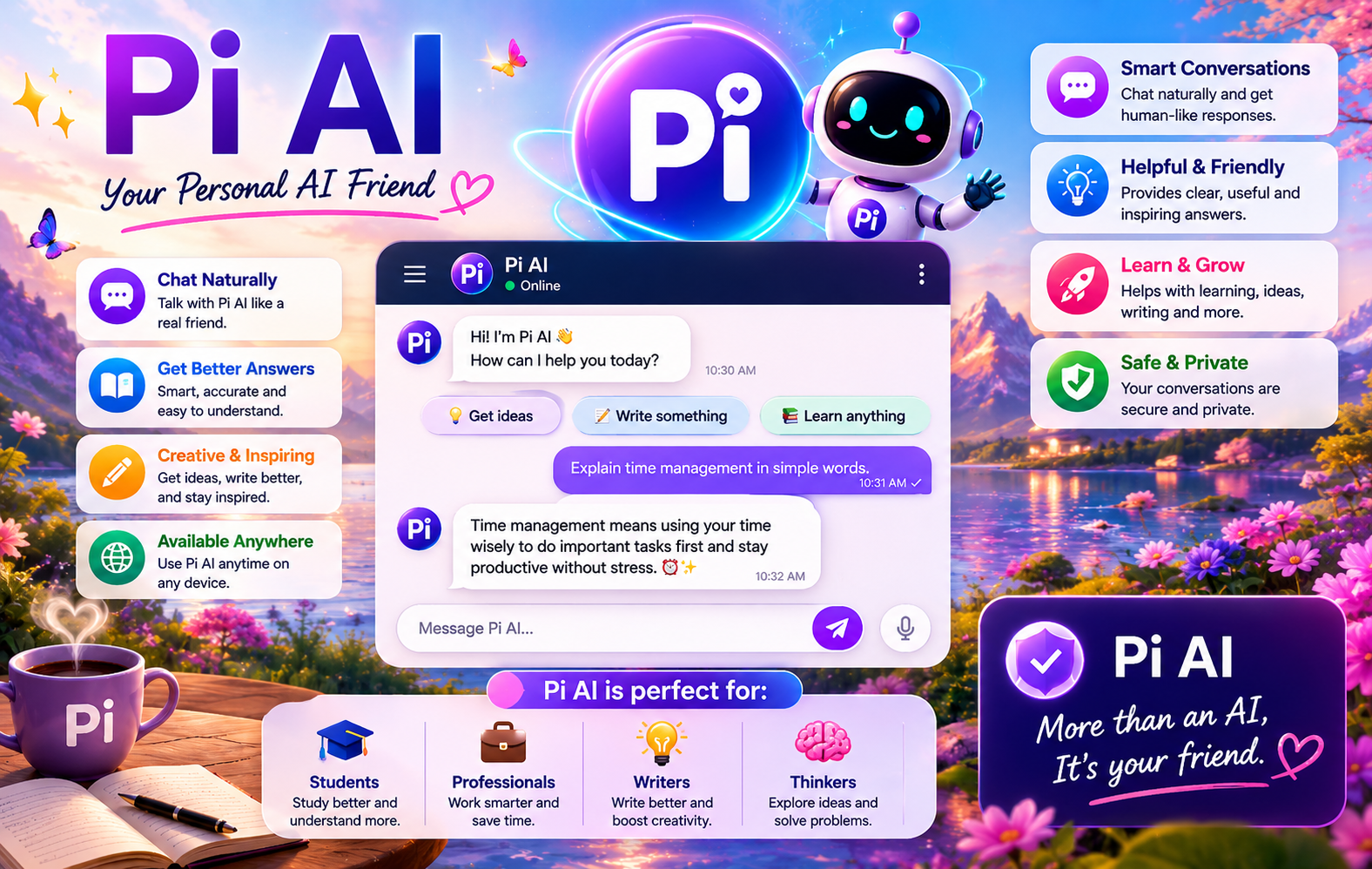
Pi AI focuses on personal conversations and emotional intelligence, making interactions feel more natural and supportive.
Key Features
- Empathetic communication
- Personalized interactions
- Daily assistance
- Reflection and coaching support
- Human-like dialogue
- Emotional awareness
Comparison Table of Leading AI Chatbot Apps
| AI Chatbot | Best For | Key Strength | Primary Users |
| ChatGPT | General AI Assistance | Versatility | Everyone |
| Google Gemini | Productivity & Research | Google Ecosystem Integration | Professionals & Students |
| Microsoft Copilot | Workplace Productivity | Microsoft Integration | Businesses |
| Claude | Writing & Analysis | Long-Form Understanding | Researchers & Writers |
| Perplexity AI | Research | Source-Based Answers | Students & Professionals |
| Character AI | Entertainment | Personality-Based Conversations | Casual Users |
| Pi AI | Personal Support | Human-Like Communication | Individuals |
Features Driving AI Chatbot Innovation in 2026
Natural Language Understanding
Modern AI chatbots understand complex questions, context, and conversational nuances better than ever before. This creates smoother and more productive interactions.
Multimodal Capabilities
Many chatbot apps can now process multiple forms of information, including:
- Text
- Images
- Audio
- Video
- Documents
This allows users to communicate with AI in more flexible ways.
Personalized Responses
AI systems can adapt to user preferences, communication styles, and goals, creating customized experiences that improve over time.
Real-Time Information Access
Several AI chatbot platforms can retrieve current information, making them valuable for research, news, and decision-making.
Workflow Automation
Businesses increasingly rely on AI chatbots to automate repetitive tasks such as scheduling, reporting, customer inquiries, and data management.
Language Translation
AI chatbots are breaking communication barriers by offering instant and accurate translations across numerous languages.
Also Read- Volonaut Airbike: The Future of Personal Flying Transportation
Benefits of AI Chatbot Apps for Individuals
Enhanced Productivity
AI chatbots help users complete tasks faster by providing instant answers, generating content, and organizing information.
Improved Learning
Students can use AI chatbots as study companions, tutors, and research assistants.
Creative Assistance
Writers, marketers, designers, and content creators can use AI tools to generate ideas, drafts, and creative solutions.
Better Communication
Language assistance, translation features, and writing suggestions help users communicate more effectively.
Accessibility
AI chatbots provide support around the clock, ensuring users can access information whenever needed.
Benefits of AI Chatbots for Businesses
Customer Support Automation
Businesses can handle customer inquiries 24/7 without requiring large support teams.
Reduced Operational Costs
Automation reduces the need for repetitive manual work, lowering operational expenses.
Improved Customer Experience
Fast responses and personalized interactions contribute to higher customer satisfaction.
Data Insights
AI chatbots can analyze customer interactions and identify valuable trends and patterns.
Scalability
Businesses can support thousands of customer interactions simultaneously without compromising service quality.
Challenges Facing AI Chatbots
Despite their advantages, AI chatbots still face several challenges.
Information Accuracy
While AI systems continue improving, they can occasionally provide inaccurate or outdated information.
Privacy Concerns
Users and organizations must ensure sensitive data is handled securely.
Ethical Considerations
Developers must address issues related to bias, transparency, and responsible AI usage.
Dependence on Technology
Overreliance on AI tools could reduce critical thinking and human interaction in some situations.
The Future of AI Chatbots
The future of AI chatbots looks exceptionally promising. Experts predict that future systems will become even more personalized, context-aware, and capable of understanding human emotions.
Emerging trends include:
- AI-powered virtual assistants
- Voice-first communication
- Autonomous task execution
- Advanced emotional intelligence
- Industry-specific AI agents
- Enhanced collaboration tools
As AI continues to evolve, chatbots will become increasingly integrated into everyday life, helping individuals and organizations communicate more efficiently than ever before.
Conclusion
AI chatbot apps are transforming communication in 2026 by making information more accessible, improving productivity, and creating more personalized digital experiences. From versatile assistants like ChatGPT and Google Gemini to specialized platforms such as Perplexity AI, Character AI, and Pi AI, today’s chatbot ecosystem offers solutions for virtually every need.
As technology advances, AI chatbots will continue to reshape how people interact with information, businesses, and each other. Organizations that embrace these tools can gain significant advantages in efficiency, customer engagement, and innovation, while individuals can enjoy smarter, faster, and more meaningful communication experiences.
Frequently Asked Questions (FAQs)
1. What is an AI chatbot?
An AI chatbot is a software application that uses artificial intelligence to understand and respond to human language through text or voice conversations.
2. Which AI chatbot is best in 2026?
The best chatbot depends on your needs. ChatGPT excels in general assistance, Gemini is strong for productivity, Claude is ideal for writing, and Perplexity AI is excellent for research.
3. Can AI chatbots replace human customer support?
AI chatbots can handle many routine inquiries, but human support remains important for complex issues and personalized assistance.
4. Are AI chatbots safe to use?
Most leading chatbot platforms implement security measures, but users should avoid sharing highly sensitive personal or financial information.
5. How do AI chatbots improve productivity?
They automate repetitive tasks, provide instant information, assist with content creation, and streamline workflows.
6. Can AI chatbots understand multiple languages?
Yes. Many modern AI chatbot platforms support multilingual communication and translation.
7. Do AI chatbots require internet access?
Most advanced AI chatbots rely on cloud-based systems and require an internet connection, although some limited offline models exist.
8. What is the future of AI chatbots?
Future AI chatbots are expected to become more intelligent, emotionally aware, autonomous, and integrated into daily life and business operations.